Roman Curia
ConclaveThe Roman Curia is the central administrative body of the Church in the novel, but it is not presented as a neutral instrument of governance. Its officials manage information, interpret rules, and oversee Church affairs; they also possess institutional interests that can conflict with the late Pope’s reform agenda. During the succession crisis, the Curia’s bureaucratic authority becomes inseparable from the questions of secrecy, accountability, and who has the right to determine the Church’s future.
Structure and Institutional Influence
The Curia’s members are among the last cardinals to arrive at Casa Santa Marta before the conclave. About two dozen officials live permanently in Rome and run the Church’s major departments, forming a distinct group within the College of Cardinals, described as the Order of Cardinal-Deacons. Most are Italian, and many, including Jacopo Baldassare Lomeli, have apartments within Vatican walls. Their proximity makes it easy to reach the residence with their luggage, and some arrive late after lingering over lunch.
That familiarity with Rome contrasts with the sense of awe Lomeli detects in cardinals who have travelled from around the world. He sees the Curia’s local ease as a form of institutional habituation: its members are good men, yet can seem knowing and blasé about the sacred responsibilities they administer. Lomeli recognizes the same spiritual dullness in himself and has prayed for the strength to resist it. The late Pope had warned the officials against the courtly vices of vanity, intrigue, malice, and gossip; in Lomeli’s understanding, the warning reflects the risks of life at the centre of the Church, not merely individual failings.
The Curia is not ideologically uniform. Its senior officials include figures whose public promises do not necessarily match their later conduct. Cardinal Simo Guttuso, Prefect of the Congregation for the Doctrine of the Faith, had been hailed by liberals as a potential second John XXIII and had advocated greater autonomy for bishops before entering the Curia. In office, however, he reveals himself as authoritarian, if less energetic than his predecessors. His arrival with three suitcases prompts a joke about bringing a personal chef; his answer that no one knows whether or when they will go home carries a momentary suggestion of ambition, which he then dismisses as a joke. The episode makes the Curia’s political atmosphere visible even in an apparently light exchange.
Information, Procedure, and the Succession
When the Pope dies, the Curia’s control of information has immediate consequences. Bellini tells Lomeli that the Pope had concealed a longstanding medical problem because he feared that disclosure would prompt rumours of resignation. Lomeli recognizes that the Pope’s distrust may have placed him, the Dean, on the same side as the Curia in the Pope’s eyes. He is consequently concerned both with the accuracy of what the public will be told and with the unanswered circumstances of the death, including whether anyone was present and whether the Pope received absolution.
The Camerlengo, Joseph Tremblay, presents Lomeli with a printed timeline of the Pope’s final hours. It records dinner with Archbishop Janusz Woźniak at 7:30 p.m., retirement to the apartment at 8:30, and the reading of a passage from The Imitation of Christ. At 9:30 the Pope went to bed. Woźniak checked on him at 11:30 and failed to observe vital functions; a doctor began cardiac massage and defibrillation at 11:34, and the Pope was pronounced dead at 12:12 a.m. The document is an official account meant to forestall discrepancies and malicious rumours. Its careful chronology also shows how the Curia’s administrative response begins to define what can be known about the death.
The Curia’s authority is exercised through formal rules as well as control over records. When Vincent Benítez arrives and says that he was created a cardinal in pectore, Lomeli initially doubts that the claim is genuine. The late Pope had revised the canon law governing such appointments shortly before his death, and the Dean had not been notified. Lomeli nevertheless invokes paragraph thirty-nine of the Apostolic Constitution: an elector who arrives re integra, before a new Pope has been elected, may join the election at the stage it has reached. He concludes that Benítez is legally a cardinal. The episode demonstrates that the Curia’s institutional arrangements can conceal information even from senior officials, while the written law can still determine how that secret appointment is recognized.
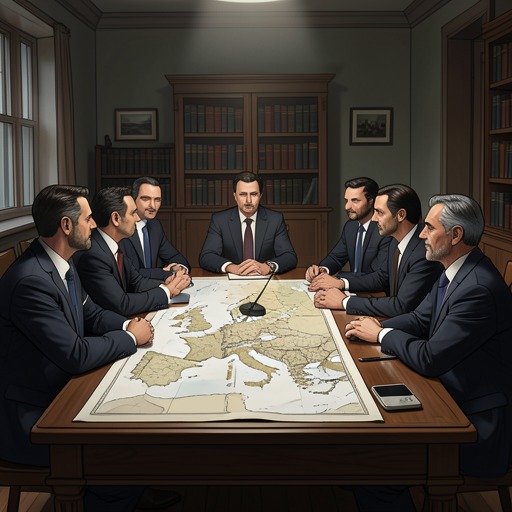
Lomeli also uses procedure to manage conflict during the conclave. Before disclosing a crisis to the assembled cardinals, he asks for authority under paragraphs five and six of the Apostolic Constitution, which allow certain matters to be discussed in special circumstances if a majority agrees. Later, when Goffredo Tedesco objects to receiving the information, Lomeli proposes a vote. The majority chooses to hear it, and no one leaves. In these moments, rules do more than regulate the election: they give Lomeli a legitimate means to open discussion despite opposition from powerful churchmen.
Financial Stewardship and Reform
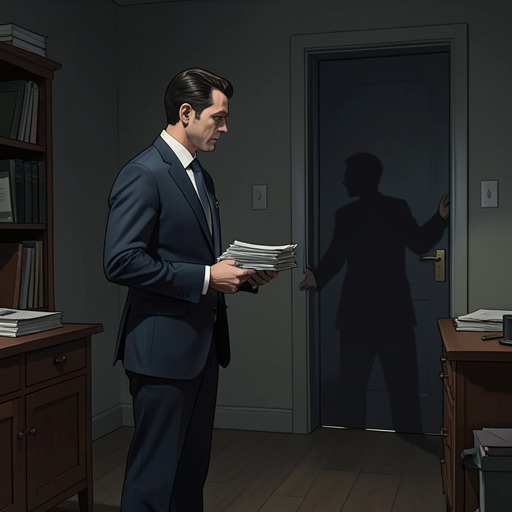
The sharpest challenge to the Curia’s administration emerges from papers hidden in the late Pope’s bedpost. Lomeli finds a small wooden case containing bank statements, money transfers, apartment addresses, and the Pope’s handwritten notes. One document lists official apartments occupied by serving and retired Curia members, with the residences of cardinal-electors underlined. Lomeli’s apartment in the Palace of the Holy Office measures 445 square metres; Bellini’s is 410, Adeyemi’s 480, and Tremblay’s 510. The Pope’s own residence at Casa Santa Marta is listed as 50 square metres. The contrast makes the records an indictment not just of accounting but of the Church’s visible distribution of comfort and space.
An attached report estimates that the Administration of the Patrimony of the Apostolic See holds 347,532 square metres of property, with a potential value exceeding €2.7 billion but a stated book value of €389.6 million. It estimates paid occupancy at only 56 percent and concludes that much of the income may not have been properly declared. The figures give concrete form to the Pope’s suspicion that institutional finances were not being reported transparently. The discovery also places Lomeli, whose apartment appears in the records, inside the system he must scrutinize rather than outside it as a detached investigator.
Bellini describes the late Pope’s reform programme as a sustained struggle with the Curia. On his first day, the Pope refused the full regalia of office and chose to live at Casa Santa Marta rather than the Apostolic Palace. At an introductory meeting with the prefects of the congregations in the Sala Bologna, he demanded transparent finances, proper books, disclosed accounts, outside tenders for building work, and receipts. He then brought in accountants and management consultants to examine the files, giving them offices on the first floor of Casa Santa Marta. The reforms provoked hostility across the Curia, not only among its traditionalist old guard.
According to Bellini, leaks and public embarrassments followed. Newspaper and television reports described the alleged misuse of money intended for the poor to renovate apartments or pay for first-class travel. Meanwhile, Tedesco and his allies criticized the Pope’s remarks on gay people, divorced couples, and the promotion of women, at times treating them as heretical. Bellini identifies the resulting paradox: the Pope became more popular with the outside world while growing more isolated inside the Holy See. By the end, he trusted almost no one, and Bellini is unsure that even he retained the Pope’s confidence.
Accountability and the Curia’s Contradictions
The Curia’s importance in the novel rests on this tension between indispensable administration and compromised stewardship. The Pope’s reforms depend on the same institution whose accounts, property arrangements, and internal culture require scrutiny. Lomeli’s discovery of the hidden records does not place him beyond that contradiction: his own apartment is part of the inventory, and his role as Dean requires him to protect the institution’s procedures while confronting evidence about its failures.
The succession brings the Curia’s procedural power into the open. Its officials participate in producing the account of the Pope’s death, its rules govern who may vote, and its senior members enter a conclave already shaped by factions and competing visions of the Church. Yet those formal mechanisms cannot by themselves settle the moral questions the records raise. The Roman Curia is therefore both the machinery through which the Church continues to act and the institution whose habits of secrecy, privilege, and resistance make reform so difficult.