Chocolate Poirot gave Norton
CurtainChocolate Poirot gave Norton is the instrument of Stephen Norton’s death and the hinge of Hercule Poirot’s final confrontation with him. Poured during an apparently ordinary sharing of chocolate, the drink contains a sleeping dose; Norton’s decision to drink from Poirot’s cup does not save him, because both portions are dosed. The difference in their effects on the two men lets Poirot carry out the next steps of his plan.
The chocolate at the confrontation
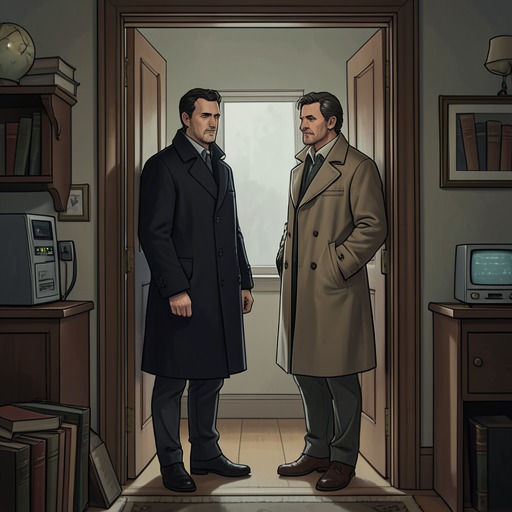
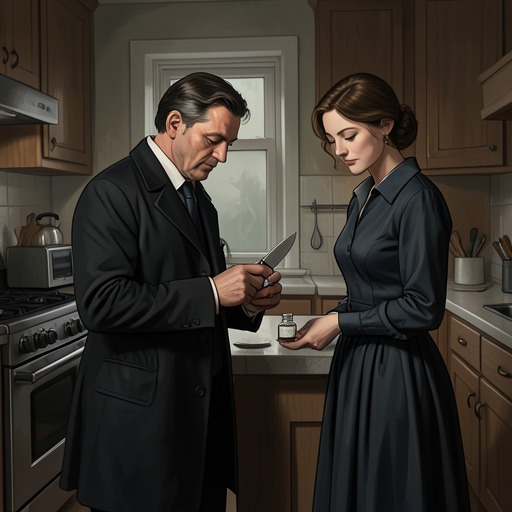
The chocolate enters the scene as a familiar treat rather than as an overt weapon. Hercule Poirot notes that Stephen Norton has a sweet tooth, and the two are about to have chocolate together when Poirot tells him that he intends to execute him. Norton asks whether Poirot means a dagger or a cup of poison. Poirot answers that the cup would be simplest, then hands Norton the chocolate he has just poured.
The exchange makes the object’s role unusually explicit: Norton recognizes the intended method before accepting the drink. He asks to drink from Poirot’s cup instead of his own, and Poirot agrees. The switch is therefore not a successful effort to evade the poison. Its significance depends on the fact that the dose is in the chocolate itself, not in one particular cup.
How the dose works
Both men drink the same chocolate, and both receive the sleeping dose. Poirot explains that he, too, takes sleeping tablets, but that taking them every night for a considerable period has given him a degree of tolerance. A dose sufficient to send Norton to sleep has little effect on Poirot; he further counters its effect with a dose of his strychnine tonic. The shared drink thus produces sharply different consequences without requiring separate poisoned and unpoisoned cups.
The chocolate’s apparent simplicity conceals a carefully controlled difference in outcome. Norton falls asleep in due course, while Poirot remains capable of acting. The object is not merely a vehicle for poisoning: its use allows Poirot to make Norton’s own choice of cup immaterial and to proceed once the sleeping dose takes effect.
From drink to concealment
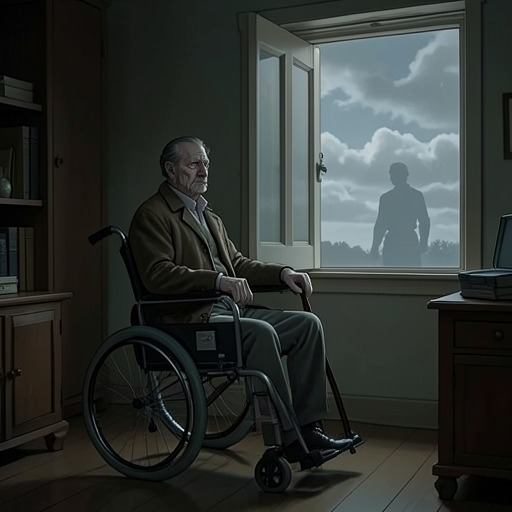
After Norton is asleep, Poirot gets him into Poirot’s wheelchair. Poirot notes that it has several kinds of mechanism, making the transfer relatively easy, and wheels Norton to the chair’s usual place in the window embrasure behind the curtains. The drink therefore initiates a sequence extending beyond the poisoning itself: Norton’s sleep gives Poirot an opportunity to move him, while the wheelchair becomes part of the concealment.
The chocolate is also the beginning of a staged absence. Curtiss puts Poirot to bed, and, once everything is quiet, Poirot wheels Norton to his room. Poirot then relies on the eyes and ears of Arthur Hastings. In this sequence, the ordinary act of sharing chocolate enables the killing, while Poirot’s subsequent management of the scene helps conceal what he has done.
Significance in Poirot’s final act
The scene turns the conventional logic of a poisoned cup inside out. Norton anticipates poison and tries to protect himself by choosing the other man’s cup, but because the dose is in the chocolate both drinks are affected. Poirot’s tolerance and tonic, rather than a hidden difference between the cups, determine who falls asleep and who can act. The detail makes the chocolate central to the mechanics of the killing and to the deception that follows.
Its familiar, sociable setting also sharpens the reversal: the shared treat becomes the practical instrument of Poirot’s execution of Norton. The scene does not end with the drink or Norton’s sleep. By enabling Poirot to move Norton into the wheelchair and later to his room, the chocolate sets in motion the actions through which Poirot tries to make the killing appear otherwise.