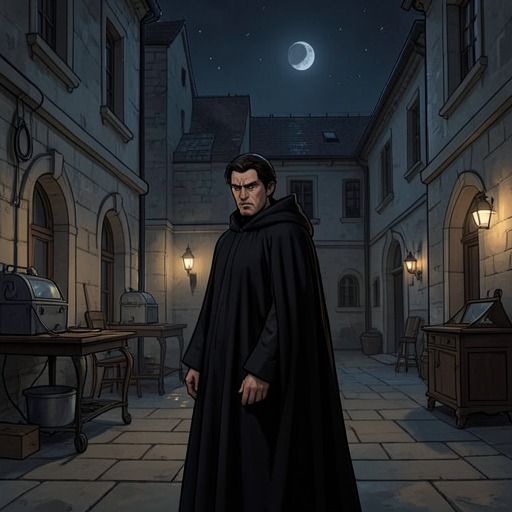
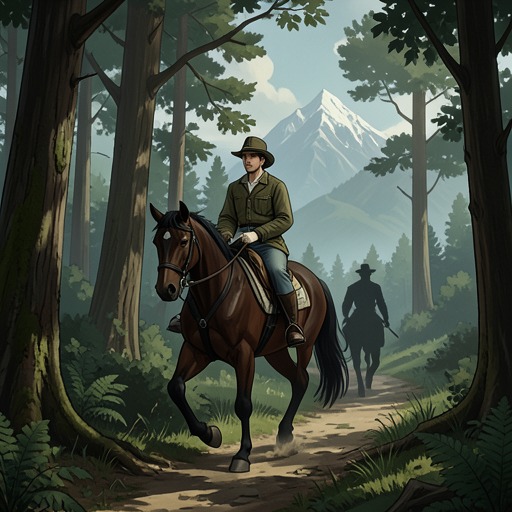
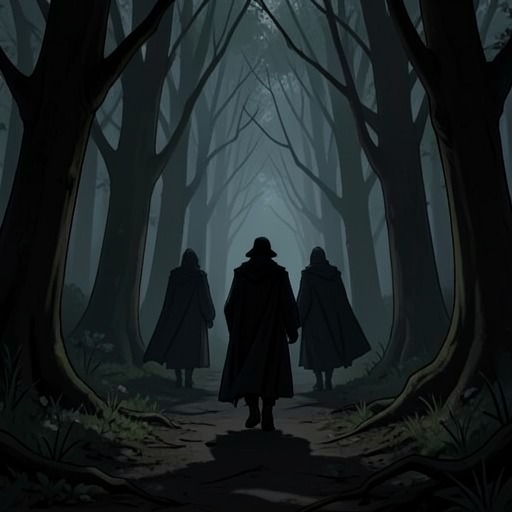
long before the story
The Two Kingdoms
The tale is set between the [Kingdom of Dagonaut](entity:location-recall-location-ed4ca9e6e5fb) east of the [Great Mountain Range of Dagonaut and Unauwen](entity:location-recall-location-db053258d676) and the [Unauwen Realm](entity:location-recall-location-eb520d752d5c) to its west. Their capitals bear their rulers’ names, while the lands beyond them remain largely unknown to one another.
The Kingdom of Dagonaut is prosperous and guarded by the king’s knights. Some govern land in his name, while others wander to offer their services and watch beyond the borders.
long before Tiuri’s vigil
The Knightly Vocation
Becoming a knight in [Dagonaut](entity:character-recall-character-583f1369e701)’s service requires years of training and proof of loyalty, honesty, helpfulness, and courage. A candidate must serve first as a squire and then in the king’s forces before being judged worthy of knighthood.
Every four years, the king gathers his knights in the capital. The young candidates receive their swords in a solemn ceremony, but first they must fast and keep a silent night vigil, reflecting on the duties they promise to uphold.
years before the novel’s main journey
The Princes’ Rivalry
King Unauwen has twin sons, born only minutes apart. The elder becomes Crown Prince, while the younger resents the distinction and grows ambitious for power; their father refuses to divide his realm.
Appointed governor of the southern province, the younger prince invades [Eviellan](entity:location-recall-location-1523bc2656b3) and declares himself its ruler. When Unauwen orders him to withdraw, he refuses, and fighting between the brothers leaves the [Unauwen Realm](entity:location-recall-location-eb520d752d5c) divided and vulnerable to raids from Eviellan.
years before Tiuri’s journey
Menaures Leaves the Court
Unauwen once had a brother born on the same day, a prince who never sought the throne. He relinquished his royal standing and eventually withdrew into the mountains as the hermit [Menaures](entity:character-recall-character-menaures-e07aa9506e82).
The hermit lives near the source of the Blue River, far from court, but his kinship with the king remains unknown to most travelers. His wisdom and knowledge of the mountains will later become essential to [Tiuri](entity:character-recall-character-tiuri-7657e8dea579)’s mission.
several years before the main journey
The Rescue in Vorgóta
When hostile bands from [Eviellan](entity:location-recall-location-1523bc2656b3) threaten the Forest of Vorgóta, [Edwinem](entity:character-recall-character-ae5f8dfdf572) rides to the aid of Ristridin and his outnumbered followers. His victory earns him a reputation as the Unconquerable, while he and Ristridin become close friends.
Ristridin later remembers Edwinem as an honorable defender of the good, a White-Shield Knight of Unauwen who fought beside him despite serving another kingdom. The battle establishes the friendship and shared code that shape Ristridin’s later response to Edwinem’s death.
spring before the vigil
The Peace Mission
After the [Lord of Eviellan](entity:character-recall-character-beb03c8312c7) signals that he may seek peace, Unauwen sends a delegation of trusted knights south. [Edwinem](entity:character-recall-character-ae5f8dfdf572) travels with the envoys, including Andomar, hoping negotiations will end the long hostility.
Ristridin remembers Edwinem as troubled by a foreboding he cannot explain. Edwinem admits that he distrusts the Lord of Eviellan, whom he believes dangerous precisely because his charm makes his wickedness difficult to see.
shortly before the summer gathering
Edwinem’s Secret Escape
[Edwinem](entity:character-recall-character-ae5f8dfdf572) eventually arrives secretly at Ristridin’s castle wearing black armor and carrying a black shield. He says the disguise was his only way out of [Eviellan](entity:location-recall-location-1523bc2656b3), where the southern approaches and mountain routes are watched by hostile forces.
He refuses to explain the full crisis, saying it concerns his king and country. He plans to return by a northern route through [Dagonaut](entity:character-recall-character-583f1369e701)’s forest and asks his old squire [Vokia](entity:character-recall-character-vokia-087cc4e7c645) to accompany him, despite the danger and urgency.
the day after Edwinem’s arrival at Ristridin’s castle
The Red Riders Enter Dagonaut
A troop of riders in red crosses into the [Kingdom of Dagonaut](entity:location-recall-location-ed4ca9e6e5fb), claiming to be envoys sent to honor the king’s midsummer celebration. Ristridin and his brother let them proceed because relations with [Eviellan](entity:location-recall-location-1523bc2656b3) appear to be improving.
Ristridin and [Bendoe](entity:character-recall-character-baf2d935ffe1) nevertheless decide to follow the riders and keep them under observation. Their pursuit will bring them into the search for [Edwinem](entity:character-recall-character-ae5f8dfdf572) and eventually into conflict with [Tiuri](entity:character-recall-character-tiuri-7657e8dea579)’s own journey.
the night before Tiuri’s vigil
The Challenge at Yikarvara
At the [Inn at Yikarvara](entity:location-recall-location-1404b2e1c1b2), a Black Knight with a White Shield is challenged by a Black Knight with a Red Shield. The innkeeper sees the two leave together, believing they are going to fight an honorable duel.
In reality, the Red Shield Knight’s riders attack [Edwinem](entity:character-recall-character-ae5f8dfdf572) in an ambush. [Vokia](entity:character-recall-character-vokia-087cc4e7c645) escapes toward the capital to seek help, while Ristridin and [Bendoe](entity:character-recall-character-baf2d935ffe1) follow different leads into the forest.
the night before the midsummer knighting
Edwinem Is Murdered
[Edwinem](entity:character-recall-character-ae5f8dfdf572) is found gravely wounded in the forest after the Red Riders have attacked him. He tells the young [Tiuri](entity:character-recall-character-tiuri-7657e8dea579) that there was no duel: the Red Shield Knight’s men set a trap and sought both to kill him and to seize the letter he carries.
Edwinem gives Tiuri his ring and charges him to bring the sealed message to King Unauwen. He instructs Tiuri to reveal the letter only if its loss becomes unavoidable, and to destroy it after memorizing its contents; Tiuri promises on his honor to complete the mission.
the night before Midsummer Day
Tiuri Breaks His Vigil
[Tiuri](entity:character-recall-character-tiuri-7657e8dea579) and four other young men keep their silent vigil in the [Chapel of the City of Dagonaut](entity:location-recall-location-37d34d4c8c76). A knock at the door is ignored, but later a stranger begs Tiuri through a window to open it in God’s name.
Tiuri believes the stranger may be in desperate need and cannot bring himself to remain silent. He opens the door despite knowing that breaking the vigil may cost him the knighthood he expects to receive that morning.
shortly after midnight
The Stranger’s Request
The hooded stranger identifies [Tiuri](entity:character-recall-character-tiuri-7657e8dea579) as a trustworthy young man who has not yet become famous. He says that a vital letter must reach King Unauwen and asks Tiuri to take it to the Black Knight with a White Shield at the [Inn at Yikarvara](entity:location-recall-location-1404b2e1c1b2).
Tiuri accepts the dangerous errand, though the stranger warns him of spies and enemies. He memorizes the password for identifying the knight, hides the letter beneath his tunic, and leaves the chapel before the delegation arrives to escort the candidates to the king.
before dawn on the first day
The Borrowed Horse
A horse has been left tied behind the chapel, but [Tiuri](entity:character-recall-character-tiuri-7657e8dea579) discovers it has no saddle or bridle. As he takes it, the farm’s owner wakes, calls him a thief, and gives chase with a barking dog.
Tiuri rides into the night without weapons, intending to return the horse after completing the urgent delivery. He feels guilty about taking it but cannot afford the delay of explaining himself or asking permission.
before dawn on the first day
The Riders in the Forest
On the way to Yikarvara, [Tiuri](entity:character-recall-character-tiuri-7657e8dea579) sees a troop of armed riders crossing the forest at night. He hides beneath the trees until they have passed, wondering whether they are connected to the enemies who seek the letter.
The encounter deepens his sense that the forest is watched. He follows a rough side trail toward the inn, losing time as the ground becomes difficult and the dawn approaches.
near dawn on the first day
The Knight Has Left
At Yikarvara, the innkeeper tells [Tiuri](entity:character-recall-character-tiuri-7657e8dea579) that the White-Shield Knight has already ridden away. Earlier in the night, the Red Shield Knight arrived and challenged him; the innkeeper believes they departed to settle their dispute.
Tiuri learns that the two riders went into the forest, and he immediately sets out to follow them. He has not delivered the letter, and the deadline for returning to the chapel is already close.
dawn on the first day
The Mission Changes Hands
[Tiuri](entity:character-recall-character-tiuri-7657e8dea579) finds [Edwinem](entity:character-recall-character-ae5f8dfdf572) wounded beneath the trees. After confirming the password, he learns that the Red Riders ambushed the knight instead of fighting him fairly, and that the letter remains hidden on Tiuri’s person.
Dying, Edwinem formally entrusts Tiuri with the greater mission: take the letter to Unauwen himself. He gives Tiuri his ring as proof for [Menaures](entity:character-recall-character-menaures-e07aa9506e82), the hermit who can guide him across the mountains, and insists that Tiuri’s duty is to carry the message rather than seek revenge.
morning on the first day
The First Pursuit
Returning toward the inn, [Tiuri](entity:character-recall-character-tiuri-7657e8dea579) encounters a Red Rider, then sees more riders appear and begin to follow him. With no weapon and a tired horse, he is badly outmatched.
He escapes by sending the horse onward and climbing into a tree. When the riders have passed, he retrieves the animal and continues, now fully aware that the letter has made him a target.
morning on the first day
The Stolen Horse Accusation
At the inn, [Tiuri](entity:character-recall-character-tiuri-7657e8dea579) tells the innkeeper that [Edwinem](entity:character-recall-character-ae5f8dfdf572) is dead and asks him to arrange a proper burial and send word to the city. Before he can explain more, the owner of the borrowed horse arrives and accuses Tiuri of theft.
Tiuri cannot disclose the secret mission to defend himself. When the men threaten to take him to the authorities, he flees into the forest and hides in a tree, leaving the witnesses to believe that the supposed thief has escaped.
later on the first day
A Message for Tiuri’s Parents
In the forest, [Tiuri](entity:character-recall-character-tiuri-7657e8dea579) meets a young woodcutter and asks him to carry a message to Tiuri’s father: the son is safe but cannot yet return, and no one should search for him. Tiuri gives the boy his mother’s embroidered belt as proof and tells him to keep their meeting secret.
The boy agrees, believing Tiuri is not truly a thief. This is Tiuri’s first attempt to ease his family’s fear while preserving the secrecy of the mission.
first days of the journey
The Dwaas’s Meal
Hungry and lost on a forest path, [Tiuri](entity:character-recall-character-tiuri-7657e8dea579) meets [Marius](entity:character-recall-character-marius-64ee8a1791fa), known as the Dwaas of the Boshut. The strange, friendly man offers food taken from his mother’s stores and points Tiuri westward, warning him not to drink from a dark pool.
Tiuri promises to return and tell Marius where the sun goes down. Marius promises to keep Tiuri’s presence secret, and his kindness gives the exhausted traveler strength to continue.
during the first week
The Ring’s Light
As [Tiuri](entity:character-recall-character-tiuri-7657e8dea579) rests beside a stream, [Edwinem](entity:character-recall-character-ae5f8dfdf572)’s ring catches the darkness and reveals that its stone glows faintly. Tiuri takes it as a reminder of the dead knight and of the promise he has made.
The ring becomes both a practical token for [Menaures](entity:character-recall-character-menaures-e07aa9506e82) and a source of resolve. Tiuri renews his determination to keep the letter safe and continue west despite his fear and hunger.
during the first week
The Robbers’ Bargain
A band of robbers surrounds [Tiuri](entity:character-recall-character-tiuri-7657e8dea579) at night and demands his horse, ring, and possessions. When their leader threatens to take the ring by cutting off a finger, Tiuri says he would rather lose the finger than surrender it.
The leader is moved by the boy’s courage and lets him keep the ring, though the robbers take [Ardanwen](entity:character-recall-character-ardanwen-9731ec97a7d9). Tiuri is left alone and on foot, but the ring—and the proof he needs to find [Menaures](entity:character-recall-character-menaures-e07aa9506e82)—remains with him.
the morning after Ardanwen is taken
The Robbers’ Captives
[Tiuri](entity:character-recall-character-tiuri-7657e8dea579) hides in a cave as the Grey Knights arrive and defeat the robbers. Their leader recognizes [Ardanwen](entity:character-recall-character-ardanwen-9731ec97a7d9) and identifies the horse as [Edwinem](entity:character-recall-character-ae5f8dfdf572)’s, then learns that a young traveler carrying a shining ring escaped on it.
Instead of rescuing Tiuri, the Grey Knights decide that he must be the murderer who stole the ring and horse. They release the robbers on the condition that they help find him, turning Tiuri into the quarry of men who are themselves seeking Edwinem’s killers.
about a week into the journey
The Brown Abbey
[Tiuri](entity:character-recall-character-tiuri-7657e8dea579) meets two monks, Laurentius and Martijn, and travels with them to the Abbey of Brown, where he receives food, rest, and a brown robe. The monks ask little about his past and offer him a place of safety.
The abbot, Hyronimus, promises not to reveal Tiuri’s presence and helps disguise him as a pilgrim. He confirms that the Blue River lies farther north, near the westbound road, and gives Tiuri a chance to resume his journey without exposing his identity.
after leaving the Brown Abbey
The Search at Mistrinaut
Disguised as a monk, [Tiuri](entity:character-recall-character-tiuri-7657e8dea579) reaches [Mistrinaut Castle](entity:location-recall-location-cdd403acc600) and is welcomed under the castle’s custom of hospitality. The gatekeepers record his false name, Brother Tarmin, in the guest book.
The next morning the bridge remains raised because unexpected visitors have arrived. The castle’s lord, [Sigirdiwarth Rafox](entity:character-recall-character-526f121f11d9), questions Tiuri about a young man with a shining ring and quietly recognizes that the description may fit his guest.
the morning after his arrival at Mistrinaut
Tiuri Is Arrested
Rafox brings [Tiuri](entity:character-recall-character-tiuri-7657e8dea579) before the four Grey Knights, who demand to know whether he has [Edwinem](entity:character-recall-character-ae5f8dfdf572)’s ring. Tiuri tries to maintain his disguise, but admits he has the ring rather than risk having the letter discovered in a search.
Ristridin and his companions seize the ring and accuse Tiuri of murdering Edwinem. Tiuri protests that he is their guest and has committed no crime, but Rafox does not intervene openly as the knights take him to a tower cell.
the afternoon of Tiuri’s arrest
Lavinia’s Hidden Aid
[Lavinia](entity:character-recall-character-lavinia-9f7cea2469db), Rafox’s daughter, visits [Tiuri](entity:character-recall-character-tiuri-7657e8dea579) through a concealed passage and warns that the Grey Knights intend to harm him. She brings a mail shirt, a sword, and a dagger, urging him to defend himself.
Rafox later enters by the same secret passage and independently brings Tiuri another set of armor and weapons. He refuses to help Tiuri escape, but makes clear that he does not want his former guest to face the coming danger unarmed.
evening on the day of his arrest
The Trial in the Courtyard
The Grey Knights lead [Tiuri](entity:character-recall-character-tiuri-7657e8dea579) into a dim courtyard, where drumming and their silence are meant to unnerve him. When they draw their swords, he runs only long enough to cast off his robe and prepare to fight.
Tiuri resists fiercely and demands to know the charge. Ristridin eventually reveals that the knights believed Tiuri killed [Edwinem](entity:character-recall-character-ae5f8dfdf572) and stole his ring and horse, a conclusion built from the misleading reports of the Red Riders.
the same evening
The False Accusation Unravels
[Tiuri](entity:character-recall-character-tiuri-7657e8dea579) explains that he found [Edwinem](entity:character-recall-character-ae5f8dfdf572) alive, heard the account of the ambush, and received the ring from him. His knowledge of Edwinem’s last words convinces Ristridin that the accusation is false.
Rafox challenges the Grey Knights to consider how close their desire for vengeance came to becoming an unjust act. Ristridin admits that they were wrong, and the knights return Tiuri’s ring and ask his forgiveness.
that evening at Mistrinaut
The Grey Knights’ Pursuit
Ristridin and [Bendoe](entity:character-recall-character-baf2d935ffe1) explain how rumors from [Eviellan](entity:location-recall-location-1523bc2656b3) made [Tiuri](entity:character-recall-character-tiuri-7657e8dea579) seem like the murderer: he had fled the chapel, taken a horse, disappeared into the forest, and carried [Edwinem](entity:character-recall-character-ae5f8dfdf572)’s ring. A Red Rider had falsely described the death as the result of a duel and implicated a mysterious young man.
The knights now believe Tiuri, but the Red Riders remain at large. They decide to seek the killers, while Tiuri agrees to travel with them for a time toward the Blue River and [Menaures](entity:character-recall-character-menaures-e07aa9506e82)’s mountain refuge.
the next morning
Edwinem’s True Name
Ristridin apologizes to [Tiuri](entity:character-recall-character-tiuri-7657e8dea579) in private and tells him that [Edwinem](entity:character-recall-character-ae5f8dfdf572) was the Black Knight with a White Shield, lord of [Forèstèrra](entity:location-recall-location-eabea59a761b) and a Paladin of Unauwen. He also explains that Edwinem’s black armor was a disguise: beneath it he had concealed the white colors of his kingdom.
Tiuri learns that the ring is one of a very few given by Unauwen to trusted knights and officials. He keeps it hidden and continues to say little about his mission, even as Ristridin correctly suspects that the journey leads to the western kingdom.
the following evening
Leor’s Betrayal
At the Sunset Inn, the suspicious servant Leor denies seeing Red Riders, then admits they had asked after the Grey Knights and a young man with a shining ring. They instructed him to watch for the party and send word when it appeared.
Ristridin realizes that the Red Riders have informants and may know where the knights are heading. The group keeps watch, but [Tiuri](entity:character-recall-character-tiuri-7657e8dea579) understands that his presence—and [Ardanwen](entity:character-recall-character-ardanwen-9731ec97a7d9)’s recognizable appearance—may draw the enemy to them.
the next day along the Blue River
The Red Riders’ Ambush
Red Riders attack from the woods and rocks beside the road, aiming to seize [Tiuri](entity:character-recall-character-tiuri-7657e8dea579) and the letter. Tiuri is overwhelmed by several assailants and wounded in the arm while the Grey Knights fight the attackers off.
[Ardanwen](entity:character-recall-character-ardanwen-9731ec97a7d9) saves Tiuri by striking down a man about to attack him. The Red Riders flee, leaving several dead and one prisoner; their assault confirms that the mission remains in danger even while Tiuri travels under the knights’ protection.
that night
The Prisoner’s Confession
The captured mercenary says he joined the Red Riders for pay and had never met their masked leader. He confirms that the band included men from [Eviellan](entity:location-recall-location-1523bc2656b3) and hired outlaws, and that they had learned of [Tiuri](entity:character-recall-character-tiuri-7657e8dea579) through informants.
Ristridin plans to bring the prisoner to the lord of the district and request more help. The Grey Knights also decide to split their party so that one group can pursue the remaining attackers while Tiuri continues westward.
the following day
Ilmar Becomes a Decoy
As the Grey Knights prepare to separate, [Tiuri](entity:character-recall-character-tiuri-7657e8dea579) insists that he must travel on toward [Menaures](entity:character-recall-character-menaures-e07aa9506e82) and the mountains. Ristridin warns that the Red Riders may still use spies to follow him.
Ilmar volunteers to wear Tiuri’s clothes and ride [Ardanwen](entity:character-recall-character-ardanwen-9731ec97a7d9), drawing attention away from the real messenger. Tiuri accepts reluctantly, then leaves with the other group and finally parts from Ristridin and the Grey Knights near the Blue River’s mountain road.
the twelfth day of Tiuri’s journey
The Lonely Mountain Road
[Tiuri](entity:character-recall-character-tiuri-7657e8dea579) follows the Blue River alone, better equipped than during his first weeks on the road but still uncertain about what lies ahead. He leaves the main route for a narrower mountain path and meets a hard-eyed traveler who calls himself [Jaro](entity:character-recall-character-df867f7eb51c).
Jaro says that he is crossing the mountains to visit his son and asks to accompany Tiuri. Tiuri dislikes him but, ashamed of his own unkindness, agrees to travel together while continuing to conceal his true name and purpose.
the next day
The Fall at the Ravine
On a narrow path above a deep ravine, [Jaro](entity:character-recall-character-df867f7eb51c) stumbles into [Tiuri](entity:character-recall-character-tiuri-7657e8dea579) and then slips over the edge. He catches a branch and hangs above the drop, unable to climb back to the path.
Tiuri risks his own life to reach him, using his body as a bridge so Jaro can climb to safety. The rescue changes the balance between them, though Jaro’s reaction is strangely angry and Tiuri remains unsure what to make of his companion.
the next day in the mountains
Jaro Reveals His Mission
After they reach [Menaures](entity:character-recall-character-menaures-e07aa9506e82)’s hut, [Tiuri](entity:character-recall-character-tiuri-7657e8dea579) privately reveals his identity and shows the ring. Menaures recognizes [Edwinem](entity:character-recall-character-ae5f8dfdf572)’s token, hears the account of the letter, and promises a trusted guide for the crossing.
Menaures suspects [Jaro](entity:character-recall-character-df867f7eb51c) may be a spy but leaves the decision to Tiuri. Later, when [Piak](entity:character-recall-character-piak-23c74e0dc4f7) is out of earshot, Jaro admits that he was sent by the Red Shield Knight to kill Tiuri and steal the letter; having been saved at the ravine, he cannot carry out the order.
the same morning
Slupor’s Warning
Before leaving, [Jaro](entity:character-recall-character-df867f7eb51c) warns [Tiuri](entity:character-recall-character-tiuri-7657e8dea579) that another agent has been sent after him. The man, known as [Slupor](entity:character-recall-character-8832db1b5673), is a particularly dangerous spy who can pass as a soldier, rider, or ordinary traveler.
Jaro says Slupor is more ruthless than he is and may get ahead of Tiuri to wait on the western side of the mountains. After giving the warning, Jaro turns back toward the east, uncertain whether he can return to the master he has disobeyed.
the same morning
Piak Learns the Secret
[Piak](entity:character-recall-character-piak-23c74e0dc4f7) reveals that echoes in the mountains allowed him to overhear [Tiuri](entity:character-recall-character-tiuri-7657e8dea579) and [Jaro](entity:character-recall-character-df867f7eb51c). He now knows about the secret letter and [Slupor](entity:character-recall-character-8832db1b5673), but promises not to betray Tiuri.
[Menaures](entity:character-recall-character-menaures-e07aa9506e82) has already tasked Piak with guiding and protecting the young messenger. Piak sees the mission as partly his own, and he and Tiuri affirm their trust in one another before continuing together.
after crossing the first mountain ridges
Piak Chooses the Journey
[Menaures](entity:character-recall-character-menaures-e07aa9506e82) permits [Piak](entity:character-recall-character-piak-23c74e0dc4f7) to continue beyond the mountains if he wishes. Piak chooses to remain with [Tiuri](entity:character-recall-character-tiuri-7657e8dea579), despite knowing the dangers and hoping to become his squire.
Tiuri objects because he does not want his friend exposed to danger, but Piak insists that two travelers can watch for threats better than one. Their friendship becomes a partnership rather than simply a guide’s service.
several days into the mountain crossing
The Blizzard at Seven Rocks
[Tiuri](entity:character-recall-character-tiuri-7657e8dea579) and [Piak](entity:character-recall-character-piak-23c74e0dc4f7) climb above the tree line and cross a glacier cut by streams and hidden crevasses. The weather turns suddenly, bringing darkness, fierce wind, and heavy snow before they can reach the safest shelter.
They retreat to a shallow cave near the Seven Rocks and endure the night in bitter cold, taking turns to move and keep one another awake. By morning they are exhausted, but the storm passes and they can resume the climb.
the morning after the blizzard
The View into Unauwen
[Tiuri](entity:character-recall-character-tiuri-7657e8dea579) and [Piak](entity:character-recall-character-piak-23c74e0dc4f7) struggle over the last of the Seven Rocks and reach a high pass. From there they see the [Unauwen Realm](entity:location-recall-location-eb520d752d5c) spread beyond the mountains, though the land is still distant and veiled by ridges.
The view marks the first great threshold of Tiuri’s mission. They continue down into the western valleys, where Piak’s familiarity with the terrain begins to give way to Tiuri’s knowledge of the wider world.
after leaving the high mountains
Taki and Ilia’s Welcome
[Piak](entity:character-recall-character-piak-23c74e0dc4f7) takes [Tiuri](entity:character-recall-character-tiuri-7657e8dea579) to the home of his uncle Taki and aunt Ilia. They welcome the travelers with warm water, clean clothes, and a substantial meal, while agreeing to keep their visit secret.
The hospitality gives Tiuri and Piak a rare pause from pursuit. Taki also provides directions to [Ardoc](entity:character-recall-character-ardoc-e6ef5d782287)’s estate, where the travelers may be able to find transport toward [Dangria](entity:location-recall-location-dangria-aadee8ae7a35).
the next morning
Ardoc’s Ride to Dangria
[Ardoc](entity:character-recall-character-ardoc-e6ef5d782287) agrees to take [Tiuri](entity:character-recall-character-tiuri-7657e8dea579) and [Piak](entity:character-recall-character-piak-23c74e0dc4f7) toward [Dangria](entity:location-recall-location-dangria-aadee8ae7a35) on horseback beside his loaded wagon. Piak is uneasy on a horse, while Tiuri’s skill is immediately apparent despite his modest explanation of his experience.
On the road, Ardoc describes the eastern regions of the [Unauwen Realm](entity:location-recall-location-eb520d752d5c) and their reduced security amid the conflict with [Eviellan](entity:location-recall-location-1523bc2656b3). He also tells the travelers that the [Rainbow River](entity:location-recall-location-66f1ac46d5ef) marks the way into the heart of the western kingdom.
the first afternoon in Dangria
The Mayor’s Invitation
In [Dangria](entity:location-recall-location-dangria-aadee8ae7a35), the travelers marvel at the city and its crowded market. A palace guard tells them that the mayor wishes to welcome the young visitors, and they follow him to the town hall despite [Tiuri](entity:character-recall-character-tiuri-7657e8dea579)’s unease.
The mayor begins with extravagant hospitality, then presses them to stay until a friend arrives. Armed men quietly gather in the hall, and [Piak](entity:character-recall-character-piak-23c74e0dc4f7) realizes the invitation is a trap before Tiuri does.
the same afternoon
Piak’s Decoy
As the mayor’s guards close in, [Piak](entity:character-recall-character-piak-23c74e0dc4f7) calls out that he has found the thing they want and runs from the town hall. His bluff draws the pursuit away from [Tiuri](entity:character-recall-character-tiuri-7657e8dea579), who understands that the mayor is after the secret letter.
Tiuri escapes through the building, arms himself, and barricades himself in an upper room. Piak is caught and taken to the cells beneath the town hall, leaving Tiuri to decide how to preserve the message and get free.
later that afternoon
The Letter Is Burned
[Tiuri](entity:character-recall-character-tiuri-7657e8dea579) breaks the remaining seals and reads the letter, only to discover that it is written in an unfamiliar language. He concentrates until he can memorize every word, then burns the parchment and scatters the ash.
The act protects the message from the mayor and his allies, but leaves Tiuri alone in a barricaded room with only his memory. He threatens the men outside with his bow and defends himself when archers fire through the windows.
late afternoon in Dangria
Escape Through the Town Hall
[Tiuri](entity:character-recall-character-tiuri-7657e8dea579) slips out of his barricade and takes a guard prisoner long enough to flee through the building. He hides in a cupboard, then encounters the mayor’s pale young clerk, who chooses not to betray him.
The clerk reveals that the mayor ordered every boy between fourteen and eighteen arriving from the east to be brought in. He tells Tiuri that [Piak](entity:character-recall-character-piak-23c74e0dc4f7) is in the dungeon, but urges him to escape first; Tiuri climbs from a window and reaches the market in disguise.
evening of the same day
Iruwen’s Protection
An old man, [Iruwen](entity:character-recall-character-iruwen-f7cb5bb0dc74), finds [Tiuri](entity:character-recall-character-tiuri-7657e8dea579) in the market and helps him disappear into the crowd. He buys him a cheap jacket and hat, then leads him to the White Swan, where the innkeeper and [Ardoc](entity:character-recall-character-ardoc-e6ef5d782287) offer protection.
Tiuri learns that [Dangria](entity:location-recall-location-dangria-aadee8ae7a35)’s mayor is widely distrusted and may be aligned with [Eviellan](entity:location-recall-location-1523bc2656b3). The city’s residents debate whether to confront him, while Tiuri insists that [Piak](entity:character-recall-character-piak-23c74e0dc4f7) must be freed before he can continue west.
that evening
The People Demand Justice
[Iruwen](entity:character-recall-character-iruwen-f7cb5bb0dc74) gathers townspeople and argues that the mayor has imprisoned two visitors without charge, violating [Dangria](entity:location-recall-location-dangria-aadee8ae7a35)’s law. [Tiuri](entity:character-recall-character-tiuri-7657e8dea579) returns to the town hall with a growing crowd and publicly demands [Piak](entity:character-recall-character-piak-23c74e0dc4f7)’s release.
The mayor cannot produce an accusation, and his own clerk testifies that the boys did nothing to warrant arrest. Under pressure from the council and the assembled citizens, the mayor is forced to release Piak, while the political crisis in Dangria becomes impossible to conceal.
later that night
The Secret Message Shared
After [Piak](entity:character-recall-character-piak-23c74e0dc4f7) is freed, [Tiuri](entity:character-recall-character-tiuri-7657e8dea579) tells him that the letter was written in a language neither of them understands. He has memorized the wording but destroyed the original, and Piak’s earlier decoy helped keep it from the mayor.
The friends decide they cannot remain in [Dangria](entity:location-recall-location-dangria-aadee8ae7a35) to answer the council’s questions without exposing their mission. [Iruwen](entity:character-recall-character-iruwen-f7cb5bb0dc74) offers them a way out through a friendly gatekeeper, even as the city begins tightening its watch.
after midnight
The Failed River Crossing
[Tiuri](entity:character-recall-character-tiuri-7657e8dea579) and [Piak](entity:character-recall-character-piak-23c74e0dc4f7) leave [Dangria](entity:location-recall-location-dangria-aadee8ae7a35) through a small northern gate and travel west. At the [Rainbow River](entity:location-recall-location-66f1ac46d5ef), they learn that crossing is restricted by tolls and that each traveler owes three gold pieces, which they cannot pay.
A local man, Ferman, lends them a small boat in secret, though he warns them that the crossing is perilous. In the dark, the leaky craft takes on water and strikes a submerged rock; Piak is thrown overboard, but Tiuri pulls him to a small island and saves his life.
the next morning
The Toll Lord’s Decision
Stranded on the island, [Tiuri](entity:character-recall-character-tiuri-7657e8dea579) realizes that [Edwinem](entity:character-recall-character-ae5f8dfdf572)’s ring could serve as payment. Before they can act, [Warmin](entity:character-recall-character-warmin-24b24efe7a23) arrives with the toll lord’s boat and brings the boys into custody for evading the crossing toll.
Tiuri insists on speaking to the toll lord, Ardian, and offers Edwinem’s ring as security for the toll and their release. Ardian recognizes the ring, hears how Edwinem died, and lets both boys cross, trusting Tiuri’s promise to settle the debt later.
the first night beyond the Rainbow River
The Dead Clerk
[Tiuri](entity:character-recall-character-tiuri-7657e8dea579) and [Piak](entity:character-recall-character-piak-23c74e0dc4f7) ride west toward the [Moon Hills](entity:location-recall-location-8d375563882e). They discover the mayor’s clerk, now a messenger sent after them, dead in the grass with an arrow through his heart; the letter he carried has been stolen.
Tiuri fears the murder may be connected to the secret message and suspects the assassin is [Slupor](entity:character-recall-character-8832db1b5673). He and Piak separate briefly to divide the danger, but riders approach from the east before either can get far.
the same night
The Tolheer’s Riders
[Tiuri](entity:character-recall-character-tiuri-7657e8dea579) holds off the approaching riders to give [Piak](entity:character-recall-character-piak-23c74e0dc4f7) time to escape, threatening them with a bow he does not actually possess. Their leader identifies himself as [Warmin](entity:character-recall-character-warmin-24b24efe7a23), sent by Ardian to protect the boys after hearing of danger.
Warmin explains that a suspicious stranger in a broad-brimmed hat had asked about the boys and then hurried west after hearing of the messenger. Tiuri recognizes the description as [Slupor](entity:character-recall-character-8832db1b5673)’s, and the party searches the nearby hills without finding him.
the following day
Slupor’s False Report
[Warmin](entity:character-recall-character-warmin-24b24efe7a23)’s men hear that a brown-clad stranger stole a shepherd’s horse and fled after being recognized. The account matches [Slupor](entity:character-recall-character-8832db1b5673), and [Tiuri](entity:character-recall-character-tiuri-7657e8dea579) believes the spy is now on foot and under pursuit.
The party continues through the [Moon Hills](entity:location-recall-location-8d375563882e), carrying the dead messenger’s story ahead to local authorities. Tiuri is exhausted from the sleepless journey, and Warmin insists that he and [Piak](entity:character-recall-character-piak-23c74e0dc4f7) rest before continuing.
the next morning
A False Capture
[Warmin](entity:character-recall-character-warmin-24b24efe7a23) tells [Tiuri](entity:character-recall-character-tiuri-7657e8dea579) that a herdsman recognized [Slupor](entity:character-recall-character-8832db1b5673) and escaped on the spy’s horse. Armed men have been sent to hunt him, and the report makes Tiuri believe the danger is nearly over.
At the [Castle of the White Moon](entity:location-recall-location-83bcfdd529cf), a supposed messenger reports that Slupor has been captured. The man provides details that persuade the party to release most of Warmin’s escort, exactly as the spy intends.
the same morning
The Messenger Is Exposed
The messenger says that [Slupor](entity:character-recall-character-8832db1b5673) cursed [Tiuri](entity:character-recall-character-tiuri-7657e8dea579) by name when he was supposedly taken. Tiuri realizes that the report may be a deception, but the stranger has already achieved his aim of sending [Warmin](entity:character-recall-character-warmin-24b24efe7a23)’s men back east.
Warmin offers to continue with Tiuri and [Piak](entity:character-recall-character-piak-23c74e0dc4f7), but Tiuri believes Slupor is no longer a threat and releases him from the duty. The three travelers set out with only a smaller escort, leaving the true spy free to resume his pursuit.
the next night
The Clerk’s Murderer Revealed
At the edge of the [Moon Hills](entity:location-recall-location-8d375563882e), [Tiuri](entity:character-recall-character-tiuri-7657e8dea579) finds the [Dangria](entity:location-recall-location-dangria-aadee8ae7a35) clerk’s body and suspects the killer may still be nearby. Riders arrive, and Tiuri pretends to have weapons so [Piak](entity:character-recall-character-piak-23c74e0dc4f7) can slip away.
The riders turn out to be [Warmin](entity:character-recall-character-warmin-24b24efe7a23)’s men, who have returned after discovering inconsistencies in the capture report. Warmin understands that the messenger lied and that the man who killed the clerk is still on the loose.
the same night
The Hunt for Slupor
[Warmin](entity:character-recall-character-warmin-24b24efe7a23) and his men join [Tiuri](entity:character-recall-character-tiuri-7657e8dea579) and [Piak](entity:character-recall-character-piak-23c74e0dc4f7) in searching the hills for the killer. They find a trail that vanishes in a stream, but no sign of [Slupor](entity:character-recall-character-8832db1b5673).
Warmin explains that the stranger had earlier asked about young travelers from the east, laughed at the boys’ arrest, and rushed west after hearing of the messenger. Tiuri concludes that Slupor killed the clerk by mistake while pursuing the message and is now ahead of them.
several days later
The Bedlam at the Gate
[Tiuri](entity:character-recall-character-tiuri-7657e8dea579) and [Piak](entity:character-recall-character-piak-23c74e0dc4f7) reach the outskirts of [Unauwen Capital](entity:location-recall-location-e7153ed93443) and are met by an old beggar asking for alms. Tiuri gives him his remaining coins, but the man rebukes him for giving without even looking at his face.
Tiuri dismounts to meet the beggar as a person, and the man raises his face to reveal [Slupor](entity:character-recall-character-8832db1b5673). Slupor attacks with a concealed dagger, but Tiuri is ready; Piak and the gate guards help seize the spy before he can escape.
the same day
The Message Reaches Unauwen
The guards escort [Tiuri](entity:character-recall-character-tiuri-7657e8dea579) and [Piak](entity:character-recall-character-piak-23c74e0dc4f7) to King Unauwen’s palace. Tiuri gives the king [Edwinem](entity:character-recall-character-ae5f8dfdf572)’s ring and reports that the knight was murdered by the Red Riders, then explains that he burned the letter after memorizing it.
At first, Tiuri cannot recall the message under pressure. He remembers Piak’s melody and recovers the words, reciting them exactly; Unauwen reacts with grief and anger, then asks Tiuri to repeat and write them down.
the following day
Slupor’s Confession
At the magistrate’s court, [Slupor](entity:character-recall-character-8832db1b5673) mocks [Tiuri](entity:character-recall-character-tiuri-7657e8dea579) for risking his life over a letter whose importance he does not understand. [Piak](entity:character-recall-character-piak-23c74e0dc4f7) answers that the enemy’s own efforts prove the message mattered, restoring Tiuri’s confidence in the mission.
Slupor admits that he served the Red Shield Knight and had used the mayor of [Dangria](entity:location-recall-location-dangria-aadee8ae7a35), the false messenger, and disguises to obstruct the boys. He refuses to identify his master, but his account confirms that [Eviellan](entity:location-recall-location-1523bc2656b3)’s agents worked far beyond their own borders.
the day after the message is delivered
The Princes’ Murder Plot
King Unauwen tells his court that the secret message exposed a plot behind [Eviellan](entity:location-recall-location-1523bc2656b3)’s apparent peace offer. The [Lord of Eviellan](entity:character-recall-character-beb03c8312c7) intended to return in reconciliation, then have the Crown Prince killed so he could inherit the throne.
[Edwinem](entity:character-recall-character-ae5f8dfdf572)’s warning prevented Unauwen from welcoming the danger into his own household. The king declares that Eviellan remains an enemy and that the realm must prepare to defend itself, while acknowledging that the treacherous prince is still his son.
the day the court gathers
Andomar’s Death
Unauwen announces that Andomar has been killed by [Eviellan](entity:location-recall-location-1523bc2656b3)’s forces in the [Southwind Range](entity:location-recall-location-2ee024bb65ad). The court mourns the loss of another trusted knight sent on the peace mission.
The news confirms that [Edwinem](entity:character-recall-character-ae5f8dfdf572) was not the only envoy to fall. Andomar’s squire has escaped to report the death, and the king’s warnings about Eviellan turn from suspicion into an immediate political and military crisis.
during Tiuri’s stay in Unauwen Capital
The King’s Gifts
King Unauwen presents [Tiuri](entity:character-recall-character-tiuri-7657e8dea579) and [Piak](entity:character-recall-character-piak-23c74e0dc4f7) with ancient swords and small rings, explaining that they have earned the gifts through their service even though they are not his knights. He also confirms that [Ardanwen](entity:character-recall-character-ardanwen-9731ec97a7d9) has chosen Tiuri as its new master.
Tiuri asks what the letter said, but the king refuses to explain yet. He tells the friends that the meaning will soon be made known, while Tiuri and Piak begin to consider the homes and duties waiting for them elsewhere.
the evening after the court announcement
Tirillo’s Rainbow Story
[Tirillo](entity:character-recall-character-tirillo-9f5e5cb96ea3), the king’s jester, sits with [Tiuri](entity:character-recall-character-tiuri-7657e8dea579) and [Piak](entity:character-recall-character-piak-23c74e0dc4f7) in the palace garden and tells of a man who travels to the end of a rainbow. The rainbow disappears when he arrives, but the journey has shown him beauty and taught him that the search mattered more than the destination.
Tirillo tells Tiuri that the value of his task lies not in understanding the message but in carrying it faithfully through danger. Tiuri’s sense of emptiness after completing the mission begins to lift.
the day after the court gathering
Tiuri Starts Home
After hearing Unauwen’s warning and receiving the king’s thanks, [Tiuri](entity:character-recall-character-tiuri-7657e8dea579) decides to return to [Dagonaut](entity:character-recall-character-583f1369e701). The king gives him a new letter to carry to Dagonaut, while [Piak](entity:character-recall-character-piak-23c74e0dc4f7) chooses to accompany him as far as the capital.
They leave the western city together, carrying a renewed bond with Unauwen and a new understanding of the political danger. Their return journey retraces the route through the [Moon Hills](entity:location-recall-location-8d375563882e) and the lands east of the [Rainbow River](entity:location-recall-location-66f1ac46d5ef).
on the return journey through Ingewel
Andomar’s Heir
In [Ingewel](entity:location-recall-location-ingewel-6453a4311569), [Tiuri](entity:character-recall-character-tiuri-7657e8dea579) and [Piak](entity:character-recall-character-piak-23c74e0dc4f7) hear the villagers mourn Andomar, then see his young son riding west in gray mourning clothes. The son is going to Unauwen, where he hopes to be knighted and eventually take his father’s place.
The sight gives Tiuri a new way to think about loss: when one person dies, another may inherit the work that remains. The flowers of Ingewel still bloom, though the peaceful country now faces the threat of war.
at the Rainbow River on the return journey
Menaures’s Brother
At the toll lord’s castle, [Tiuri](entity:character-recall-character-tiuri-7657e8dea579) and [Piak](entity:character-recall-character-piak-23c74e0dc4f7) settle their debt and learn that the hermit [Menaures](entity:character-recall-character-menaures-e07aa9506e82) is the brother of King Unauwen. Menaures abandoned his royal identity and chose a life in the mountains, explaining the resemblance between the hermit and the king.
The revelation deepens the friends’ understanding of Menaures without changing their affection for him. They continue east with borrowed horses and the toll lord’s men, then reach [Dangria](entity:location-recall-location-dangria-aadee8ae7a35), where [Iruwen](entity:character-recall-character-iruwen-f7cb5bb0dc74) tells them that the corrupt mayor has been replaced by Dirwin.
near the end of the return journey
The Return to Menaures
After riding with [Ardoc](entity:character-recall-character-ardoc-e6ef5d782287) and climbing back over the Great Mountain Range, [Tiuri](entity:character-recall-character-tiuri-7657e8dea579) and [Piak](entity:character-recall-character-piak-23c74e0dc4f7) revisit Taki and Ilia, then reach [Menaures](entity:character-recall-character-menaures-e07aa9506e82)’s hut. The hermit has expected them and welcomes news that Tiuri’s mission succeeded.
Piak hesitates to say what he wants, while Tiuri tells Menaures that [Jaro](entity:character-recall-character-df867f7eb51c) returned and may have abandoned the [Lord of Eviellan](entity:character-recall-character-beb03c8312c7). The friends’ reunion with the hermit brings the journey back to its starting point, but also forces Piak to confront where he belongs.
that night at Menaures’s hut
Piak’s Doubt
[Tiuri](entity:character-recall-character-tiuri-7657e8dea579) overhears [Piak](entity:character-recall-character-piak-23c74e0dc4f7) telling [Menaures](entity:character-recall-character-menaures-e07aa9506e82) that he may not want to leave the mountains after all. He fears that he will miss the mountains if he travels to [Dagonaut](entity:character-recall-character-583f1369e701), yet also expects to long for the wider world if he stays.
Menaures tells Piak that some longing will remain either way, and that Tiuri deserves an honest answer. Tiuri understands that his friend’s hesitation is not rejection or cowardice, but a genuine struggle over home and choice.
the following morning
Farewell at the Blue River
[Tiuri](entity:character-recall-character-tiuri-7657e8dea579) tells [Piak](entity:character-recall-character-piak-23c74e0dc4f7) that he understands if the mountains are where Piak belongs and insists that their friendship will survive the separation. Piak admits that he wants to stay, though he is distressed at the thought of losing Tiuri’s company.
Tiuri decides not to prolong the farewell. He leaves after breakfast, and the friends part near the ravine with a promise to meet again; Piak watches him go from a hillside until Tiuri disappears from view.
during the final days of the journey
Marius Welcomes Tiuri Back
Traveling alone, [Tiuri](entity:character-recall-character-tiuri-7657e8dea579) remembers his promise to return to [Marius](entity:character-recall-character-marius-64ee8a1791fa). He leaves the main road and eventually hears the Dwaas call out; Marius is delighted that Tiuri has come back and has kept their secret despite questions from riders and knights.
Tiuri tells him that the sun sets into the sea, though he has not seen it himself. Marius’s curiosity makes Tiuri reconsider his own claim that there are no more secrets: the world still holds countless things that remain unknown or impossible to understand.
shortly before Tiuri reaches Dagonaut City
Ristridin’s New Mission
At a roadside shelter, [Tiuri](entity:character-recall-character-tiuri-7657e8dea579) unexpectedly meets Ristridin, who is waiting for [Arwaut](entity:character-recall-character-888c9912fd57) and a company of soldiers. The Grey Knights have punished most of the Red Riders, but the Red Shield Knight remains at large and [Bendoe](entity:character-recall-character-baf2d935ffe1) has gone south to continue the pursuit.
Ristridin explains that King [Dagonaut](entity:character-recall-character-583f1369e701) has redirected him to investigate rumors from the [Wilderness Wood](entity:location-recall-location-5da87ed9dde5), where outlaws and mysterious green-clad men may threaten the kingdom. He also tells Tiuri that [Edwinem](entity:character-recall-character-ae5f8dfdf572) and [Vokia](entity:character-recall-character-vokia-087cc4e7c645) have been buried together near Yikarvara, and that Vokia later died from grief.
about six weeks after the vigil
Tiuri Returns to Dagonaut
[Tiuri](entity:character-recall-character-tiuri-7657e8dea579) reaches [Dagonaut City](entity:location-recall-location-067606f18960) carrying Unauwen’s letter for [Dagonaut](entity:character-recall-character-583f1369e701). He enters in a monk’s robe to avoid drawing attention and sees Arman and Jioesipu ride out without recognizing him.
At the palace, the guards identify Tiuri and admit him. His father meets him in the waiting hall, and the two embrace before Tiuri is brought to the king to deliver the message and explain why he abandoned the vigil.
the day Tiuri returns
Dagonaut’s Judgment
[Tiuri](entity:character-recall-character-tiuri-7657e8dea579) tells [Dagonaut](entity:character-recall-character-583f1369e701) that he broke the vigil because someone begged for help and that he continued because he had promised [Edwinem](entity:character-recall-character-ae5f8dfdf572) to deliver the letter. The king acknowledges Tiuri’s deeds but reminds him that he has not yet been knighted and must accept the consequences of leaving the ceremony.
When Dagonaut asks whether Tiuri would answer the same plea again, Tiuri says that he would. The king sends him away without knighting him, leaving Tiuri to wonder whether his lost chance has fulfilled [Slupor](entity:character-recall-character-8832db1b5673)’s curse.
that afternoon
The Meaning of Knighthood
[Tiuri](entity:character-recall-character-tiuri-7657e8dea579) rides beyond the city to think through the king’s decision. He recognizes that he does not regret answering the plea for help, even if it cost him the knighthood he expected; he must accept the consequences without abandoning his principles.
Remembering [Tirillo](entity:character-recall-character-tirillo-9f5e5cb96ea3)’s lesson that a sword and shield do not make a person a knight, Tiuri concludes that he can still do good whether or not he receives the title. His father’s respect and his own resolve steady him before the royal banquet.
the evening of Tiuri’s return
The White Shield Knighthood
At the royal banquet, [Dagonaut](entity:character-recall-character-583f1369e701) unexpectedly welcomes [Tiuri](entity:character-recall-character-tiuri-7657e8dea579) as a young knight. He explains that Tiuri has already proved himself through his choices and his completed mission, and that the formal ceremony will confirm rather than create his knighthood.
Dagonaut knights him with a sword, gives him a white shield in honor of [Edwinem](entity:character-recall-character-ae5f8dfdf572) and Unauwen, and names him Tiuri with the White Shield. Tiuri swears the knightly oath, moved by the recognition he had feared he had lost.
the night after Tiuri’s knighting
The Vigil Completed
[Tiuri](entity:character-recall-character-tiuri-7657e8dea579) asks leave to depart the banquet because he has not yet completed the vigil he abandoned. [Dagonaut](entity:character-recall-character-583f1369e701) understands and lets him go, and Tiuri rides to the chapel where his adventure began.
He spends the night alone before the altar, now understanding more fully what knighthood demands. At sunrise, he sees the white shield hanging above the altar and resolves to become a good knight through the choices still ahead.
the next morning at sunrise
Piak Comes Back
After completing his vigil, [Tiuri](entity:character-recall-character-tiuri-7657e8dea579) rides down from the chapel hill and sees a young traveler approaching with a sword at his side. It is [Piak](entity:character-recall-character-piak-23c74e0dc4f7), who had stayed only briefly with [Menaures](entity:character-recall-character-menaures-e07aa9506e82) before realizing that he wanted to remain Tiuri’s companion.
Piak explains that distance made his choice clear: he would miss the mountains, but he would regret not going with Tiuri. Tiuri welcomes him as friend and squire, and the two set off together toward [Dagonaut City](entity:location-recall-location-067606f18960) with [Ardanwen](entity:character-recall-character-ardanwen-9731ec97a7d9) at their side.