At the opening of Part I
The Arrival at N.
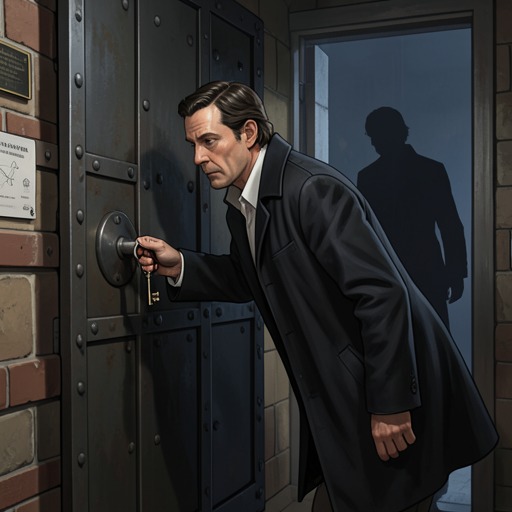
A smart britchka brings [Paul Ivanovitch Chichikov](entity:character-recall-character-paul-ivanovitch-chi-c6cb13bc1cea), a middle-ranking civil servant travelling on private business, to an inn in the provincial town of N. His unremarkable appearance and quiet arrival draw little notice, but his careful questions about officials, landowners, and local conditions hint at a purpose beyond ordinary travel.
Chichikov introduces himself to the town’s authorities with practiced modesty and flattery, quickly becoming a welcome guest at their parties. His talent for seeming informed, agreeable, and appropriately deferential earns him a reputation as a polished man of the world before anyone knows what he has come to do.
During Chichikov’s first weeks in N.
The Provincial Round
Chichikov attends dinners and card games with the town’s officials and landowners, adapting his conversation to every subject and flattering each person in turn. The officials conclude that he is educated, capable, and good-hearted, while the outwardly respectable social world reveals its dependence on ritual, mutual approval, and self-interest.
At a governor’s reception he meets [Manilov](entity:character-recall-character-manilov-c0291a2db278) and [Sobakevitch](entity:character-recall-character-sobakevitch-42583d01fc73), and promptly takes an interest in how many serfs each owns. His inquiries prepare the ground for a transaction that will turn the census system’s dead into an opportunity for profit.
After Chichikov’s first weeks in N.
The Journey to Manilovka
Chichikov sets out to visit [Manilov](entity:character-recall-character-manilov-c0291a2db278), ostensibly to honor his promise but in fact driven by his scheme. The distance proves much greater than the fifteen versts Manilov had claimed, and the neglected grounds of [Manilovka](entity:location-recall-location-5287c137144b) announce the gap between the landowner’s flattering dreams and the estate’s actual condition.
Manilov greets his guest with extravagant warmth and interminable courtesies. His house is full of unfinished projects, neglected rooms, and sentimental gestures, a domestic landscape that makes his genial emptiness visible before the business conversation begins.
During Chichikov’s visit to Manilovka
The Dead-Soul Proposal
After lunch, Chichikov asks how many peasants have died since the last revision of the census. He then proposes that [Manilov](entity:character-recall-character-manilov-c0291a2db278) transfer those dead serfs to him on paper, where the official lists still record them as alive. The arrangement would relieve Manilov of taxes on the dead while giving Chichikov names he can use in a larger financial plan.
Manilov is bewildered and worries briefly about the law, but Chichikov reassures him with legalistic language and claims that the Treasury will receive its proper fee. Too moved by the idea of serving a friend to ask for payment, Manilov agrees to give the souls away and promises to prepare their list.
On the road from Manilovka
Selifan Loses the Road
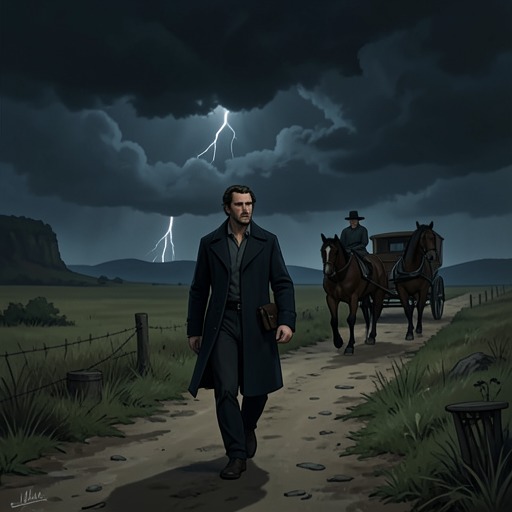
Leaving [Manilovka](entity:location-recall-location-5287c137144b), Chichikov travels toward [Sobakevitch](entity:character-recall-character-sobakevitch-42583d01fc73)’s estate while [Selifan](entity:character-recall-character-selifan-5fe362bf49c6) talks to the horses and drinks. A storm darkens the road; Selifan cannot remember which turnings he has passed, and the britchka eventually capsizes in the mud, leaving Chichikov and his coachman stranded in the rain.
Following barking dogs and a light in a window, they find shelter at the country house of a landowner they have not met. The accident redirects Chichikov’s journey and brings him to [Korobotchka](entity:character-recall-character-korobotchka-2ff5c5b5bdaa)’s door.
That night after the storm
A Night at Korobotchka’s
[Korobotchka](entity:character-recall-character-korobotchka-2ff5c5b5bdaa) receives the muddy traveller cautiously but hospitably, gives him a bed, and has his clothes dried. In the morning Chichikov sees the well-kept peasant huts and productive household around her estate, then learns that she is a widow with fewer than eighty registered souls.
When he asks about deaths since the last census, she recounts the loss of eighteen peasants and complains that she still pays taxes on them. Chichikov recognizes the precise opportunity he has been seeking and begins to negotiate.
The morning after Chichikov’s arrival
The Sale to Korobotchka
Chichikov explains that he wants to buy the dead peasants as names on the records, not to dig up bodies or acquire living workers. [Korobotchka](entity:character-recall-character-korobotchka-2ff5c5b5bdaa) fears that the strange transaction may cheat her, repeatedly considers waiting for a better offer, and tries to redirect the conversation toward hemp and other goods.
He finally persuades her with the promise of fifteen roubles per soul and the assurance that she will escape the continuing tax burden. She agrees, dictates the names from memory, and accepts a small advance; her reluctance and uncertainty show how easily a novel financial trick can unsettle someone who is cautious but not equipped to understand it.
Later that day
Nozdrev at the Tavern
At a roadside tavern, Chichikov encounters [Nozdrev](entity:character-recall-character-nozdrev-b66fad4bf6b0), a boisterous acquaintance who has lost heavily at a fair and boasts about his drinking, gambling, and bargains. Nozdrev presses Chichikov to visit his estate, and Chichikov accepts, hoping that the talkative landowner may prove useful to his scheme.
Nozdrev’s companion, his brother-in-law, tries to restrain his exaggerations, but Nozdrev’s energy and lack of boundaries dominate the encounter. The visit promises a new source of souls while also exposing Chichikov to a man whose indiscretion makes secrecy difficult.
That afternoon at Nozdrev’s estate
Nozdrev’s Estate Tour
[Nozdrev](entity:character-recall-character-nozdrev-b66fad4bf6b0) takes his guests through a ramshackle estate, boasting of expensive horses, enormous fish, excellent dogs, and lands that plainly do not belong to him. His brother-in-law repeatedly challenges these claims, while the property itself—empty stalls, neglected equipment, and extravagant stories—reveals Nozdrev’s appetite for invention.
A late, poorly prepared meal and a stream of dubious wines prolong the visit. Chichikov waits for a chance to speak privately about the dead souls, but the brother-in-law’s presence and Nozdrev’s restless behavior make the conversation increasingly precarious.
That evening at Nozdrev’s estate
The Bargain Breaks Down
Chichikov asks [Nozdrev](entity:character-recall-character-nozdrev-b66fad4bf6b0) to transfer his dead serfs, but Nozdrev refuses to discuss the matter without knowing why Chichikov wants them. Chichikov offers weak explanations, then invents a marriage motive; Nozdrev sees through the stories and calls him a liar.
Nozdrev tries to bundle the souls with a colt, horses, dogs, a barrel organ, or a card game. Chichikov rejects the bargains, and the discussion turns openly hostile. Nozdrev refuses to sell the souls and orders that [Chichikov’s horses](entity:creature-recall-creature-chichikov-s-horses-58b65de73384) receive only hay, leaving the visitor trapped overnight with his scheme both exposed and unfulfilled.
The next morning
The Chessboard Assault
[Nozdrev](entity:character-recall-character-nozdrev-b66fad4bf6b0) renews his effort to play Chichikov for the souls, this time proposing chess. During the game he moves pieces dishonestly, and when Chichikov protests, Nozdrev insists that the game must continue. The quarrel escalates until Nozdrev calls in his servants and raises a pipe to strike him.
A rural police superintendent arrives to arrest Nozdrev over an earlier assault on a landowner. Chichikov uses the distraction to escape to his britchka, shaken by how narrowly he avoided a beating and newly conscious that Nozdrev may spread the secret of his business.
Immediately after leaving Nozdrev’s estate
The Carriage Collision
As Chichikov flees, his britchka collides with a six-horse carriage carrying an elderly woman and a young girl. The drivers and village peasants struggle to untangle the teams, while the young woman’s beauty briefly interrupts Chichikov’s thoughts of business.
He wonders who she is and imagines the possibility of a substantial dowry, but his practical calculations quickly regain control. The girl is the governor’s daughter, though Chichikov does not yet know her identity; their meeting will later help fuel a town scandal.
Later that day
The Purchase from Sobakevitch
Chichikov reaches [Sobakevitch](entity:character-recall-character-sobakevitch-42583d01fc73)’s estate, whose sturdy, heavy construction reflects its master’s own imposing presence. Over lunch, Sobakevitch condemns nearly every town official, eats heavily, and describes dead peasants as if they were still valuable workers.
When Chichikov raises the sale, Sobakevitch immediately names an exorbitant price and praises the deceased men’s trades and skills. After hard bargaining, he accepts two and a half roubles per soul and writes a meticulous list of names and occupations. The sale gives Chichikov another substantial set of records, but Sobakevitch’s shrewdness makes clear that the buyer is not the only person pursuing advantage.
After leaving Sobakevitch’s estate
The Visit to Plyushkin
On the road, Chichikov asks a peasant how to reach the miser Plyushkin’s village. The peasant answers with a coarse insult that makes Chichikov laugh, but the village itself soon reveals the cost of Plyushkin’s neglect: ruined huts, broken roofs, and a neglected estate.
Chichikov first mistakes the ragged, bearded figure who meets him for a housekeeper, then learns that he is the landowner himself. Plyushkin’s threadbare appearance contrasts grotesquely with his immense stores of property and more than a thousand registered souls.
During Chichikov’s visit to Plyushkin
Plyushkin’s Dead and Runaways
Plyushkin says that disease has killed many peasants and confirms that he continues paying taxes on them. Delighted by the number, Chichikov offers to take over the tax obligation and pays the expenses of the transfer, winning Plyushkin’s gratitude without having to pay for the dead souls themselves.
Plyushkin supplies a list of 120 dead serfs and also offers 78 runaway peasants, for whom Chichikov pays a small sum. The bargain is unusually profitable and expands the scheme beyond dead souls to people still officially registered but absent from the estate.
The morning after returning to N.
The Lists Come Alive
Kikichov personally drafted the transfer documents and carefully examined the names collected from the sale of the dead serfs Korobochka, Sobakovich, and Plushkin. The list prompted him to imagine the transactions, habits, journeys, and deaths of each serf, giving the deceased
That morning at the local offices
The Registration of Souls
At the local office, Qiqichou and [Manilov](entity:character-recall-character-manilov-c0291a2db278) the landowner tried to deal with the obstruction of the clerks until the mayor of the local council, Ivan Grigoryevich, agreed to help with the registration. Sobakovich was already there, and the sellers unexpectedly gathered
In the days after registration
The Millionaire’s Reputation
The citizens of the city heard that Kabyukov had bought a large number of serfs, and mistakenly thought that the scale of this transaction proved he was a millionaire. Officials and landowners competed to persuade him to stay, while the women of the city of N suddenly found his future and appearance
At the governor’s ball
The Governor’s Daughter Again
At the ball, Kikichov was welcomed and regarded as a wealthy and prominent guest. When the governor's wife introduced her daughter, he recognized the young girl he had met during the car accident. For a moment, he was completely absorbed by her, neglecting the other ladies who had previously
Later during the governor’s ball
Nozdrev’s Public Revelation
Nоздёрев's acquaintance appeared at the ball drunk and loudly accused Chichikov of trafficking dead serfs. He boasted that Chichikov had once wanted to buy his dead soul, and told the governor and the present guests that these purchases together were worth a fortune. Nоздё
The night after the ball
Korobotchka Seeks a Price
Korobochka, who sells dead serfs, feels uneasy about this transaction, worried she sold them too cheaply, so she goes into the city to inquire about the market price of such souls. Her arrival brings the second confusing source of information to the city of N in the story
The following morning
The Abduction Rumor
Two ladies spread the news that Kabyukov intended to abduct the governor's daughter, and Nоздёлов's acquaintance was his accomplice. The supposed motive changed with each retelling, but as the story circulated among the city's drawing rooms, each version became more bizarre
After the rumors spread through N.
The Officials’ Panic
The officials discussed what the dead souls really meant, and their anxiety was further increased by the worry that the new governor-general, Prince, was about to arrive and possibly start a new investigation. Some suspected that Qiqikov was a special envoy investigating the deaths at the local hospital; others guessed he
During the officials’ investigation
The Napoleon Theory
The officials could not find a reliable account of Qiqichou's identity, so they proposed even more bizarre explanations, including the possibility that he was a disguised Napoleon. A close friend of Qiqichou, Nozdryev, was questioned; however, his answers were just a continuous fabrication
After Chichikov recovers
The Failed Farewell Calls
Kichikof exits the room, tries to visit the governor and other officials, but is turned away or only gets awkward silence. [Nozdrev](entity:character-recall-character-nozdrev-b66fad4bf6b0)'s acquaintance comes to visit and tells him directly that the whole city suspects him of forging documents, engaging in espionage, or planning to kidnap the governor
The morning Chichikov finally leaves N.
The Funeral Procession
Kikichov overslept. The horse needs shoes, and the light carriage also needs repairs, so the journey was delayed. Finally, after setting out, he met the funeral procession of the prosecutor, and bitterly remarked how the official notices of death turn a person's life into a few common
A flashback during the journey away from N.
Chichikov’s Early Formation
When kikichov was asleep in the light carriage, the narrator spoke of his childhood. His father taught him to obey superiors, not to make friends with the poor, but to associate with the rich, and to save every kopeck, because money would never abandon him. This teaching
After Chichikov leaves school
The First Civil-Service Maneuver
After his father's death, Kabukicho sold his poor estate and entered the civil service. He rose in rank by copying documents, flattery towards the chief clerk, and by pretending to pursue the other's daughter. After being promoted, he quietly left that household and abandoned the implied marriage. In
During Chichikov’s early career
The Building Commission Scheme
Kikichov joined a committee responsible for building government buildings. Official projects remained near the foundation for many years, while committee members used the public funds and opportunities brought by their positions to build beautiful private homes
Later in Chichikov’s career
The Customs Conspiracy
Kikichov entered the customs department, famous for his diligence in combating smuggling. After obtaining broad authority, he used his position to join a smuggling group, helping to hide goods in double layers of leather, crossing the border. This enterprise brought huge profits, until Kikichov had a dispute
After the customs scandal
The Dead-Soul Idea
Working as an attorney on a mortgage involving a ruined estate, Chichikov learns that peasants who have died may remain on the revision lists and continue to count for administrative purposes. He realizes that if he buys such names before the next revision, he may present them as living peasants and borrow against them.
He plans to claim that the people are being transferred to newly settled land in Kherson province, where land can be obtained cheaply. The scheme joins an obscure legal loophole to the tax system’s inertia, transforming the dead into fictional collateral and setting the novel’s central journey in motion.
At the end of Part I
The Departure from N.
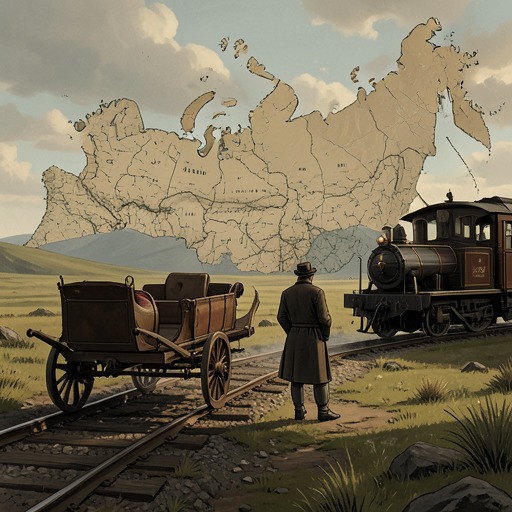
The narrative returns to the road as Chichikov urges his tired horses forward. The narrator reflects on the Russian troika’s speed and asks where [Russia](entity:location-recall-location-russia-8ee8be401081) itself is rushing, leaving the journey’s destination unresolved.
Chichikov continues toward new encounters with the lists of dead and absent peasants in his possession. The first part closes on motion and promise rather than a settled outcome, with the hero’s private appetite set against the vastness of the country he crosses.
At the opening of Part II
Tientietnikov’s Retreat
Part II opens with a remote and beautiful estate belonging to [Andrei Ivanovich Tientietnikov](entity:character-recall-character-andrei-ivanovich-ti-764442a0cafa), a young landowner who has withdrawn into idleness. He rises late, avoids his neglected household’s noise, and spends his days dreaming of a grand work about [Russia](entity:location-recall-location-russia-8ee8be401081) that he never manages to write.
The contrast between the breathtaking landscape and the disorder of the house makes his stagnation especially striking. His neighbors call him a fool or an impractical dreamer, but his history reveals a disappointed idealist rather than a simple idler.
During Tientietnikov’s school years
The Loss of Alexander Petrovitch
As a boy, Tientietnikov studies under Alexander Petrovitch, an unusually perceptive teacher who values intelligence, character, and resilience rather than outward obedience. His pupils learn to confess their faults and to face hardship without losing dignity, and Tientietnikov hopes to reach the teacher’s advanced class.
Alexander Petrovitch dies just as Tientietnikov reaches that class. His successor, Thedor Ivanovitch, replaces the former teacher’s humane method with rigid demands for discipline, and the school’s spirit decays. The loss leaves Tientietnikov without the guiding voice he later remembers as a call to move forward.
After Tientietnikov leaves school
The Failed Civil-Service Career
Tientietnikov goes to [Saint Petersburg](entity:location-recall-location-saint-petersburg-30abed414d45) expecting the civil service to offer meaningful work, but finds clerks copying trivial documents and hiding novels from their superiors. Influenced by outspoken friends and increasingly sensitive to injustice, he confronts Director [Lienitsin](entity:character-recall-character-lienitsin-cda57170b478) and leaves his post rather than apologize for what he regards as an insult.
He returns to his estate believing that direct stewardship of his peasants will be a more honorable public service. His decision is sincere, but the education that gave him ideals has not equipped him with practical knowledge of the people or land he hopes to manage.
After Tientietnikov returns home
The Failed Estate Reforms
Tientietnikov reduces forced labor, dismisses his bailiff, and takes personal control of the estate. He tries to improve work, aid the peasants, establish a school, and resolve disputes, but the peasants quickly recognize that he lacks practical experience and exploit his uncertainty.
His reforms produce disorder rather than the reciprocal trust he imagined. Frustrated by failed management and by a quarrel with General Betrishev over a familiar form of address, he withdraws from society and becomes more deeply inactive. His brief love for [Ulinka](entity:character-recall-character-ulinka-050e9b96524f) also ends without fulfillment, reinforcing his isolation.
Several years after Chichikov’s first journey
Chichikov at Tientietnikov’s
Chichikov arrives at [Tientietnikov’s estate](entity:location-recall-location-b74a64301224), presenting himself as a courteous traveler seeking knowledge and recovering from difficult roads. His tact and quiet accommodation soon make him a welcome guest in a household unused to visitors.
He explores the land, speaks with workers, and notices the estate’s inefficiency. He also learns from the servants that Tientietnikov once visited a nearby general and had become estranged from him, recognizing an opportunity to use his own social skill to open another door.
During Chichikov’s stay with Tientietnikov
The General’s Reconciliation
Chichikov persuades Tientietnikov to explain his quarrel with General Betrishev and offers to visit the general himself. He flatters Betrishev with respectful language, then claims that Tientietnikov regrets the earlier offense and is writing a history of the Russian generals of 1812.
The invented history delights Betrishev, who is especially pleased by the prospect of appearing in it. His daughter [Ulinka](entity:character-recall-character-ulinka-050e9b96524f) defends Tientietnikov against a former critic, and the meeting opens the way toward renewed contact between the estranged men. Chichikov’s mediation also gives him a plausible connection to the general’s circle.
During Chichikov’s visit to General Betrishev
A Failed Appeal to the Uncle
Chichikov invents an elderly uncle who will leave him a fortune if he can acquire three hundred souls. He asks Betrishev to give him dead serfs, claiming that the uncle will accept them as living property and transfer his estate in return.
Betrishev finds the story hilarious and promises to provide souls and even land, but the surviving manuscript breaks off shortly afterward. The episode marks the second part’s turn toward a new set of landowners and schemes, while leaving the consequences of the general’s offer unknown.
After the General Betrishev episode
The Wrong Estate
The surviving narrative resumes with Chichikov worrying that [Colonel Koshkarev](entity:character-recall-character-colonel-koshkarev-f67fe5e759f0) may be as strange as his previous host. [Selifan](entity:character-recall-character-selifan-5fe362bf49c6) and [Petrushka](entity:character-recall-character-petrushka-9509714a4ba3) have taken him instead to the estate of [Peter Petrovich Pietukh](entity:character-recall-character-peter-petrovich-pie-d308ee97100e), a genial and extravagant landowner who is busy fishing and preparing enormous meals.
Pietukh’s estate is mortgaged, and his sons are eager to leave the provinces for metropolitan life. Chichikov sees the danger in the family’s extravagance but accepts their hospitality, beginning another encounter in which a landowner’s character is revealed through his habits and household.
During Chichikov’s stay with Pietukh
Pietukh’s Feast
Pietukh overwhelms his guests with food and drink, insisting that they keep eating and turning hospitality into a comic display of excess. His cheerful, practical household contrasts with [Platon Mikhailovich](entity:character-recall-character-platon-mikhailovich-61612ef45d50), a wealthy neighbor who finds life persistently dull despite his healthy estate and abundant resources.
Chichikov proposes that Platon travel with him as a remedy for his melancholy. Platon accepts, and the two men set out together after Pietukh has delayed their departure for one more meal and a boating excursion.
The day after Pietukh’s feast
The Invitation to Kostanzhoglo
Platon takes Chichikov to visit his brother-in-law, [Konstantin Theodorovich Kostanzhoglo](entity:character-recall-character-konstantin-theodoro-716ef4f4ee0e), a remarkably successful landowner. The estate is prosperous without fashionable display: its crops, forests, workshops, and well-kept village show the results of practical knowledge and sustained labor.
Kostanzhoglo’s household and methods offer a sharp contrast with Tientietnikov’s failed idealism and Pietukh’s wasteful hospitality. Chichikov, impressed by the estate’s order and productivity, asks to learn how wealth can be built through sound management.
During Chichikov’s stay at Kostanzhoglo’s estate
Kostanzhoglo’s Counsel
Kostanzhoglo explains that a landowner must know the soil, work steadily, and make every resource productive. He describes the agricultural year as a continuous cycle of planning, sowing, harvesting, and caring for workers, arguing that labor can ennoble the soul because it makes the proprietor responsible for real prosperity.
His account captivates Chichikov, who begins imagining himself as a genuine estate owner. He hopes to mortgage the dead souls, buy a real property, and become rich through the methods he has heard described, though his attention remains fixed on the wealth those methods promise.
After Chichikov’s stay at Kostanzhoglo’s
The Purchase of Khlobuev’s Estate
With Kostanzhoglo’s help, Chichikov visits [Semen Semenovich Khlobuev](entity:character-recall-character-semen-semenovich-kh-65e7e7233b68), whose estate is deteriorating through debt, poor management, and neglect. Khlobuev admits that only half his registered peasants remain and that some have fled, while he himself lives in poverty amid reminders of fashionable tastes and unpaid obligations.
Chichikov bargains for the estate and agrees to buy it for thirty-five thousand roubles, arranging immediate payment through his own funds and a loan from Platon. The acquisition gives him real land and a chance to become the proprietor he has imagined, but it also commits him to a property that needs sustained work.
After the estate sale
Khlobuev’s New Commission
Khlobuev tells Chichikov and Platon of his wealthy aunt [Alexandra Ivanovna Khanasarova](entity:character-recall-character-alexandra-ivanovna-b61f20d9fbf0), whose legacy has partly gone toward his debts. Later, [Afanasy Vassilievich Murazov](entity:character-recall-character-afanasy-vassilievic-652a3254bd3f) confronts Khlobuev about his idleness and urges him to accept work rather than seek another easy rescue.
[Murazov](entity:character-recall-character-murazov-d9a2bb30ce37) arranges for Khlobuev to collect alms for a church, offering to care for his family and children while he travels. Khlobuev accepts the assignment as a spiritual trust, and the prospect of purposeful labor briefly restores his hope.
During Chichikov’s travels after buying the estate
The Secret Deal with Lienitsin
Kikichov visits Leningrad, persuades him to secretly transfer the dead souls and runaway peasants, and presents this transaction as a private agreement between respectable people with legal form. Leningrad is uneasy about this arrangement, but when his wife enters the room with an infant, Kikich
Later in Chichikov’s journey
The Fair and the New Suit
Bad roads and an upcoming fair delay Chichikov’s onward travel. At the fair he buys fashionable cloth for a new suit, carefully choosing a smoked-gray pattern shot with flame color. Khlobuev appears in the same shop, and [Murazov](entity:character-recall-character-murazov-d9a2bb30ce37) also arrives, but the two leave together before Chichikov can learn what they are discussing.
[Lienitsin](entity:character-recall-character-lienitsin-cda57170b478) then asks Chichikov to visit him. Chichikov’s attention is divided between his growing social ambitions, his financial arrangements, and the sense that some important event is gathering around him.
After the fair
The Inheritance Investigation
The inheritance of Khanasarova brings relatives and claimants into conflict, while rumors emerge about the validity of her will and the handling of her property. Officials uncover information about Chichikov’s dead-soul purchases and his earlier customs dealings, and his past begins to converge with the contested inheritance.
A confidential letter warns Chichikov that legal trouble may be approaching, though it offers no clear explanation. He dismisses the danger while admiring his new clothes, unaware that the authorities are preparing to arrest him over a fraudulent will and related schemes.
Soon after the inheritance inquiry begins
The Arrest
A gendarme arrives at Chichikov’s lodging and orders him to appear before the [Governor](entity:character-recall-character-a0b6f7fbc153)-General. Taken to the official’s study in his new suit, Chichikov learns that a woman who allegedly impersonated the deceased in a will has been arrested and will be confronted with him.
The Governor-General accuses him of repeated fraud and orders him confined until trial. Chichikov pleads for mercy, first invoking a mother and then admitting that his supposed family does not exist, but the official rejects his appeals and sends him to prison.
An hour after the arrest
Murazov’s Prison Visit
In prison, Chichikov despairs over the loss of his dispatch-box and the fortune it contains. [Murazov](entity:character-recall-character-murazov-d9a2bb30ce37) visits and urges him to look beyond property toward the condition of his soul, arguing that worldly wealth cannot provide lasting security.
Chichikov breaks down and admits that he has wanted a respectable family and a stable life but has become more devoted to acquisition than to goodness. Murazov encourages him to practice virtue deliberately, even if genuine love of doing good has not yet taken root. Chichikov promises to abandon his schemes and begin a sober life as a landowner if he can be released.
During Chichikov’s imprisonment
The Bribery Bargain
After [Murazov](entity:character-recall-character-murazov-d9a2bb30ce37) leaves, [Samosvitov](entity:character-recall-character-samosvitov-1915ffc3b6aa) visits Chichikov and offers to secure his release and recover his property for a bribe of thirty thousand roubles. Chichikov accepts, and Samosvitov soon returns the dispatch-box and its contents, having used his influence to remove compromising papers.
The rescue revives Chichikov’s hopes of wealth and pleasure. His prison repentance begins to fade as he imagines returning to the theater and fashionable life, showing how quickly moral resolve can yield when the old ambitions again appear attainable.
While Samosvitov’s plan is underway
The Prisoner Swap
[Samosvitov](entity:character-recall-character-samosvitov-1915ffc3b6aa) disguises himself as a gendarme, recruits a substitute woman, and arranges for her to be placed in the detained woman’s position. The original prisoner is secretly removed to a safer hiding place, while the guards believe that the woman in custody has not changed.
The maneuver is one part of a wider effort to obstruct the investigation. Samosvitov’s loyalty and audacity give Chichikov’s side a temporary advantage, but the operation deepens the conspiracy and increases the danger to everyone involved.
During the Governor-General’s investigation
The False Dossier
Chichikov’s lawyer and [Samosvitov](entity:character-recall-character-samosvitov-1915ffc3b6aa) spread contradictory reports designed to turn officials against one another. Each faction receives warnings that another is preparing evidence against it, and the resulting accusations multiply into a mass of gossip, fabricated allegations, and personal scandals.
The [Governor](entity:character-recall-character-a0b6f7fbc153)-General’s secretary struggles to make sense of the dossier, while the province faces separate emergencies: famine, unrest among the Old Believers, and peasant resistance stirred by rumors of social upheaval. The investigation becomes entangled in a crisis that is larger than Chichikov’s case.
During the Governor-General’s deliberations
Murazov’s Appeal
[Murazov](entity:character-recall-character-murazov-d9a2bb30ce37) meets the [Governor](entity:character-recall-character-a0b6f7fbc153)-General and urges him to distinguish between degrees of guilt, recalling the unequal cases of [Dierpiennikov](entity:character-recall-character-dierpiennikov-51cb21ea7589) and a more culpable accomplice. He argues that officials, like other people, commit wrongs through weakness and error, and that justice requires more than a rigid response to every scandal.
The Governor-General asks whether leniency would be mistaken for weakness. Murazov advises him to speak openly to the officials and appeal to their sense of equity and duty. He also offers to send grain to famine-stricken districts and to approach the Old Believers himself, believing that ordinary people may listen to a plain man more readily than to officials.
After Murazov’s appeal
Release and Expulsion
[Murazov](entity:character-recall-character-murazov-d9a2bb30ce37) returns to Chichikov with news that he will be freed, but only if he leaves town immediately. He warns that the bribery operation may be exposed and that [Samosvitov](entity:character-recall-character-samosvitov-1915ffc3b6aa) could implicate others rather than face punishment alone.
Chichikov takes the warning seriously enough to depart, though his attention soon returns to the familiar business of clothes and possessions. He arranges the same distinctive cloth for another suit and leaves the town diminished by the crisis, while the larger questions about his moral reform remain unresolved.
After Chichikov’s departure
The Governor-General’s Address
The [Governor](entity:character-recall-character-a0b6f7fbc153)-General gathers the officials and announces that the scandal has uncovered other serious abuses. He considers a military tribunal because ordinary civil procedures have been obstructed, documents destroyed, and fabricated reports used to confuse the case.
Rather than simply condemn everyone, he asks the officials to consider their own culpability and their duty to the country. He argues that corruption has become a shadow administration more powerful than the lawful system, and calls on those with a sense of nobility to resist it. The surviving manuscript ends abruptly before his appeal is complete, leaving the proposed reform and the fate of the officials unresolved.