
Denial and Self-Deception
Death of a SalesmanThe theme of denial as a survival mechanism for Willy and his family, and how it ultimately leads to tragedy.
increasing Bearing strength in each event
 decreasing
Bearing strength in each eventdecreasingWilly's Denial
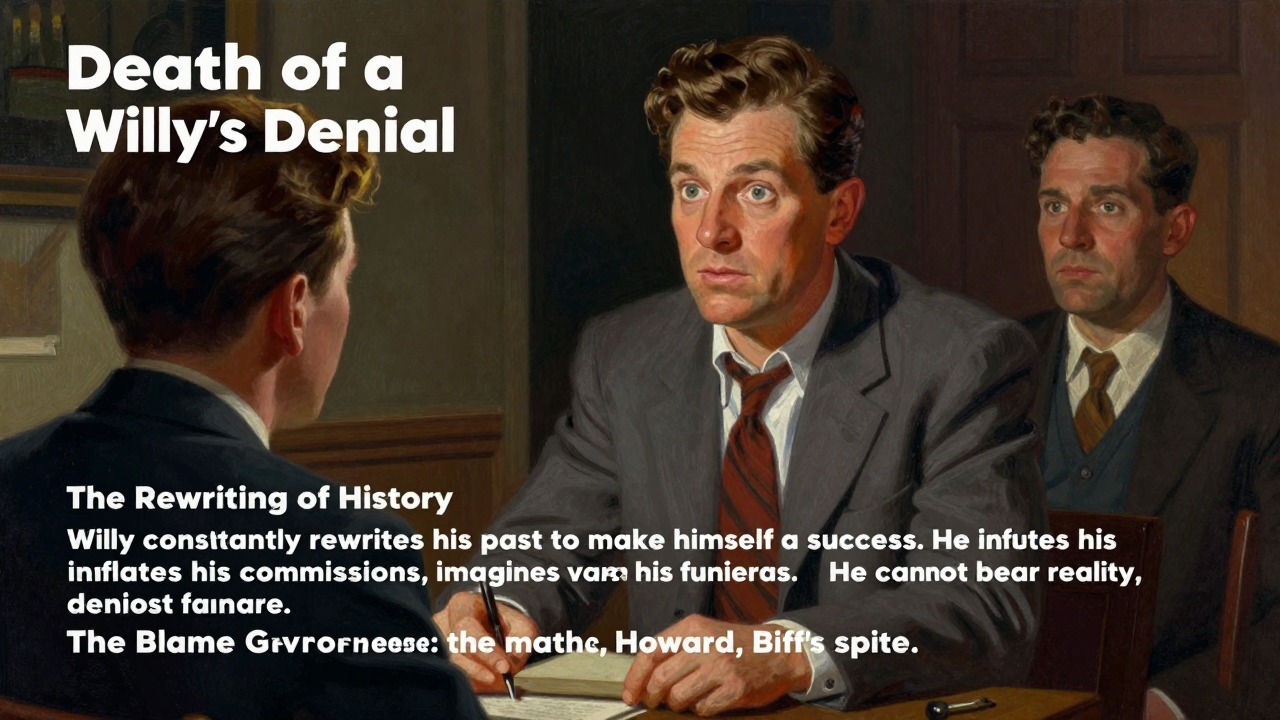
The Refusal to See
The Rewriting of History
Willy constantly rewrites his past to make himself a success. He inflates his commissions, imagines vast funerals, and denies his failures. He cannot bear reality.
The Blame Game
Willy blames everyone else: the math teacher, Howard, Biff's spite. He never takes responsibility for his own choices. Denial protects his fragile ego.
The Cost of Denial
Willy's denial drives him mad. He cannot distinguish between past and present, fantasy and reality. The play shows that denial is a temporary shelter that eventually collapses.
The Family's Denial
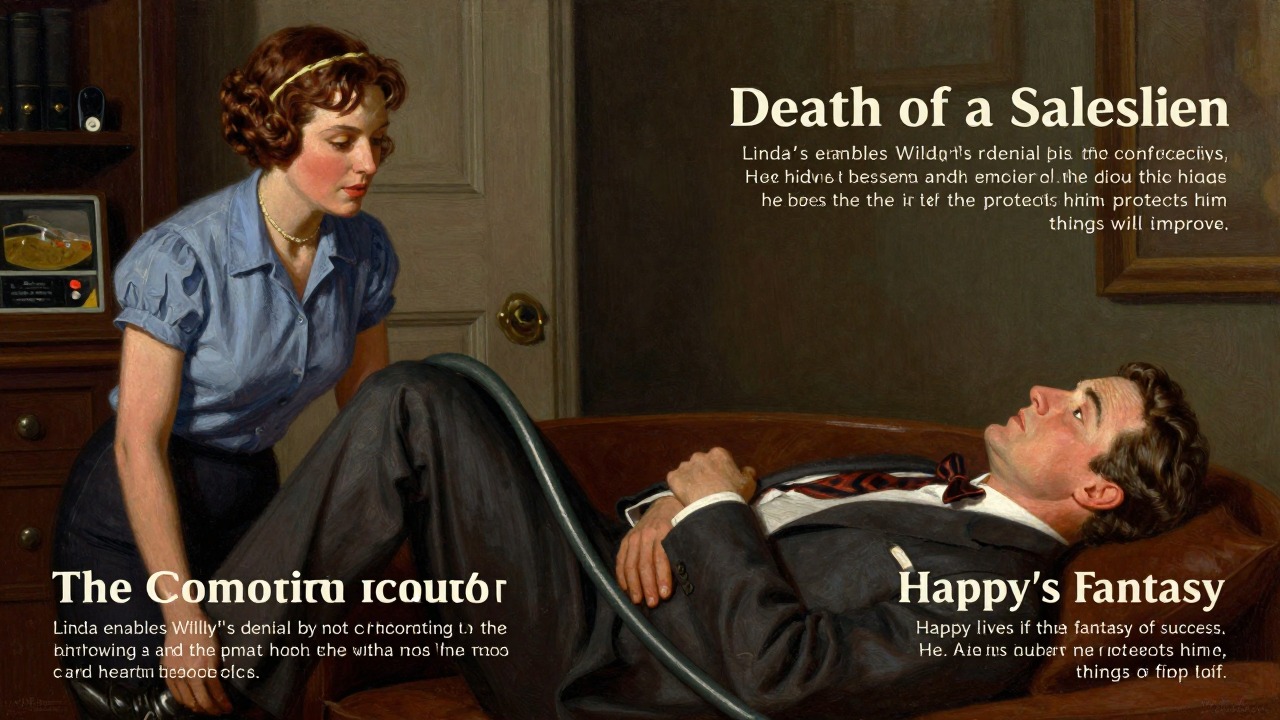
The Collective Illusion
Linda's Complicity
Linda enables Willy's denial by not confronting him. She hides the truth about his borrowing and the hose. She hopes that if she protects him, things will improve.
Happy's Fantasy
Happy lives in a fantasy of success. He lies about his job and his life. He refuses to see the emptiness of his pursuits.
The Unspoken Truth
The family avoids the truth about the Boston affair. They pretend it did not happen. The denial prevents healing and perpetuates the cycle of pain.
The Breaking of Denial
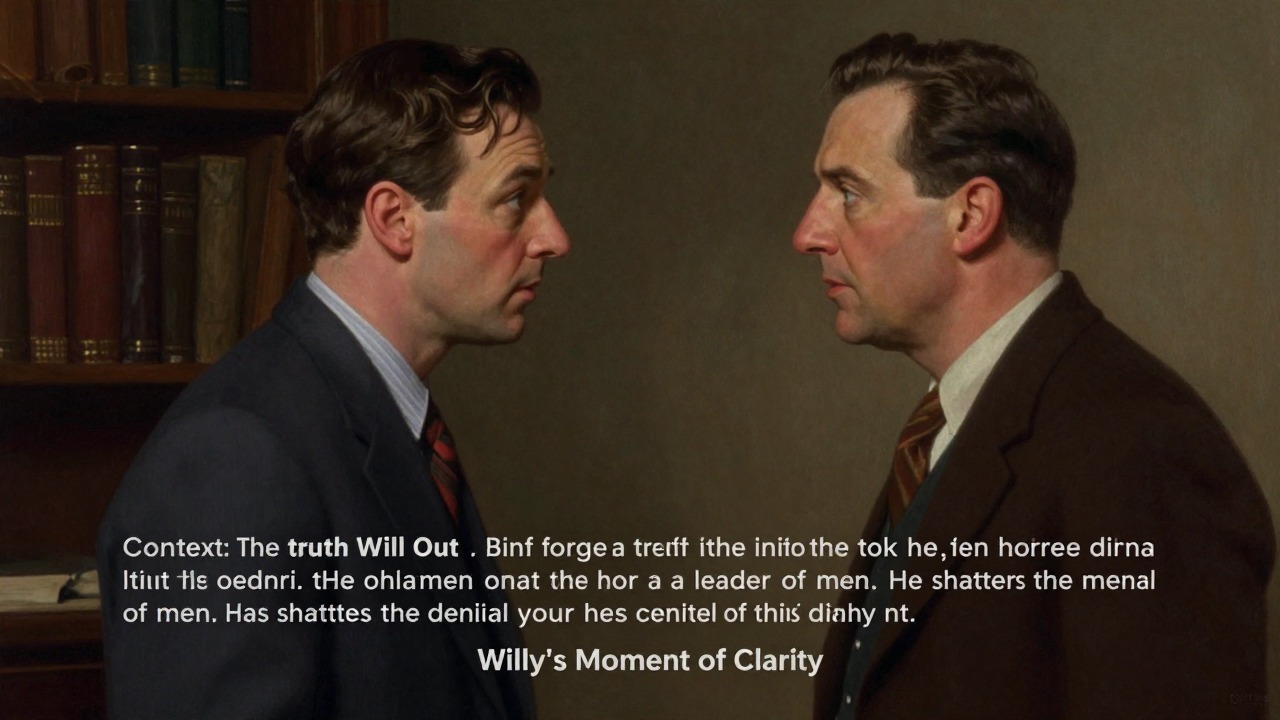
The Truth Will Out
Biff's Assault
Biff forces the truth into the open. He tells Willy that he is a dime a dozen, that he is not a leader of men. He shatters the denial.
Willy's Moment of Clarity
For a moment, Willy sees Biff's love. But he immediately reinterprets it to fit his denial. He decides that the suicide will make him a hero. Denial is not broken; it is transformed.
The Tragic End
Willy dies still believing in the illusion. The play suggests that denial can be so powerful that it can survive even the truth. The tragedy is that Willy never sees himself clearly.
Throughout the play
Throughout the play
Final confrontation
