Wagner Company
The Wagner Company is the New York-based firm for which Willy Loman has worked as a traveling salesman for thirty-four years, a tenure that spans the entire adult life of its current head, Howard Wagner. Founded by the late Frank Wagner, the company was built during an era when personal relationships between employer and salesman were paramount. Willy recalls that Frank Wagner was "a prince, he was a masterful man," and that when Willy first went north for the firm, "the Wagner Company didn't know where New England was!" This founding generation operated on handshake promises and personal loyalty, a world Willy believes has vanished under Howard's management.
The Shift from Personal Loyalty to Corporate Efficiency
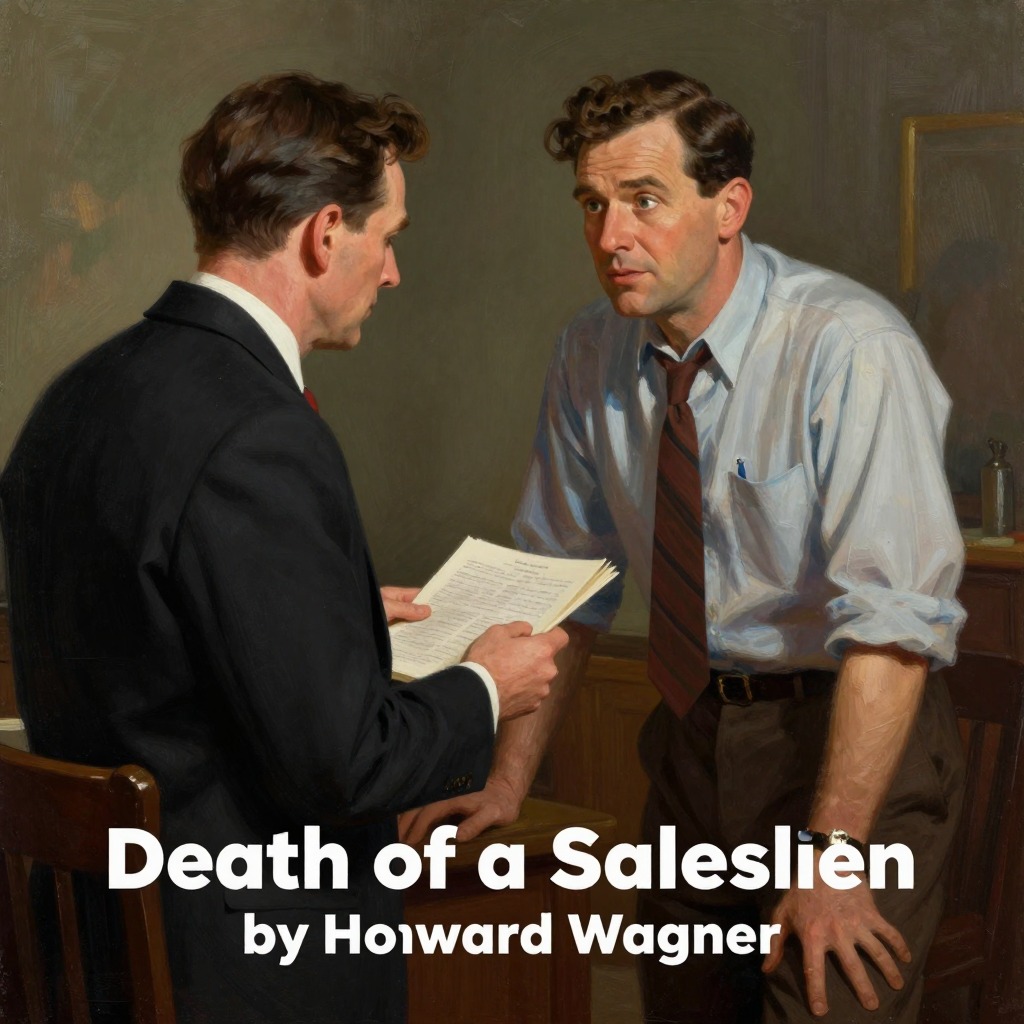
The transition from Frank Wagner to his son Howard marks a decisive change in the company's ethos. Howard, now thirty-six, is preoccupied with new technology—he proudly demonstrates a wire recorder to Willy, playing back his daughter's whistling and his son's recitation of state capitals. When Willy tries to discuss his job, Howard brushes him off, saying "business is business" and insisting that "everybody's gotta pull his own weight." The company no longer values the decades of service Willy gave; Howard tells him bluntly, "I don't want you to represent us. I've been meaning to tell you for a long time now." The firing is delivered not as a personal betrayal but as a cold business decision, with Howard advising Willy to "pull yourself together" and to ask his sons for help.
Willy's Thirty-Four Years of Service
Willy's long association with the Wagner Company is the foundation of his identity and his sense of worth. He reminds Howard that he was with the firm when Frank Wagner "used to carry you in here in his arms," and that Frank Wagner came to him on the day Howard was born to ask his opinion on the name "Howard." Willy believes these personal ties should guarantee his place, but the company no longer operates on such bonds. Linda reveals that Willy has worked for the company for thirty-six years this March, "opens up unheard-of territories to their trademark, and now in his old age they take his salary away." For five weeks before his firing, Willy has been on straight commission "like a beginner, an unknown," a humiliation that underscores the company's abandonment of its loyal employee.
The Company's Role in Willy's Collapse
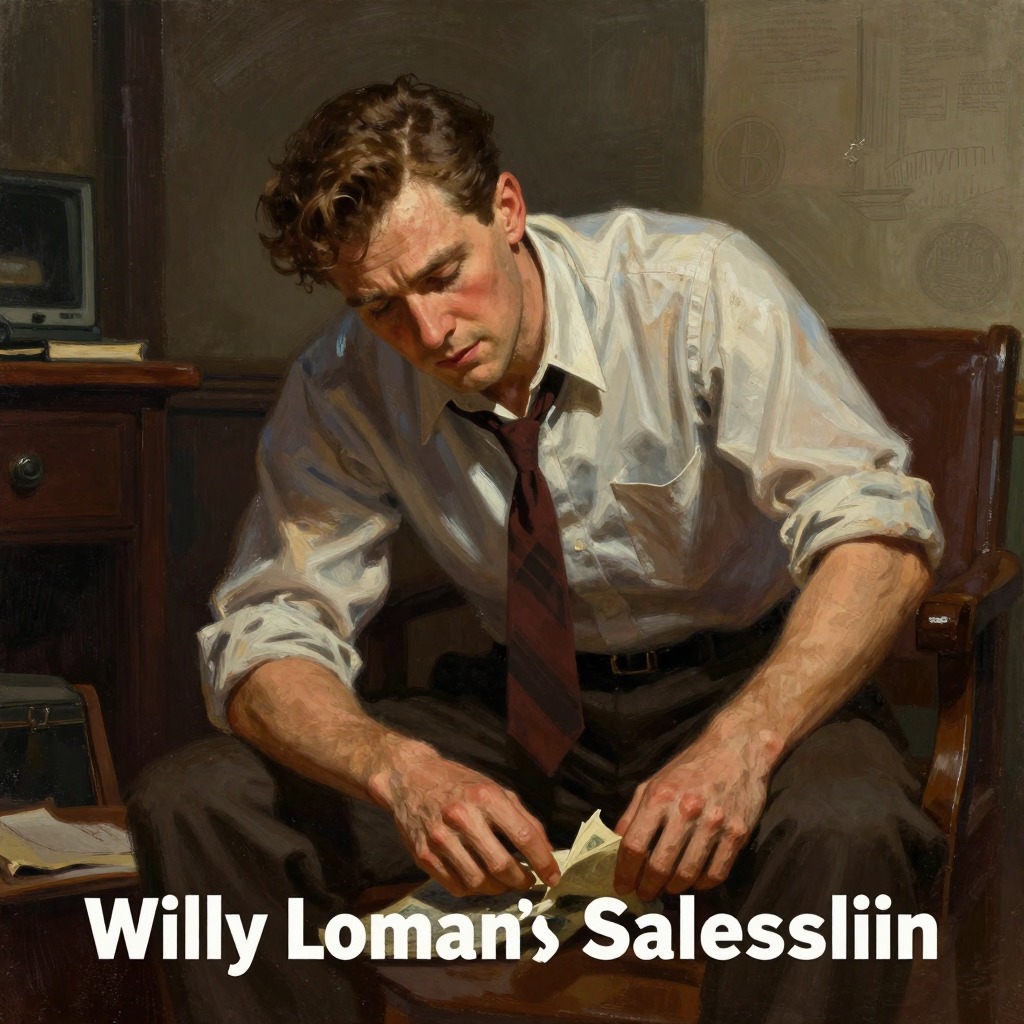
The Wagner Company's rejection is the immediate trigger for Willy's final psychological breakdown. After Howard fires him, Willy wanders into Charley's office, desperate and disoriented, and confesses, "I was just fired." The loss of his job—and the salary that sustained his family—removes the last material support for his dreams. Howard's dismissal also strips Willy of the narrative he has constructed about being "vital in New England" and "well liked" by buyers. The company's cold efficiency—its refusal to acknowledge his years of service, its replacement of personal loyalty with bottom-line thinking—mirrors the larger social forces that have made Willy obsolete. In the Requiem, Charley reflects that "for a salesman, there is no rock bottom to the life," and that when buyers stop smiling back, "that's an earthquake." The Wagner Company, by firing Willy, has set that earthquake in motion.
The Company as Symbol of a Changing America
The Wagner Company functions as a microcosm of the shift from a personal, relationship-based economy to an impersonal, corporate one. Frank Wagner represented an older America where a salesman could build a career on handshake deals and personal connections; Howard represents the new order, where technology, efficiency, and profit margins determine value. Willy's inability to adapt to this change—his insistence that "personality always wins the day" and that being "well liked" is the key to success—leaves him vulnerable to the company's indifference. The Wagner Company, by discarding Willy after thirty-four years, embodies the betrayal of the American Dream that the play critiques: the promise that hard work and loyalty will be rewarded, a promise the company no longer honors.