Parvati’s secret midnight visit to Devdas
DevdasParvati Chakravarty’s secret midnight visit to Devdas Mukherjee is the scene in which her private love becomes an urgent proposal and his indecision briefly turns toward action. She comes to him alone, asks to remain with him, and presses him to imagine defying his parents. Although he eventually offers to take her home, the encounter does not lead to their marriage; the gap between the intimacy of the night and its unresolved outcome marks the larger tragedy of their relationship.
Background and Stakes
Parvati and Devdas are childhood sweethearts, but marriage between them depends not only on their attachment: Devdas must also face the opposition of his parents. Parvati’s visit therefore makes a private relationship confront the social and familial obstacle that has kept it from becoming a marriage. The scene is not a casual meeting. By coming to Devdas at night, she puts her own reputation at risk and asks him to choose a shared future rather than leave her to face the consequences alone.
The novel’s wider account makes the encounter a pivotal moment in a sequence of reversals. Devdas cannot initially meet Parvati’s proposal with the resolve it requires; after rejecting her, he recognizes that he loves her and tries to reverse course, only to find that her marriage has been arranged elsewhere. The midnight visit thus belongs to the earlier point at which the possibility of a union is still being tested, before regret and delay make the separation harder to undo.
The Secret Visit
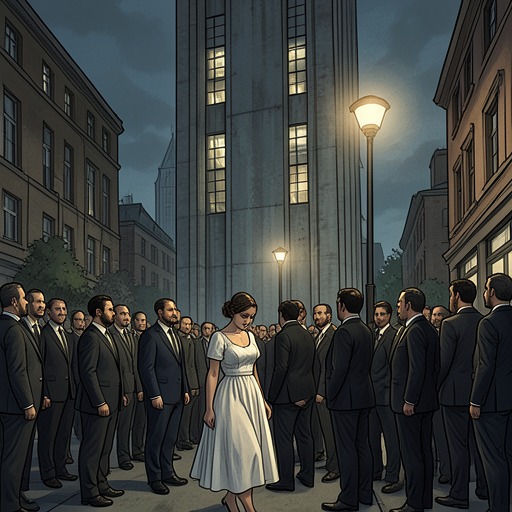
At about one o’clock in the morning, under faint moonlight, Parvati wraps herself in bedsheets and quietly descends the stairs. She checks that everyone is asleep, leaves the house, and crosses the empty village roads to the gate of the zamindar’s house. The secrecy of her approach is practical as well as emotional: the village is still, but she must pass the old guard, Krishan Singh, who is sitting at the threshold reading the Ramayan. When he asks who is there, Parvati identifies herself. The brief exchange brings her hidden errand to the edge of discovery before she reaches Devdas.
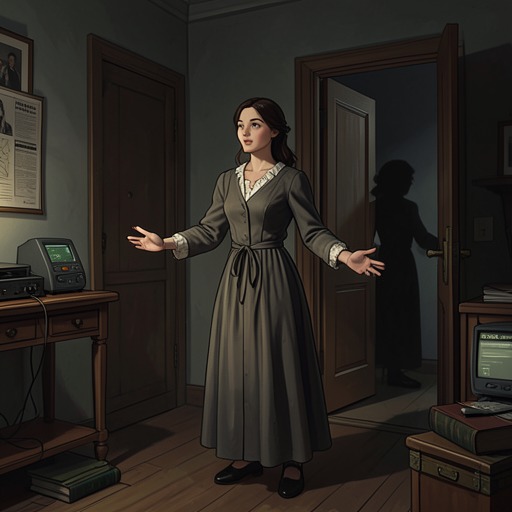
Inside, the proposal unfolds less as a formal declaration than as a plea for refuge. Devdas takes Parvati’s hands; she lays her head at his feet and asks to stay with him. They fall silent, and her tears mark the weight of what she has asked. Much later, Devdas asks whether he is her only salvation. Parvati does not answer with an explanation or argument: she returns her head to his feet, and her silence keeps the question of what he owes her unresolved.
The clock strikes two before Devdas resumes speaking. He asks why she has come and whether he should go against his parents; Parvati answers that he should. When he asks where she would live, she replies that she would live at his feet. Her response makes the stakes intimate and immediate: she is not negotiating for status or comfort, but asking him to choose her despite the consequences. It also leaves the responsibility with Devdas, whose decision she cannot make for him.
Devdas’s Offer and the Unresolved Outcome
The scene moves toward dawn without producing a settled commitment. At four o’clock, Devdas grips Parvati’s hands and offers to take her home. He explains that if someone sees them and a scandal follows, that might still create a way out for them. The offer is a reversal from hesitation toward possible action, but it remains conditional: it depends on exposure and on a scandal opening a path that neither has secured directly.
Parvati asks whether he will really come with her. Devdas says that he will take her home, giving the moment the shape of a possible joint departure. Yet the encounter cannot be treated as a completed elopement or a marriage. The broader course of the story confirms that Devdas fails to establish a life with Parvati: he rejects her, later recognizes his love, and returns too late to change the fact that her marriage has been arranged elsewhere. The scene’s promise therefore matters precisely because it is not fulfilled.
Narrative Significance
The visit reveals Parvati as the more decisive participant. She leaves home, crosses the village alone, and states what she wants; Devdas, by contrast, has to be brought to the question of whether he will oppose his parents. The balance between them is not simply a contrast between courage and fear, since Devdas does offer to act, but the scene makes clear that Parvati’s initiative supplies the pressure that moves the encounter forward.
The novel’s character-driven method gives that pressure force through gesture and dialogue rather than extended explanation. Parvati’s journey to the gate, her silence when Devdas asks whether he is her only salvation, and the clocks marking the passage from one to four in the morning carry the scene’s changing possibilities. The movement from a secret arrival to an offer to go home suggests a route out of their predicament, yet no stable decision follows. In the larger story, Parvati and another woman’s love sustain the narrative while Devdas repeatedly fails to convert feeling into a lasting choice. This night concentrates that pattern: a direct appeal briefly draws him toward action, but the possibility it opens does not overcome the forces that separate them.