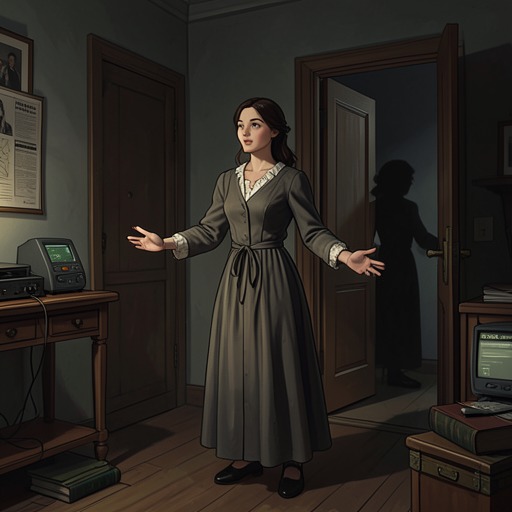
Devdas writes to reject Parvati
DevdasDevdas’s rejection letter to Parvati is the point at which family opposition becomes an explicit refusal, delivered in Devdas’s own words rather than left as an obstacle she must infer. He cites his parents’ wishes and Parvati’s lower social standing, and tells her that he cannot promise the love or grief she might expect. But the act of sending the letter unsettles him almost at once: what he has presented as a considered decision becomes, in his mind, a message that may wound Parvati and leave him responsible for her suffering.
Background and Separation
Devdas leaves for Calcutta on the same day his father declares that he will not participate in the matter and that Devdas and his mother may do as they please. His departure gives Parvati reason to hope that he might still act on their relationship. When Manorama asks what he intends to do about her, Parvati has no answer; she is caught between hope and fear, still imagining that Devdas might return and prevent her marriage to someone else.
A few days later, the letter arrives. Its timing matters: Parvati has not told anyone about the previous night, and she has no assurance that Devdas will follow it with a visit or another message. The letter therefore answers the question she cannot resolve for herself, but it does so by closing off the future she has been waiting for. It replaces the possibility of a return with a written account of why he will not oppose his family.
The Refusal in the Letter
Devdas frames his decision as a conflict between making Parvati happy and inflicting a wound on his parents that he feels unable to cause. He also treats going against their wishes as practically difficult. His explanation does not offer a plan for overcoming their opposition; instead, it presents their resistance as decisive and leaves Parvati to bear the consequences. The letter turns a private attachment into a choice governed by parental authority.
He makes the class barrier explicit. His mother will not seek an alliance with a trading family, and she considers a match between neighbours indecent; Devdas adds that Parvati’s family is not high-born. These details show that the rejection is not simply a matter of uncertain feeling between two young people. Family status and social propriety shape the decision, while Parvati’s birth is treated as a disadvantage for which she bears no responsibility.
The letter also acknowledges the previous night, when Parvati’s actions revealed the extremity of her hope. Devdas says that he understands what it must have taken for a proud person like her to act so drastically, and that the memory causes him pain. Yet his admission stops short of a declaration of love: he says he cannot feel deep sorrow for her, and describes his distress instead as regret that she will suffer on his account. He asks her to forget him and wishes her success in doing so. The appeal is both a rejection and an attempt to define what she should do next, though the letter offers no means of making that separation painless.
After the Letter Is Sent
Devdas’s feelings shift after he drops the letter into the post box. Before posting it, he is in one frame of mind; once it has left his hands, he feels something different. The narrative figures the dispatched letter as an arrow already released: he watches it go with consternation and begins to fear the harm it may cause. The image makes the written refusal an irreversible action. He can no longer qualify it before it reaches Parvati.
On his way back from the post office, Devdas thinks of Parvati placing her head at his feet and weeping the previous night. He wonders whether he has acted rightly and whether the letter will hurt her so much that she will not survive the blow. His fear shifts the scene’s emphasis from the reasons he gave for refusing to the consequences he may have set in motion. The letter has achieved its immediate purpose, but the sender is no longer secure in the judgment it expresses.
Conscience and Narrative Significance
Devdas’s reconsideration brings the social argument inside the act of rejection. With the understanding of life he has gained during his stay in Calcutta, he has come to believe that destroying an individual’s life to preserve status is wrong, especially when that status rests on narrow-minded ideas. He asks himself why his parents object to Parvati when her birth is not her fault. His thoughts expose the contradiction between the letter’s submission to family authority and his own judgment that the authority is unjust.
That contradiction does not undo the refusal. Devdas has already sent the message, and his concern that Parvati might harm herself is a fear, not a reported outcome. The episode instead leaves him facing the distance between feeling responsible for her suffering and taking action to prevent it. The letter gives Parvati a definite answer where she had waited in uncertainty; its aftermath shows that decisiveness has not given Devdas peace. His words reject the marriage, while his immediate remorse reveals the moral cost of allowing rank and family opposition to decide another person’s future.