Eveline’s aborted escape
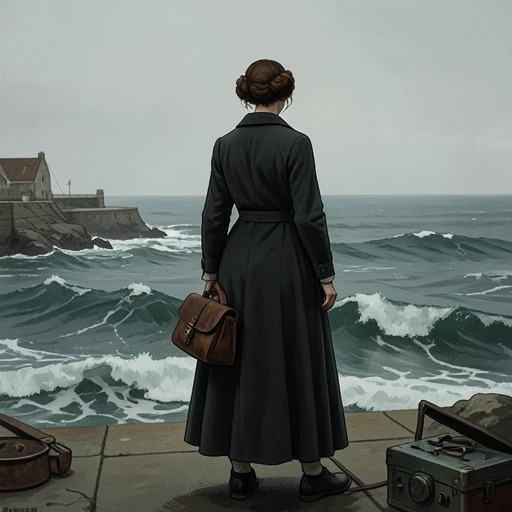
DublinersEveline’s aborted escape is the decisive reversal at the North Wall: she reaches the station with Frank and a booked passage to Buenos Aires, but does not board the boat. The possibility she has imagined as rescue becomes, in the moment of departure, an overwhelming threat; she clings to the railing and leaves Frank to call for her from beyond the barrier. The scene makes the cost of escape visible without explaining it away: Eveline remains, while the future she had considered with him moves out of reach.
Causes and Stakes
The immediate force behind Eveline’s decision is a sudden impulse to flee. As her mother’s life returns to her mind as a vision of commonplace sacrifices ending in final craziness, Eveline trembles at the memory of her mother’s repeated words, “Derevaun Seraun! Derevaun Seraun!” The recollection does not settle what the words mean; it intensifies the terror surrounding the choice before her.
Escape briefly appears to offer a clear alternative. Eveline thinks that Frank will save her, give her a life, and perhaps give her love. She tells herself that she wants to live and has a right to happiness. In that imagined future, his arms promise protection and a life beyond the one she fears repeating. The conviction is urgent, but it has not yet become a decision she can carry through.
At the North Wall
At the station, Eveline stands in a swaying crowd while Frank holds her hand and speaks repeatedly about the passage. Soldiers with brown baggage fill the station; through the shed doors she sees the black boat beside the quay wall, its portholes illuminated. The passage has been booked, and if she goes, the next day she will be at sea with Frank, steaming towards Buenos Aires. The concrete arrangements make departure imminent, not hypothetical.
Yet Eveline answers nothing. Her cheek feels pale and cold, and distress becomes physical nausea. She prays silently for God to direct her and show her what her duty is. The boat’s long, mournful whistle sounds through the mist as she confronts the fact that she could still draw back, despite all Frank has done for her. Her lips continue to move in fervent prayer, but no answer or resolve is spoken aloud.
Refusal and Separation
When Frank seizes her hand and urges her to come, Eveline experiences the sea as a force that would drown her. She grips the iron railing with both hands. His call is repeated, but the repetition cannot move her; she cries out in anguish and insists inwardly on refusal. The scene turns on a sharp division between Frank’s forward motion and Eveline’s physical hold on the barrier.
Frank rushes beyond the barrier and calls to her to follow. Someone shouts at him to go on, but he continues calling. Eveline faces him with a white, passive expression, compared to that of a helpless animal. Her eyes offer no sign of love, farewell, or recognition. The ending gives no explanation from Eveline and no reconciliation between them: Frank is still calling, but she remains motionless and unreadable as the departure separates them.
Significance
The scene reverses the promise established in Eveline’s imagined escape. Frank had seemed capable of rescuing her into a life of happiness; at the decisive threshold, however, departure feels like drowning, and the prospect of travel overwhelms the hope that had drawn her to the station. The booked passage, the waiting boat, and Frank’s repeated calls all register how close escape comes before it fails.
The ending is made legible through bodily gestures rather than explanation. Eveline’s cold cheek, nausea, silent prayer, clenched hands, and fixed gaze show the conflict as something she undergoes physically, while her silence withholds a clear account of why she stops. Her mother’s remembered life makes the threatened repetition of sacrifice part of the scene’s pressure, but the text does not state that Eveline consciously chooses her mother’s fate. Instead, the contrast remains unresolved: she has asserted a right to happiness, yet at the moment that happiness requires movement, she cannot follow Frank.