Campaign to elect Richard Tierney
DublinersThe campaign to elect Richard Tierney is presented as a street-level contest in which political principles, civic respectability, economic arguments, and the need for campaign money overlap. Its canvassers promote Tierney as a Nationalist and an able representative, yet their accounts of his positions and their methods of persuasion leave his political reliability in question. The campaign’s small transactions and conversations expose a wider tension between public ideals and political opportunity.
Background and Stakes
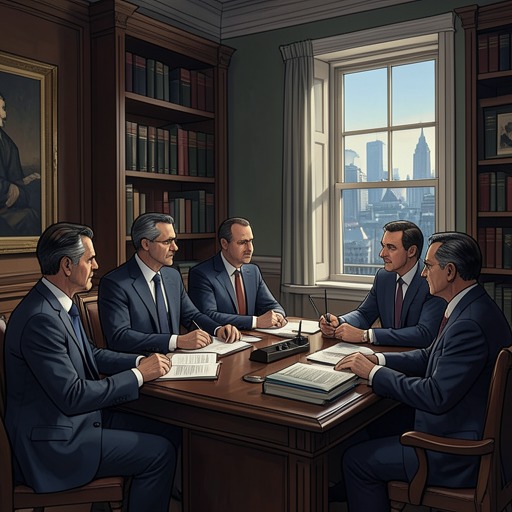
The campaign is conducted on Tierney’s behalf by a group of men who discuss canvassing, prospective voters, and the candidate’s political commitments. Joe Hynes contrasts a working-man candidate, who would represent labour, with a rival he describes as seeking a job. He objects to political favouritism and to the possibility of welcoming King Edward, whom he characterizes as a foreign king. In Hynes’s account, the election is not merely about securing a seat: it is also a test of whether civic representation serves workers or the interests of well-connected figures.
Mr O’Connor supports the principle of working-class representation but says Tierney will not vote for an address of welcome to the King and is running on the Nationalist ticket. Hynes doubts that assurance. He says he knows Tierney and challenges the claim that the candidate will refuse the address, prompting O’Connor to admit that Hynes may be right. The exchange makes the campaign’s central uncertainty explicit: the men invoke political identity as a reason for support, but they are unsure whether the candidate will act consistently with it.
Canvassing and Voter Persuasion
The work of the campaign depends on individual conversations with electors. When asked how Grimes stands, a canvasser reports that Grimes would not say how he intended to vote, though the canvasser thinks he may still be won over. The account records neither a firm commitment nor a confirmed result; it shows the campaign operating through cautious interpretation of an elector’s refusal to declare himself.
Mr Henchy describes canvassing as practical persuasion rather than a simple appeal to party loyalty. He reports securing votes from Parkes, Atkinson, and Ward of Dawson Street, an older Conservative whom he portrays as a substantial property owner and respected local figure. Henchy says he presented Tierney as respectable, beneficial to the country, a major ratepayer, a property owner with extensive city holdings and three businesses, and a Poor Law Guardian who did not belong to any party. The pitch reframes a Nationalist candidate in terms that might appeal to a Conservative: local standing and an interest in keeping rates down become arguments for support.
Henchy also argues that welcoming the King could bring an influx of money to Ireland and benefit Dublin’s citizens. Pointing to idle factories near the quays, mills, and shipbuilding yards, he makes the case that the country needs capital and renewed industry. This economic appeal sits uneasily beside Hynes’s objection to political deference toward the monarch. Within the same campaign, the address to the King can thus be treated as a threat to national dignity or as a possible means of attracting investment.
Campaign Work and Its Contradictions
Henchy claims to have had a good day’s work and says that he and Mr Crofton secured one or two sure votes in Dawson Street. His assessment distinguishes between the roles of the two canvassers: Crofton, though Henchy calls him decent, is not an effective speaker, while Henchy himself does the talking. The campaign’s progress is therefore attributed not just to party affiliation but to the canvasser’s ability to tailor an argument to an elector.
The men’s accounts present vote-winning as both a public duty and a practical operation. Tierney is described at different moments as the representative of labour, a Nationalist, and a respectable civic figure whose property interests supposedly align with lower rates. These descriptions are not reconciled into a single clear account of his politics. Instead, the campaign’s supporters move among them as they seek votes, while Hynes’s skepticism keeps the question of Tierney’s actual conduct alive.
The men also depend on Tierney’s material support. O’Connor wishes that the candidate would appear with the money, making the campaign’s financial need plain. Political work here involves both the labour of canvassing and an expectation that the candidate will provide funds; the prospective votes Henchy reports do not remove that dependence.
Significance
The campaign offers a compact portrait of local electoral politics as a negotiation between principle and expediency. Arguments about labour representation and national allegiance coexist with appeals to property, rates, investment, and personal respectability. The canvassers’ shifting pitches show how political identity is translated into language suited to particular voters, while Hynes’s doubts prevent those appeals from becoming settled facts about Tierney’s intentions.
Because the episode reports claims rather than a final election result, its emphasis falls on the campaign process: uncertain promises, persuasive talk, reported votes, and the missing candidate’s expected funds. Its political comedy and criticism arise from that gap between declared ideals and tactical practice, not from any confirmed account of how Tierney ultimately votes or whether he wins.