Waldshut
FatherlandWaldshut is the planned destination of an escape route from Berlin and a rendezvous point on the Rhine. Its importance lies not in an account of the town itself, but in the role it is assigned: a place distant enough to reach in stages, yet close to the border crossing that will determine whether the journey can continue.
Route and Rendezvous
The route to Waldshut is measured in carefully apportioned distances. From Berlin to Nuremberg is 500 kilometers by autobahn; Nuremberg to Stuttgart adds 150, and the road from Stuttgart winds through the valleys and forests of Württemberg for another 150 kilometers to Waldshut. The total is 800 kilometers. The distance is also translated into miles for the woman making the drive, who estimates that she can manage it in about twelve hours.
The plan allows more time than that estimate requires. She has twenty-four hours, and, once she believes she has put a safe distance between herself and Berlin, she is to telephone the Hotel Bellevue in Waldshut and reserve a room. The hotel is expected to be quiet because it is out of season. Waldshut thus serves as a designated meeting point rather than merely a destination: she is to arrive first, while March follows a couple of hours behind and aims to join her around midnight.
The Crossing and Its Risks
The plan gives the town a precise place in the onward journey. From the Bellevue, she is to turn right and follow the valley road; the bridge is described as impossible to miss. But reaching it is not enough. Before committing herself, she must assess the security measures. If everything appears to be searched, she is to turn back, hide the package somewhere memorable—a wood, ditch, or barn—and leave, so that it can be retrieved later.
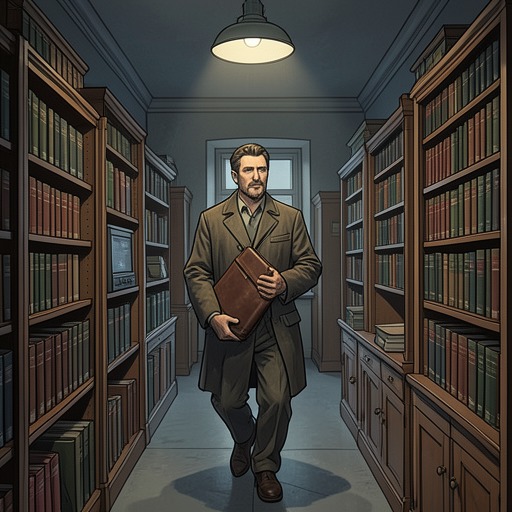
The instructions reflect the danger carried into Waldshut. The package is handled at arm’s length and concealed in the center of her suitcase beneath her clothes. As the hotel wakes around them, March carries it down the stairs and out through a narrow rear fire exit; she leaves in a dark blue suit with her hair hidden by a scarf. These details make the town-bound journey part of a coordinated escape, one in which discretion and the possibility of abandoning the evidence are built into the route.
Identity at the Checkpoint
When questioned about her journey, the woman says that she lives with her parents in Berlin and is traveling to Waldshut to meet her fiancé, Paul Hahn. The explanation gives her trip an ordinary personal purpose, concealing the larger operation behind the journey. Waldshut is therefore both a genuine meeting place and a cover story that can be stated plainly if she is stopped.
Its narrative function rests on this double use. The route, hotel reservation, bridge, and contingency plan make the town a logistical hinge between flight from Berlin and the uncertain crossing ahead. Waldshut concentrates the plan’s fragile hope: the travelers may reunite there, but the package and their escape remain vulnerable to whatever security they encounter on the way.