April 14, 1964, before dawn
The Alternate Reich
A brief historical frame establishes the world [March](entity:character-recall-character-march-259e894a2b19) inhabits: [Germany](entity:location-recall-location-a3c24dd56e42) won the Second World War, built an empire across Europe and the East, and still fights a costly guerrilla war beyond the Urals. The Führer’s promise that Germany can endure perpetual conflict hangs over a society whose prosperity rests on conquest and coercion.
The novel opens with a pledge of absolute obedience to Hitler, setting the terms of a state that treats loyalty as both creed and law. Against that backdrop, a routine police call is about to expose buried crimes the regime has spent decades teaching its citizens not to see.
Tuesday, April 14, 1964, shortly after 7 a.m.
A Body in the Havel
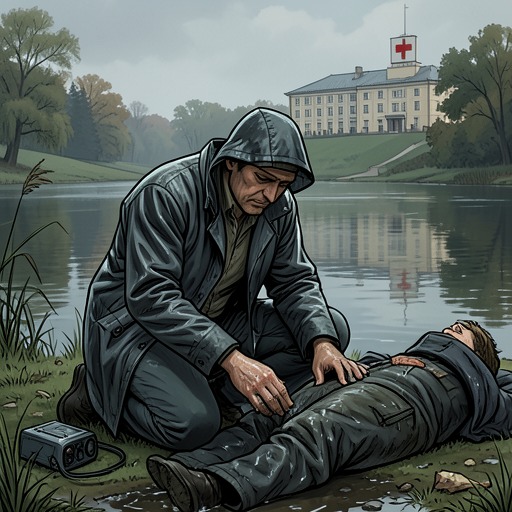
In cold rain at the [Havel](entity:location-recall-location-5ee703a979de), [Xavier March](entity:character-recall-character-xavier-march-cd2b1fac3c55) examines the naked, very fat body of an elderly man found half in the water. The corpse has one missing foot, but [August Eisler](entity:character-recall-character-august-eisler-feec0f4bb143) judges the amputation old and the death a drowning, probably about twelve hours earlier.
[Hermann Jost](entity:character-recall-character-hermann-jost-d7d48a10a671), a young cadet from the [Sepp Dietrich SS Academy](entity:location-recall-location-sepp-dietrich-d2bb92973844), says he discovered the body while running and saw no one. [March](entity:character-recall-character-march-259e894a2b19) notices that [Jost](entity:character-recall-character-jost-2c4496c22325) avoids looking at the corpse, a small sign that the scene may be more complicated than the young man’s statement suggests.
Tuesday, April 14, 1964, morning
The Cadet’s Missing Time
[March](entity:character-recall-character-march-259e894a2b19) drives [Jost](entity:character-recall-character-jost-2c4496c22325) to [Kripo](entity:organization-recall-organization-30fecba8cea6) headquarters and takes his statement. The cadet explains that he joined the SS under his father’s wishes, dreams of returning to university to study literature, and hopes to avoid the eastern front by teaching instead.
March spots a gap in Jost’s timeline: the distance and pace of his run leave roughly twenty minutes unaccounted for. He presses the boy about the truth, then recognizes that Jost may be concealing a same-sex encounter because homosexuality is punished as an “anticommunity” offense. Jost denies seeing anything else and leaves, still frightened.
Tuesday, April 14, 1964, late morning
The Pheasant Run
[March](entity:character-recall-character-march-259e894a2b19) requests the [Berlin](entity:location-recall-location-berlin-54cb4a75d0f6)-area missing-person list and realizes the body was found near Schwanenwerder, an island of powerful Party leaders’ villas. The location makes a corpse an embarrassing security problem, not merely a [Kripo](entity:organization-recall-organization-30fecba8cea6) case.
With [Max Jaeger](entity:character-recall-character-max-jaeger-ab100ccbc495), March narrows the list by age and the missing foot, but no likely match appears. The old man has not been reported missing, and the two investigators are left with a nameless corpse and a case whose proximity to the ruling elite feels ominous.
Tuesday, April 14, 1964, afternoon
A Son at the Monument
[March](entity:character-recall-character-march-259e894a2b19) spends his day off with his ten-year-old son, Paul “[Pili](entity:character-recall-character-pili-ce4059c1977d)” March. The boy wants the familiar tourist bus, and the pair ride past the enormous monuments of the capital: the Arch of Triumph, the Avenue of Victory, and the [Great Hall](entity:location-recall-location-a876f599d51e).
The excursion exposes the gap between March’s private doubts and the spectacle his son has been taught to admire. At the Führer’s palace, Pili clutches his new Pimpf dagger and asks whether they will see Hitler; March sees how readily the regime’s pageantry has captured the boy’s imagination.
Tuesday, April 14, 1964, early evening
The Asocial Accusation
On the drive home, [Pili](entity:character-recall-character-pili-ce4059c1977d) repeats Erich Helfferich’s accusation that [March](entity:character-recall-character-march-259e894a2b19) is an asocial: he does not salute properly, jokes about the Party, and has a file at Party headquarters. The boy fears his father will be arrested and says he hates him.
[Klara](entity:character-recall-character-klara-358f2c19e83d) blocks March from following Pili inside, with Helfferich behind her and a uniformed dog bounding out of the house. Driving away, March recognizes the dog as the only creature there not wearing a uniform. His strained relationship with his son now has a political threat at its center.
Tuesday, April 14, 1964, evening to midnight
Fingerprints Identify Buhler
[March](entity:character-recall-character-march-259e894a2b19) visits the morgue, takes the dead man’s fingerprints, and persuades Otto Koth to run them urgently. At home he reflects on the vanished Jewish family whose photograph he found behind his wallpaper, a mystery that has sharpened his unease about the state’s silences.
Koth calls after midnight: the prints identify [Josef Buhler](entity:character-recall-character-josef-buhler-46e2fdd9dce8), arrested only once, on [November 9, 1923](entity:time-recall-time-1923-11-9-fef667e2380b), with Hitler after the [Beer Hall Putsch](entity:event-recall-event-c5c33b7ae93e). The nameless drowned man is an old Party pioneer. March immediately phones [Jaeger](entity:character-recall-character-jaeger-afcaaedbe900), the duty office, and his former U-boat friend [Rudolf Halder](entity:character-recall-character-rudolf-halder-410b5bc53b35) for help.
Wednesday, April 15, 1964, before 7 a.m.
A Pioneer’s History
[March](entity:character-recall-character-march-259e894a2b19) meets [Rudolf Halder](entity:character-recall-character-rudolf-halder-410b5bc53b35) at a hotel breakfast and learns that Buhler served as state secretary in the [General Government](entity:organization-recall-organization-general-governme-87e71fcb0402). Halder explains the forced Germanization of occupied Polish lands, the displacement of Poles and Jews, and Buhler’s likely role in a vast system of resettlement and extraction.
Buhler’s sister has been located, and [Jaeger](entity:character-recall-character-jaeger-afcaaedbe900) reports that she is being brought to the morgue for identification. March also learns that Buhler owned a house on Schwanenwerder and that [Sipo](entity:organization-recall-organization-0ead4f0326dd) men recently asked Halder about March’s wartime conduct and political views. The investigation is already attracting attention from above.
Wednesday, April 15, 1964, morning
The Sister’s Identification
Elisabeth Trinkl identifies the corpse as her brother [Josef Buhler](entity:character-recall-character-josef-buhler-46e2fdd9dce8). She says they had little contact, that he wrote only formal birthday greetings, and that he lived in comfort after Edith’s death without offering her help.
She explains that Buhler lost his foot in a partisan ambush in 1951, retired from government, and later spent his days in isolation. Though he was a health fanatic and a strong swimmer, his sister cannot explain why a man who avoided alcohol would have vodka in his house. His lonely private life does not account for the circumstances of his death.
Wednesday, April 15, 1964, late morning
The Autopsy and the Old Crime
Eisler conducts the autopsy while [March](entity:character-recall-character-march-259e894a2b19) and [Jaeger](entity:character-recall-character-jaeger-afcaaedbe900) watch. He confirms drowning and finds no clear blows that would prove assault, but cannot yet rule out a seizure or heart attack.
March remembers that Eisler once used Nazi freezing experiments at Dachau to support testimony that helped send an innocent man to the gallows. The memory reinforces March’s distrust of official expertise and of a system that can turn compromised evidence into an instrument of death.
Wednesday, April 15, 1964, midday
The Villa and the Call
At Schwanenwerder, [March](entity:character-recall-character-march-259e894a2b19) learns that no visitors came to Buhler’s house on the day he died, though the lakeshore and private jetty offer a way in by boat. He sees a convoy carrying [Joseph Goebbels](entity:character-recall-character-joseph-goebbels-e38487c8d7d7) and notices the island’s elaborate security.
March then enters Buhler’s neglected villa before the [Gestapo](entity:organization-recall-organization-gestapo-7b5b599b4734) can take over. An old man phones the study, asks for Buhler, and hangs up when March answers. Searching the desk, March finds Buhler’s 1964 party diary and a package in the mailbox, clues he removes before Gestapo officers arrive.
Wednesday, April 15, 1964, afternoon
Jost Names Globus
[March](entity:character-recall-character-march-259e894a2b19) returns to the SS Academy and gets [Jost](entity:character-recall-character-jost-2c4496c22325) to reconstruct his run. The cadet finally admits that he saw three men coming up from the lake in the rain and recognized [Odilo Globocnik](entity:character-recall-character-odilo-globocnik-b21c0b002bae) among them.
The testimony turns a vague suspicion into a direct link between the [Gestapo](entity:organization-recall-organization-gestapo-7b5b599b4734) general and Buhler’s body. March has also taken a parcel from Buhler’s mailbox, but he has no time to examine it before the investigation grows more dangerous.
Wednesday, April 15, 1964, afternoon
The Führer’s Favorite Tune
[March](entity:character-recall-character-march-259e894a2b19) opens the parcel in the [Grunewald Forest](entity:location-recall-location-24d60c595ae5). It contains a music box of chocolates that plays the waltz duet from The Merry Widow, Hitler’s favorite operetta. The Swiss postmark dates it to the day before Buhler died.
March realizes the gift is unlikely to be a simple present. Its precise wrapping, lack of a message, and carefully chosen tune make it seem like a signal, though he cannot yet determine what was being communicated or by whom.
Wednesday, April 15, 1964, 4:30 p.m.
Kennedy’s Berlin Visit
At a compulsory staff gathering, the Foreign Ministry announces that the [United States](entity:location-recall-location-5d55e9152db1) has accepted an invitation for [President Kennedy](entity:character-recall-character-president-kennedy-5cc44b09634f) to meet Hitler in [Berlin](entity:location-recall-location-berlin-54cb4a75d0f6) in September. The announcement is presented as a triumph for peace and understanding.
[March](entity:character-recall-character-march-259e894a2b19) sees the political stakes behind the celebration. A summit would make scandal especially dangerous for the regime, and the public’s collective singing of the anthem contrasts with March’s silent lips. The case of a dead Party official now sits beside an effort to reshape relations with America.
Wednesday, April 15, 1964, evening
Stuckart’s Double Death
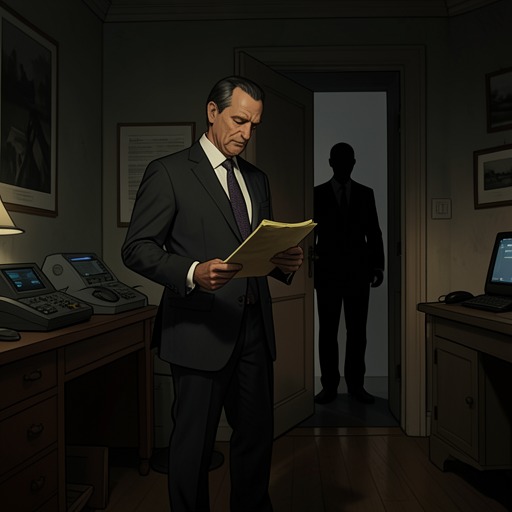
[Jaeger](entity:character-recall-character-jaeger-afcaaedbe900) gives [March](entity:character-recall-character-march-259e894a2b19) the file on [Wilhelm Stuckart](entity:character-recall-character-wilhelm-stuckart-bb12833af96e), who supposedly died by suicide after killing his mistress Maria Dymarski. The case contains compromising photographs, an alleged suicide note, and a witness: American journalist [Charlotte Maguire](entity:character-recall-character-charlotte-maguire-9e643ee8b6de), who saw two men leaving Stuckart’s building.
March learns that Stuckart’s history of sexual coercion and racial-law enforcement was long protected by his rank. He secretly takes the envelope of evidence and calls [Martin Luther](entity:character-recall-character-martin-luther-64da159252da)’s home, only to learn that Luther has disappeared. Globocnik answers the telephone at the other end, confirming that March’s inquiries are already being watched.
Wednesday, April 15, 1964, night
The Witness at Heini’s
[March](entity:character-recall-character-march-259e894a2b19) finds [Charlotte Maguire](entity:character-recall-character-charlotte-maguire-9e643ee8b6de) drinking with American correspondents and an embassy secretary. Her visa has been withdrawn after she became entangled in Stuckart’s case, but she agrees to go with March to the apartment where the bodies were found.
The encounter begins with suspicion on both sides. Maguire resents the authorities’ treatment of her, while March needs her account and fears that the [Gestapo](entity:organization-recall-organization-gestapo-7b5b599b4734) is closing in. Her confidence and refusal to be intimidated make her more than a passive witness.
Wednesday, April 15, 1964, late night
The Hidden Escape Route
At Stuckart’s apartment, Maguire recounts seeing two men flee down the stairs after passing her. [March](entity:character-recall-character-march-259e894a2b19) discovers that they could have escaped through an unscrewed air vent connecting the basement shelter to the alley, suggesting the building’s apparent suicide case may have been staged.
In the bedroom, a second music box plays the same tune as Buhler’s parcel. The matching gifts link the deaths, and a concealed safe behind a mirror becomes the next target. March and Maguire search for its location while their uneasy partnership hardens into necessity.
Thursday, April 16, 1964, shortly after midnight
The Safe Is Opened
[March](entity:character-recall-character-march-259e894a2b19) brings [Max Jaeger](entity:character-recall-character-max-jaeger-ab100ccbc495) and safecracker Willi Stiefel to Stuckart’s apartment. Stiefel opens the concealed safe using Stuckart’s birth date as the combination. The contents include property deeds and substantial investments, but the crucial item is a Swiss bank authorization letter and key.
A [Gestapo](entity:organization-recall-organization-gestapo-7b5b599b4734) raid interrupts the search. March, [Jaeger](entity:character-recall-character-jaeger-afcaaedbe900), Maguire, and Stiefel flee through the bomb-shelter air shaft as armed men enter the apartment. Maguire carries the authorization envelope away, while March and Jaeger remain to evade the raid. Their trespass has turned into an open confrontation with the secret police.
Thursday, April 16, 1964, early morning
Detained at Gestapo Headquarters
[Gestapo](entity:organization-recall-organization-gestapo-7b5b599b4734) officer [Karl Krebs](entity:character-recall-character-karl-krebs-8ff72077d0f6) arrests [March](entity:character-recall-character-march-259e894a2b19) and [Jaeger](entity:character-recall-character-jaeger-afcaaedbe900) and takes them to [Gestapo headquarters](entity:location-recall-location-d453f2168b92). Their treatment is formally polite, but armed guards and the interview room make the threat unmistakable.
After a night of waiting, Krebs brings them to Buhler’s villa, where Gestapo officers have uncovered a hidden chamber filled with looted European art. The case has been officially recast as an art-fraud investigation, and the [Kripo](entity:organization-recall-organization-30fecba8cea6) is told that March’s unauthorized searches interfered with state-security work.
Thursday, April 16, 1964, morning
The Art-Fraud Explanation
Globus and Krebs explain that Buhler stole artworks from occupied [Poland](entity:location-recall-location-8e143713a3f3), Stuckart handled them in [Berlin](entity:location-recall-location-berlin-54cb4a75d0f6), and Luther smuggled some abroad. The collection includes major paintings and the Veit Stoss altarpiece, confirming a decades-long criminal enterprise.
The explanation accounts for the men’s wealth and provides an official motive for the investigation, but [March](entity:character-recall-character-march-259e894a2b19) doubts that it explains their deaths. Nebe appoints March as [Kripo](entity:organization-recall-organization-30fecba8cea6) liaison while Globus insists Luther is the key, leaving March under the close supervision of the very men he suspects.
Thursday, April 16, 1964, morning
Nebe’s Warning
In private, [Artur Nebe](entity:character-recall-character-artur-nebe-88bdd6945863) shows [March](entity:character-recall-character-march-259e894a2b19) a [Gestapo](entity:organization-recall-organization-gestapo-7b5b599b4734) dossier documenting years of political suspicion: March’s refusal to join Party organizations, his jokes about the regime, his questions about Jews who once lived in his apartment, and complaints from [Klara](entity:character-recall-character-klara-358f2c19e83d) and [Pili](entity:character-recall-character-pili-ce4059c1977d).
Nebe reveals that Globus wanted March sent to an SS prison, but Heydrich gave him until [Führertag](entity:time-recall-time-f-hrertag-b30562fd5486) to prove his case. Nebe warns that Globus has a history of torture and murder and tells March to find Luther before the Gestapo does. March learns that [Jost](entity:character-recall-character-jost-2c4496c22325) has already been taken east for “special training.”
Thursday, April 16, 1964, daytime
Luther’s Missing Trail
[March](entity:character-recall-character-march-259e894a2b19) reaches Luther’s house in Dahlem and speaks with his anxious wife, Marthe. She says Luther planned a business trip to Munich, had previously been frightened by intruders, and once hired security guards before dismissing them.
Her account places Globus at the house before Luther was even reported missing. March infers that the old officials’ meeting at Buhler’s villa and Luther’s journey to [Zürich](entity:location-recall-location-36d13535e481) are connected, but he is now being followed and has no clear way to reach the American journalist safely.
Thursday, April 16, 1964, evening
Charlie Saves March
[March](entity:character-recall-character-march-259e894a2b19) finds Maguire’s apartment ransacked and is attacked by a [Gestapo](entity:organization-recall-organization-gestapo-7b5b599b4734)-trained man lying in wait. Maguire returns unexpectedly and drives him off with a chair, saving his life.
The envelope from Stuckart’s safe is intact. Inside are a Swiss bank authorization letter dated 1942 and a key to account 2402. Maguire has independently researched the Swiss system of anonymous wartime deposit boxes, giving March a concrete lead and transforming their reluctant cooperation into a more trusting partnership.
Saturday, April 11, 1964, retrospectively revealed on Thursday, April 16
The Defection Call
Maguire tells [March](entity:character-recall-character-march-259e894a2b19) that Stuckart called her late on Saturday from a public telephone booth. He said his line was tapped, claimed he needed to contact American authorities, and promised to make her the most famous reporter in the world if she helped him.
Stuckart’s fear and his insistence on dealing directly with Maguire’s father, a former American diplomat, reveal a planned defection rather than a journalistic interview. The call gives March a possible motive for the killings: the old officials may have possessed information powerful enough to make them targets.
Thursday, April 16, 1964, night
The Zürich Account
[March](entity:character-recall-character-march-259e894a2b19) and Maguire go to [Zürich](entity:location-recall-location-36d13535e481) under a short exit visa arranged by Nebe. At [Zaugg & Cie.](entity:organization-recall-organization-zaugg-cie-82b100b3741f), [Hermann Zaugg](entity:character-recall-character-hermann-zaugg-c5a8ae52ffd1) confirms that account 2402 was opened by [Martin Luther](entity:character-recall-character-martin-luther-64da159252da) in 1942 with four keys and that the box was accessed four times, most recently on April 13, 1964.
The box contains a small, damaged wooden panel wrapped in an oilcloth: a Renaissance portrait of a woman holding a white-furred animal. March and Maguire photograph it and leave it in the vault. The box’s recent opening confirms that Luther returned to Zürich, but the painting seems too small a clue to explain the murders or his flight.
Friday, April 17, 1964, on the flight back to Berlin
The Search for Paper
[March](entity:character-recall-character-march-259e894a2b19) realizes that Luther probably visited the Swiss box not to retrieve art or money but to recover documents. He reconstructs a sequence: Buhler, Stuckart, and Luther met shortly before Stuckart approached Maguire, and Luther returned from [Zürich](entity:location-recall-location-36d13535e481) carrying something hidden.
Maguire’s presence gives March a partner who can interpret the political consequences of the evidence, while his own instincts direct him toward government archives. The international summit makes the timing urgent: any proof could disrupt the planned meeting between Hitler and Kennedy.
Friday, April 17, 1964, early afternoon
March Returns to Berlin
Back in [Berlin](entity:location-recall-location-berlin-54cb4a75d0f6), [March](entity:character-recall-character-march-259e894a2b19) submits a deliberately false report to Nebe, claiming the Zurich box was empty. He has learned the portrait’s identity, but chooses not to place it in Nebe’s hands, preserving the artwork from another powerful official’s collection.
He asks Halder to help search the records of the Interior Ministry and Foreign Ministry. The question has shifted from art theft to the identity of the missing documents and the reason the men who shared the account are being killed.
Friday, April 17, 1964, evening
The Wannsee File Removed
Halder locates the Interior Ministry’s catalog and finds that the minutes of a [January 20, 1942](entity:time-recall-time-1942-1-20-fc2e58276a44) interagency meeting were removed by Heydrich on April 6, 1964. The date is close to the recent deaths and the gathering of the old officials.
A friend in [Krakau](entity:location-recall-location-d7d3402420b5) confirms that Globus personally visited the [General Government](entity:organization-recall-organization-general-governme-87e71fcb0402) archives and removed another file. Halder and [March](entity:character-recall-character-march-259e894a2b19) then find Heydrich’s original invitation to the meeting, revealing that it concerned the “[Final Solution](entity:expression-recall-expression-final-solution-31463664847f)” and was initially scheduled for December 1941.
Friday, April 17, 1964, late evening
The Fourteen Witnesses
The invitation and related documents identify the meeting’s participants, including Buhler, Stuckart, and Luther. [March](entity:character-recall-character-march-259e894a2b19) checks the other names against police records and obituaries: thirteen of the fourteen are dead, while Luther is missing.
The pattern reveals a systematic purge rather than a string of unrelated deaths. The state’s public accounts disguise murders as accidents, natural deaths, and suicides, while the one surviving witness is being hunted. March understands that his investigation concerns the suppression of a historical crime, not merely the deaths of corrupt officials.
Friday, April 17, 1964, late night
A Body in the Rail Yard
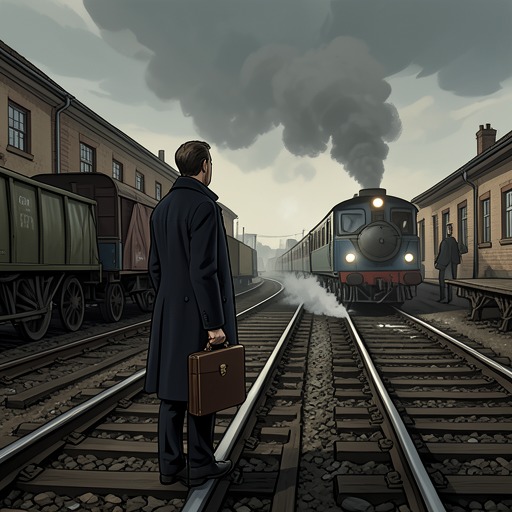
A body found beneath a train in the [Gotenland](entity:location-recall-location-327b7cf80af7) rail yard is identified by the [Gestapo](entity:organization-recall-organization-gestapo-7b5b599b4734) as [Martin Luther](entity:character-recall-character-martin-luther-64da159252da). The mutilated remains appear to settle the manhunt, and Globus mocks [March](entity:character-recall-character-march-259e894a2b19) while presenting a passport and wallet as proof.
March notices homeless figures slipping between freight cars, but he has no evidence that the corpse is not Luther. The apparent end of the search will soon prove false, while the discovery gives Globus an opportunity to declare the case closed.
Saturday, April 18, 1964, shortly after midnight
The Recorded Call
[March](entity:character-recall-character-march-259e894a2b19) reaches Maguire’s apartment and finds [Henry Nightingale](entity:character-recall-character-henry-nightingale-8c03466caa8d) there. She plays a recording of a new call from Luther, made after the rail-yard body was discovered. Luther asks for asylum and sets a meeting for nine o’clock at the central steps of the [Great Hall](entity:location-recall-location-a876f599d51e).
The recording proves that Luther is alive and that the body was a substitute. March infers that the old man has been hiding among the rail-yard drifters and used the confusion of the corpse’s discovery to contact his only apparent route to the Americans.
Saturday, April 18, 1964, before dawn
America’s Political Calculation
Nightingale warns that Washington may refuse to take Luther because his testimony could wreck the planned summit and Kennedy’s political prospects. He fears that accepting an accused Nazi fugitive could undo the diplomatic opening in a single day.
[March](entity:character-recall-character-march-259e894a2b19) argues that Luther anticipated this response and demanded a journalist as a witness. Maguire’s story and recording would make a secret refusal difficult to contain. The three agree that Nightingale will meet Luther and consider taking him to the embassy, though the Americans remain divided over the risk.
Saturday, April 18, 1964, before dawn
The Portrait’s Identity
Maguire shows [March](entity:character-recall-character-march-259e894a2b19) a book identifying the Zurich panel as Leonardo’s Lady with an Ermine, a long-missing painting taken from a Polish collection. The discovery confirms that the box contained stolen art, but it does not explain the wave of deaths.
The portrait supplies Maguire with a major story and confirms that the old officials’ criminal partnership was real. Yet March’s attention stays on the documents Luther may have carried back to [Berlin](entity:location-recall-location-berlin-54cb4a75d0f6), because those papers could reveal why the men feared exposure more than the ordinary consequences of corruption.
Saturday, April 18, 1964, morning
The Train-Station Trap
At the [Great Hall](entity:location-recall-location-a876f599d51e), [March](entity:character-recall-character-march-259e894a2b19) waits in civilian clothes while Maguire meets Nightingale. An Orpo traffic officer challenges March’s parked car, and his improvised explanation that it is part of a [Sipo](entity:organization-recall-organization-0ead4f0326dd) surveillance operation buys only a few minutes.
Luther emerges from the Hall and approaches the Americans. Before he can reach them, a high-velocity rifle shot kills him on the steps. March drives Maguire and Nightingale away as police and [Gestapo](entity:organization-recall-organization-gestapo-7b5b599b4734) officers converge, certain that their meeting was betrayed.
Saturday, April 18, 1964, shortly after 9 a.m.
The Embassy Leak
In an underground parking lot, [March](entity:character-recall-character-march-259e894a2b19) accuses Nightingale of leaking Luther’s meeting. The diplomat denies it and insists he told nobody, while Maguire argues that the accusation is baseless and the group must keep moving.
March considers other possibilities: a tapped phone, a bugged room, or surveillance of Luther. The shooting’s timing suggests someone knew precisely when he would appear, and the suspicion between the three threatens to undo the only cooperation they have left.
Saturday, April 18, 1964, late morning
The False Identification
[March](entity:character-recall-character-march-259e894a2b19) takes Maguire back to the [Havel](entity:location-recall-location-5ee703a979de) and the [Wannsee](entity:location-recall-location-e01dbb6c6983) villa, where the conference of 1942 took place. Their visit frames the evidence against a present-day landscape that has been repurposed and made ordinary.
He sees how the regime’s propaganda has converted the site of a mass-murder planning meeting into a girls’ school. The past has not disappeared from the buildings, but the state has made a new generation practice reverence there instead of asking what happened.
Saturday, April 18, 1964, midday
Luther’s Clothes
[March](entity:character-recall-character-march-259e894a2b19) checks the morgue and discovers that the body shot at the [Great Hall](entity:location-recall-location-a876f599d51e) is cataloged as Alfred Stark, while the rail-yard corpse is still officially treated as Luther. He searches Stark’s filthy clothes for a luggage claim ticket or another clue to what Luther brought from [Zürich](entity:location-recall-location-36d13535e481).
The search turns up nothing, but Maguire suggests Luther could not have carried a painting through the airport’s intensive checks. March accepts that the missing object may have been stored as lost property rather than smuggled in his luggage, and rushes to the airport to search for it.
Saturday, April 18, 1964, early afternoon
The Doctor’s Case
At the airport, [March](entity:character-recall-character-march-259e894a2b19) persuades his old colleague Friedman to search the lost-property store for luggage left on Luther’s [Zürich](entity:location-recall-location-36d13535e481) flight. A mute Slav worker finds a prewar doctor’s case, and Friedman hands it over as a favor.
The case has been abandoned rather than claimed, and its weight suggests it contains something important. March and Maguire leave the airport with it, narrowly avoiding a [Gestapo](entity:organization-recall-organization-gestapo-7b5b599b4734) alert that reaches Friedman only after the handover.
Saturday, April 18, 1964, afternoon
The Papers Inside
[March](entity:character-recall-character-march-259e894a2b19) and Maguire open [Luther’s doctor’s case](entity:object-recall-object-luther-1693680c9c50) in a borrowed hotel room. Instead of money or paintings, it is packed with documents: affidavits, correspondence, camp records, railway schedules, and evidence of deportations and killings.
The contents transform their investigation. The men’s hidden account was not simply a cache of stolen wealth; it held a documentary record that could expose the state’s most monstrous operation and the leaders who authorized it. The papers are dangerous enough to make their possession a death sentence.
Saturday, April 18, 1964, afternoon
The Final Solution Records
Among the case’s evidence are Stuckart’s sworn account of Heydrich’s private admission that Hitler ordered the destruction of European Jewry, the forged or sanitized conference minutes, and records of the camps’ capacity. The papers connect policy, logistics, and personal responsibility.
A railway timetable charts regular transports to killing centers, while a list of camp locations and construction orders fixes the crimes to dates and places. [March](entity:character-recall-character-march-259e894a2b19) recognizes that the documentary detail gives substance to what propaganda has dismissed as rumor, though the regime will fight to keep the evidence from the public.
July 15, 1943, revealed on Saturday, April 18, 1964
Luther’s Auschwitz Inspection
Luther’s handwritten notes describe his inspection of [Auschwitz-Birkenau](entity:location-recall-location-2748b19332bb): a deportation train, families divided, a gas chamber disguised as a bathing facility, mass killing, corpse processing, and the sorting of victims’ possessions. The notes record the operation in the language of an official observer who was made to see it all.
The documents show that Luther, Buhler, and Stuckart did not merely hear rumors. Their knowledge of the killing system was direct, detailed, and recorded. The evidence also explains why the men built a secret archive and why they feared both defeat and a victorious regime that might later make them scapegoats.
August 6, 1942, revealed on Saturday, April 18, 1964
The Hair Circular
A circular orders concentration-camp authorities to collect and process human hair for industrial felt and thread, including material intended for U-boat crews. [March](entity:character-recall-character-march-259e894a2b19) reads the practical instruction and recognizes the intimate connection between his former service and the victims’ remains.
The realization breaks through his practiced detachment. He plunges into the bath and repeatedly submerges himself, as though physical washing might remove complicity from his body. The evidence has ceased to be an abstract police problem and become a personal indictment of the society he served.
Sunday, April 19, 1964, before dawn
A Plan to Cross the Border
[March](entity:character-recall-character-march-259e894a2b19) and Maguire decide to get the documents out of [Germany](entity:location-recall-location-a3c24dd56e42) through [Switzerland](entity:location-recall-location-6e6c25b1c44d). She will drive south with the evidence and a stolen passport, while March follows later and attempts to meet her in [Waldshut](entity:location-recall-location-b978795cc84f).
March gives her precise instructions for the crossing and warns her to hide the packet if customs security is too tight. He insists she wait for him until the next morning, but both understand that his odds of escaping are poor. They imagine publishing the evidence in [New York](entity:location-recall-location-7a11f2949ca3) and changing the historical record, though March remains unsure anyone will believe it.
Sunday, April 19, 1964, early morning
March Visits Pili
Before leaving [Berlin](entity:location-recall-location-berlin-54cb4a75d0f6), [March](entity:character-recall-character-march-259e894a2b19) visits [Pili](entity:character-recall-character-pili-ce4059c1977d) at [Klara](entity:character-recall-character-klara-358f2c19e83d)’s bungalow. He tells his son that he may be gone for a long time and tries to explain what a father’s absence means, speaking from the memory of losing his own father.
Pili softens and asks March to stay and look at his drawing. The moment of reconciliation is interrupted when the boy’s signal brings the [Gestapo](entity:organization-recall-organization-gestapo-7b5b599b4734) to the house. March realizes that Pili has acted out of a child’s desire to help, even as the police close in.
Sunday, April 19, 1964, morning
March Is Captured
Globus’s men seize [March](entity:character-recall-character-march-259e894a2b19) in [Pili](entity:character-recall-character-pili-ce4059c1977d)’s bedroom and beat him. The arrest is witnessed by the neighborhood, while Pili is removed from the room. At [Gestapo headquarters](entity:location-recall-location-d453f2168b92), Krebs questions March about Maguire, Luther, and the missing case.
March denies involvement and learns that the [Gestapo](entity:organization-recall-organization-gestapo-7b5b599b4734) has recovered his doctor’s case from his car. The investigators still do not understand the contents, giving him a narrow advantage, but Globus takes over the interrogation and prepares to break him physically.
Sunday, April 19, 1964, morning
The Betrayal Revealed
Under questioning, [March](entity:character-recall-character-march-259e894a2b19) works out that [Max Jaeger](entity:character-recall-character-max-jaeger-ab100ccbc495) has been feeding Globus information. [Jaeger](entity:character-recall-character-jaeger-afcaaedbe900) had been assigned the original case, informed the [Gestapo](entity:organization-recall-organization-gestapo-7b5b599b4734) about [Jost](entity:character-recall-character-jost-2c4496c22325)’s testimony, warned them about Stuckart’s apartment, and helped expose Maguire’s connection to the safe.
The evidence confirms March’s suspicion: Jaeger chose self-preservation and his family’s safety over their friendship. The betrayal leaves March without his closest colleague at the moment when the Gestapo has the documents and Globus is preparing to torture him.
Sunday, April 19, 1964, later that morning
The Broken Hand
Globus uses a baseball bat to smash [March](entity:character-recall-character-march-259e894a2b19)’s hand, demanding the whereabouts of Maguire and the information Luther meant to reveal. March endures the beating without giving up her location.
Krebs later reads March’s notes and realizes that they describe mass murder on an industrial scale. He says he did not know the details, though March accuses him of knowing enough to recognize the signs. The discovery forces Krebs to confront the difference between an art-fraud inquiry and the truth behind it.
Sunday, April 19, 1964, afternoon
Krebs Learns the Evidence
[March](entity:character-recall-character-march-259e894a2b19) explains that the four men were collecting proof of the killings because they feared being blamed if the Reich fell or sacrificed if it survived. He ties their deaths to the purge of the [Wannsee](entity:location-recall-location-e01dbb6c6983) participants and identifies Globus as a central figure in the machinery of extermination.
Krebs admits the [Gestapo](entity:organization-recall-organization-gestapo-7b5b599b4734) learned of Luther’s meeting through a wiretap, not an American leak. The transcript explains how Globus knew Luther would appear at the [Great Hall](entity:location-recall-location-a876f599d51e), while March realizes that the betrayal came from someone who knew his own movements and plans.
Sunday, April 19, 1964, evening
The Evidence Burns
As Globus returns to torture [March](entity:character-recall-character-march-259e894a2b19), Krebs burns March’s notes and Buhler’s diary in the interview-room stove. The written trail that connected the evidence to the investigation is destroyed in front of March.
Globus insists that the killing sites have been erased and that no one will believe the truth. March counters with the camps’ names, but the physical evidence and the people who could testify are being systematically removed. He is left to endure further torture while Maguire’s escape remains his only hope.
Sunday, April 19, 1964, late night
Nebe’s Escape
Krebs takes [March](entity:character-recall-character-march-259e894a2b19) toward [Columbia House](entity:location-recall-location-ca924c0a3413), but the journey is interrupted when he pretends March has urinated himself. In a deserted churchyard, Krebs removes the handcuffs and gives March a gun, staging an escape with the help of [Artur Nebe](entity:character-recall-character-artur-nebe-88bdd6945863).
Nebe urges March to get the papers out and publish them, revealing that he and Krebs have chosen to risk themselves against Globus and Heydrich. March runs to the waiting car, where [Jaeger](entity:character-recall-character-jaeger-afcaaedbe900) is driving, only to discover that the escape may be another trap.
Monday, April 20, 1964, after midnight
The Highway Trap
[Jaeger](entity:character-recall-character-jaeger-afcaaedbe900) drives [March](entity:character-recall-character-march-259e894a2b19) south in a new Mercedes, claiming Nebe sent him to help. March notices the empty road and recognizes that the car is being tracked from a distance, likely by a helicopter. He forces Jaeger to hand over his gun and drives toward the east instead of following the route toward [Switzerland](entity:location-recall-location-6e6c25b1c44d).
March concludes that Jaeger is still working with Globus and that the apparent escape was designed to locate Maguire. The two men’s friendship is now irreparably broken, and March uses the car as bait to draw the pursuers away from her.
Monday, April 20, 1964, before dawn
Jaeger’s Confession
On the highway, [March](entity:character-recall-character-march-259e894a2b19) confronts [Jaeger](entity:character-recall-character-jaeger-afcaaedbe900) with the sequence of betrayals. Jaeger admits that Globus recruited him and that he passed on March’s discoveries, while insisting he only obeyed orders and wanted to protect his wife and children.
A struggle erupts in the Mercedes and a gunshot tears through the roof. Jaeger continues driving, shaken and exhausted. March does not forgive him, but their argument exposes the ordinary logic by which decent-seeming people become accomplices: fear, loyalty to family, and obedience recast as duty.
Monday, April 20, 1964, around 9 a.m.
The Scorched Bricks
[March](entity:character-recall-character-march-259e894a2b19) directs [Jaeger](entity:character-recall-character-jaeger-afcaaedbe900) off the autobahn toward the former killing grounds near [Auschwitz](entity:location-recall-location-548373df0ac9). As Hitler’s birthday broadcast fills the car with national celebration, March orders Jaeger handcuffed to the steering wheel and walks toward the birch woods.
There he finds scorched fragments of brick half-hidden in the grass, physical remnants of the extermination site that Globus claimed no longer existed. The small pieces matter because they are material proof: the ground itself contradicts the regime’s denial.
Monday, April 20, 1964, around 9 a.m.
Charlie Crosses the Rhine
While [March](entity:character-recall-character-march-259e894a2b19) searches among the ruins, Maguire reaches the Swiss border carrying the evidence. She presents herself as Magda Voss, traveling to a friend’s wedding, and gives the guards no reason to search her car or luggage.
The border officers are distracted by the [Führertag](entity:time-recall-time-f-hrertag-b30562fd5486) broadcast and wave her through. March imagines the crossing and knows with certainty that she has escaped into [Switzerland](entity:location-recall-location-6e6c25b1c44d), carrying the papers that could expose the Reich to the world.
Monday, April 20, 1964, shortly after 9 a.m.
March’s Final Stand
A helicopter appears over the birch woods as Globus’s men close in. [March](entity:character-recall-character-march-259e894a2b19) throws away his cap, checks his loaded pistol, and moves toward the trees rather than surrendering.
The novel ends with him facing the pursuit alone. Maguire has carried the evidence beyond the Reich, but March’s own fate remains unresolved as armed commands ring across the ruined ground.