Globus ruins
FatherlandThe Globus ruins are the remains of a site connected to Nazi mass murder and the disappearance of evidence. For Xavier March, locating them is a test of whether the past can still be proved: he fears that nothing remains and that even he cannot fully believe what he has discovered, until he finds scorched bricks in the grass.
Search and Identification
March and Max Jaeger follow a route recalled from Martin Luther’s crude sketch map. Their approach takes them past the polluted outskirts of Kattowitz, across rail lines and a blackened railway bridge, and finally to a junction beside a disused rail line. March recognizes the line and tells Jaeger to stop, identifying the destination as the place they have sought.
The landscape offers no obvious marker of what happened there. March’s earlier thought is stark: there is nothing left, not even a brick, and nobody will believe the site existed. He recognizes that his own certainty has been shaken too; the possibility that even he cannot believe the evidence is what makes this realization his worst moment.
Material Remains
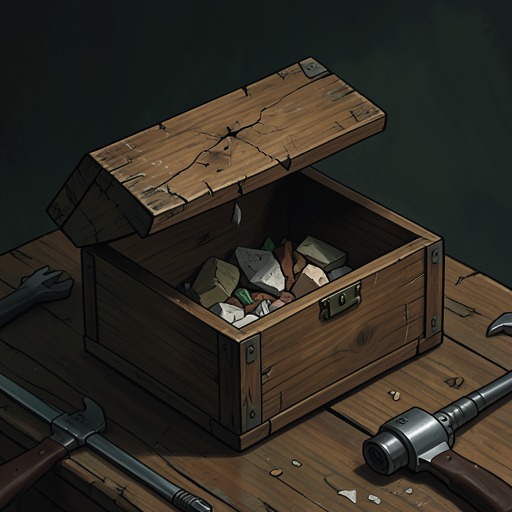
At the site, March finds a red fragment almost buried at the base of a sapling. The brick is pitted with yellow lichen, scorched by explosives, and crumbling at its corners, but it is solid enough to establish that something remains. When he scrapes the lichen, carmine dust gathers beneath his fingernail. Looking down, he sees more fragments in the pale grass—first a few, then dozens and, as he takes in the field, hundreds.
The fragments turn an uncertain location into physical evidence. The ruins are not a standing structure that explains itself; their significance lies in the contrast between apparent absence and the scattered, damaged material March can actually find. What he feared had been erased is not wholly gone.
Historical and Narrative Significance
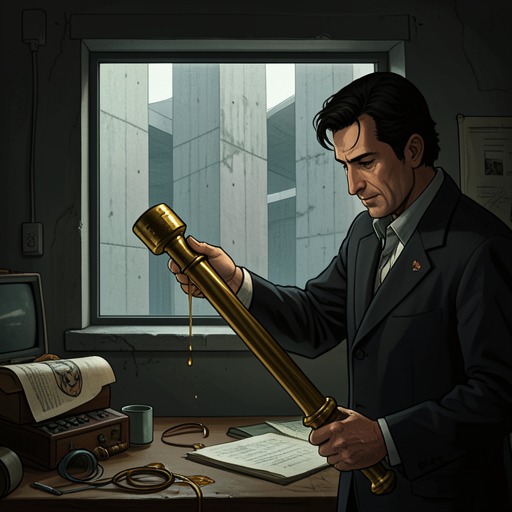
The search occurs against a landscape marked by monuments to Germany’s eastward conquest. Earlier, March and Jaeger pass a Totenburg: four granite towers enclosing a bronze obelisk, one of many memorials to German dead between the road and the Urals. The imposing memorial and the almost concealed bricks offer sharply different forms of remembrance: one monumentalizes the conquerors, while the other preserves traces of crimes the regime has made difficult to prove.
The Globus ruins therefore matter both as a location and as a fragile evidentiary counterweight to denial. March’s recovery of the fragments does not restore the destroyed site, but it changes the force of his encounter with it: the remains exist, and their existence gives material form to a truth he had feared could no longer be believed.