Havel Lake
FatherlandLake Havel is a major waterside setting in the novel, where the discovery of a corpse begins an investigation and where Xavier March later returns to examine the scene in a radically changed light. Its weather and broad, exposed shoreline make the lake more than a backdrop: they shape the contrast between the obscurity of the first encounter and the clarity of March’s later reconstruction.
Setting and Atmosphere
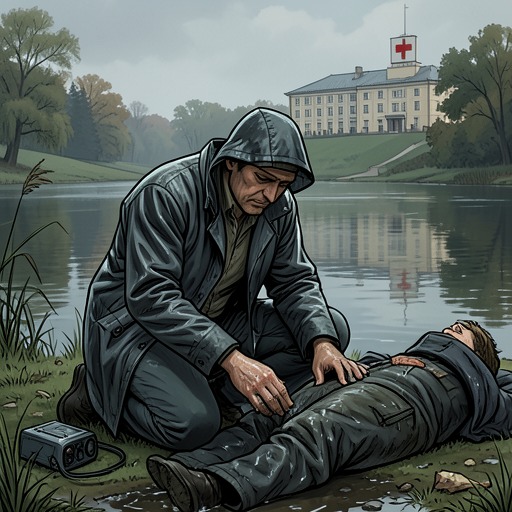
On the western outskirts of Berlin, Lake Havel first appears beneath low cloud and drifting rain. The water and sky merge into a gray sheet, with only the dark line of the far bank distinguishing them. March recognizes the rain as cold and salt-tinged, and its touch carries him back to his wartime service aboard a U-boat. The lake’s weather thus links the present investigation to an earlier life at sea without turning the shoreline into a simple refuge from the city.
The Body on the Shore
The lake is the setting for the discovery of an old man’s body, sprawled half out of the water in the mud. The corpse’s pallor and outstretched arms make it seem, from a distance, like an alabaster statue abandoned on the bank. Against the gray water and rain, the body is at once a physical piece of evidence and an arresting image: death has been placed where the landscape remains open to view.
Return to the Scene
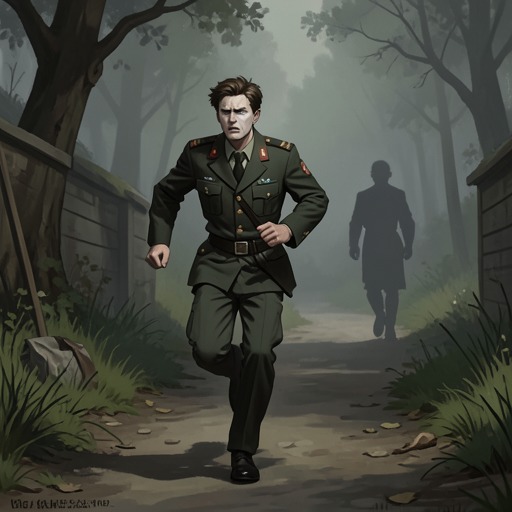
When March comes back in fine spring weather, the site looks utterly different. He reaches the Grosses Fenster, a viewpoint known as the Picture Window, where the clear view extends across eight kilometers of water to Spandau. Rather than relying only on memory, he retraces the route Hermann Jost had run when he found the body, repeating it before driving on. The return makes the lake a working landscape for investigation: its paths and vantage points can be checked, not merely remembered.
The Lake as an Investigative Boundary
Lake Havel also lies beyond the grounds March examines during his inquiry into Josef Bühler. From the window of Bühler’s study, a lawn descends to the water, where a small jetty and moored cabin cruiser face the opposite shore; in the distance, the Kladow-Wannsee ferry crosses the lake. That view places a private estate beside a public route and keeps the water visible at the edge of the investigation. Across its appearances, the lake changes from an indistinct expanse under rain to a clear, measurable view, while remaining the setting that joins discovery, reconstruction, and the novel’s scenes of inquiry.