Margaret’s mother’s death
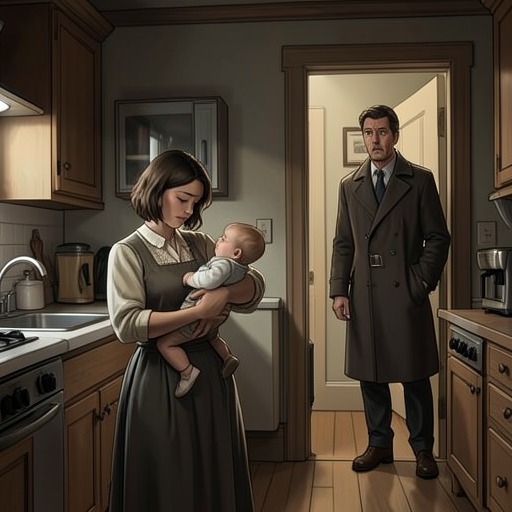
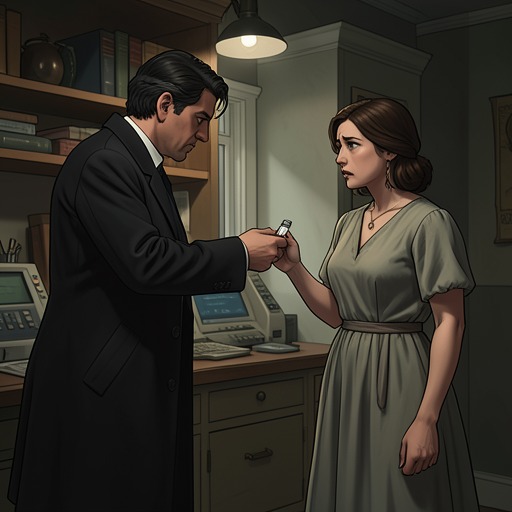
FaustMargaret’s mother’s death is the concealed consequence of Faust’s scheme to make private time with Margaret possible. He gives Margaret a phial and instructs her to put three drops into her mother’s drink; Margaret asks whether the dose will harm her, and Faust assures her it will not. The mother’s later death turns that assurance into a point of tragic responsibility, returning in religious accusation and in Margaret’s final reckoning with her crimes.
The Potion and the Decision
Margaret explains that she could draw the bolts at night if she slept alone, but her mother is a light sleeper, and discovery would bring catastrophe. The obstacle is practical and immediate: the lovers cannot be together without the mother noticing. Faust responds with a phial, prescribing three drops in her drink as a means of making the mother sleep deeply.
Margaret does not receive the plan without question. She asks whether the potion will harm her mother, and Faust answers by asking whether he would advise it if it could. His reassurance does not supply independent confirmation of the potion’s safety; it asks Margaret to trust him. She agrees because she wants to please him and says that seeing his face makes her unable to resist his will. Her words also place the proposed act within a wider pattern: she feels she has already done so much for Faust that little remains for her to fulfill.
The Death Returns as Accusation
The play later gives the death its force through recollection and consequence rather than through a staged account of the poisoning itself. In the cathedral, as the service proceeds, an evil spirit recalls Margaret’s former innocence at the altar and sets it against her present guilt. The spirit asks whether she is praying for mercy for her mother, who, it says, has fallen into long torment through Margaret. The question makes the death part of a larger accusation, alongside the blood on Margaret’s threshold and the foreboding presence stirring beneath her heart.
Margaret’s response is distress at thoughts that cross and pull her in conflicting directions. The cathedral scene does not present the mother’s death as an isolated misfortune: it binds the consequences of Margaret’s choices to religious memory, guilt, and the loss of her former innocence. The contrast between the childhood worship evoked by the spirit and Margaret’s present anguish makes the past impossible to leave behind.
Recognition in the Dungeon
In the dungeon, Margaret herself names the crime. When Faust urges her to come because the night is already passing, she says that she has killed her mother and drowned the child born to Faust. The admission places the mother’s death beside the death of her baby, and her question about whether the child had been given to them both turns her recognition toward Faust as well as herself.
Her perception then shifts: she takes Faust’s hand, sees what seems to be blood upon it, and asks what he has done, pleading with him to put away his sword. Faust urges her to let the past be past, but for Margaret the past is not settled. Her recollection of the mother’s death is part of a present crisis in which guilt, the child’s death, and the sight of Faust’s hand converge. The scene does not erase the earlier division of responsibility: Faust devised the sleeping-potion plan and reassured Margaret, while Margaret now identifies herself as the one who killed her mother.
Judgment and Significance
Margaret’s final appeal places her fate before divine judgment: she gives herself to that judgment and calls upon the Father and the angels for protection. Mephistopheles declares her judged; a voice from above declares her saved. The ending therefore distinguishes the human and demonic pronouncements from the final saving voice without undoing the deaths or Margaret’s confession.
The mother’s death marks the point at which Faust’s pursuit of intimacy depends on Margaret’s trust in his advice and on a remedy whose consequences become irreversible. Its recurrence—from the potion proposal, to the spirit’s accusation in the cathedral, to Margaret’s confession in the dungeon—makes the event a hinge in the tragedy: an act undertaken to enable the lovers’ privacy returns as evidence of guilt, contributes to Margaret’s spiritual torment, and is carried into the final judgment that declares her saved.