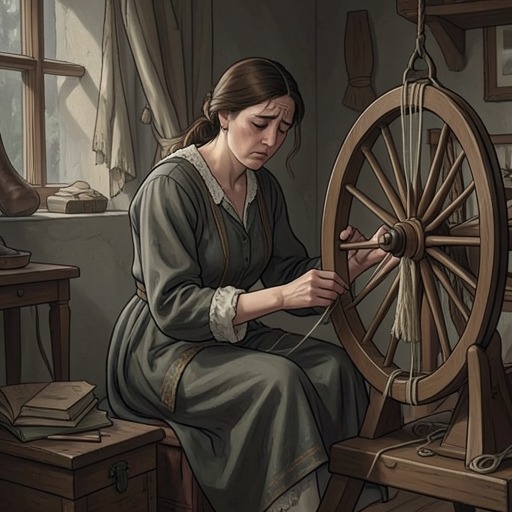
Margaret kills her baby
FaustMargaret kills her baby, a crime revealed during Faust’s attempt to rescue her from the dungeon. The disclosure binds the child’s death to her mother’s death and to Margaret’s shattered grasp of what has happened; her refusal to flee and her appeal to divine judgment make the event central to the drama’s ending and its conflict between guilt and salvation.
Background and Disclosure
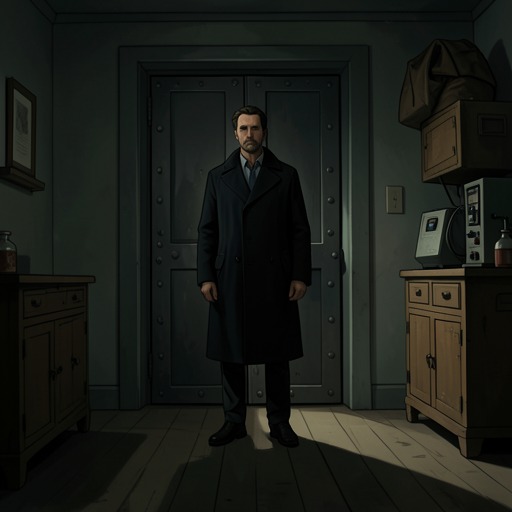
The scene takes place in the dungeon, where Faust arrives at an iron door carrying keys and a lamp. Margaret is imprisoned and distressed, but her account emerges in fragments rather than as a calm explanation. She first says that the child has been taken away and that people say she killed it, speaking as though the accusation and loss remain difficult for her to comprehend.
The scene in the cathedral supplies an earlier religious frame for the tragedy. During a service, an evil spirit had recalled Margaret’s former innocence at the altar and confronted her with the death of her mother, blood at her threshold, and a troubling presence beneath her heart. The accusation links concealed guilt, her mother’s death, and her pregnancy before the dungeon scene names the child’s fate directly.
What Margaret Reveals
When Faust offers himself as the one who loves her and would free her from her misery, Margaret initially turns to the immediate absence of her baby. She says she wants to nurse it, recalls having cherished it through the night, and believes it was taken away to torment her. Her uncertainty gives way to a direct recognition of her responsibility: she tells Faust that she killed her mother and drowned the baby born to them.
Her recognition is interwoven with disorientation. She asks whether the child had not been given to them both, then momentarily treats Faust’s presence as unreal and asks to take his hand. She sees blood on it and asks what he has done, associating him with a threat she cannot calmly distinguish from her own recollections. Faust answers by urging her to let the past be past, but the appeal cannot undo what she has named.
The Attempted Rescue and Refusal
Margaret does not simply remain passive in the scene. In a renewed crisis, she urges Faust to save the child, directing him along the ridge, beside the brook, over a bridge, and into the wood to a plank placed in a pool. She believes the child is still trying to rise and struggling, and repeatedly presses Faust to save it. The directions preserve the force of her attachment even as they reveal that she cannot reconcile her imagined rescue with the child’s actual death.
Faust tells her to recall her wandering will and insists that one step would make her free. Margaret instead gives herself to God. Her decision turns the attempted escape into a refusal: she does not follow Faust out of the dungeon but places herself under divine judgment.
Judgment and Significance
The final exchange separates the judgment of Mephistopheles from the voice heard from above. Mephistopheles declares that Margaret is judged; the answering voice declares that she is saved. The contrast makes the ending neither an erasure of the deaths nor a denial of Margaret’s responsibility. Her confession and refusal to escape precede a salvation that the demonic verdict cannot determine.
The event therefore carries the tragedy from private loss into a final moral and religious confrontation. Margaret’s fragmented recognition, her urgent but impossible directions to save the child, and her surrender to judgment place guilt and remorse beside the play’s declaration of salvation. The ending offers deliverance without making the consequences of her actions disappear.