Charlie’s Childhood Fires and Her Parents’ Fire Training
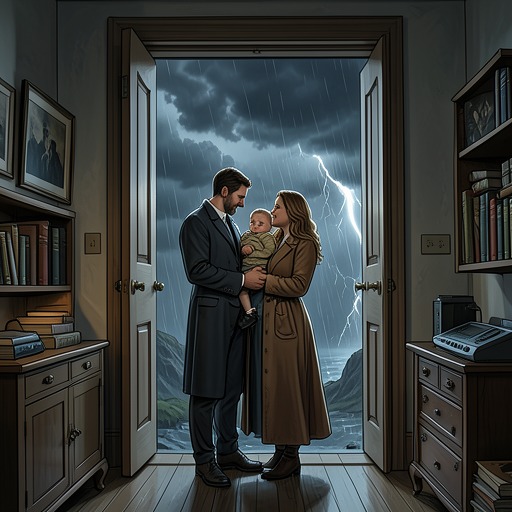
FirestarterCharlie’s childhood fires turned an extraordinary ability into an immediate family danger, forcing Andrew McGee and Vicky Tomlinson McGee to improvise protection before they could make sense of what their daughter was doing. The fires appeared in ordinary domestic spaces—a crib, a wastebasket, a staircase—and their response took shape less as formal instruction than as extinguishers, warnings, and the effort to keep the child they loved from hurting herself or them.
Fires in the Home
By the time Charlie was a week old, her parents had recognized that something was wrong: when they left her in her crib, the pillow began to smolder. They brought her into their bed and eventually put the crib away for good. On the night it became hot enough to blister her cheek, Charlie cried through much of the night; Andrew found Solarcaine in the medicine chest to treat the injury. In that first year, the danger returned in different forms. Wastebaskets caught fire when her bottles were late, and curtains once burst into flame while Vicky was in the room. The household’s ordinary routines had acquired a combustible uncertainty: even delay or distress could be followed by fire.
The parents did not openly discuss Charlie’s ability. Vicky avoided the subject with what Andrew experienced as hysterical stubbornness, insisting there was nothing wrong with their daughter. Yet the silence did not mean inaction. Fire extinguishers appeared throughout the house, quietly and without discussion. They were a practical acknowledgment of the danger that the family could not bring itself to name together.
The Teddy Bear on the Stairs
When Charlie was crawling, she had learned to climb the stairs and back down again. One day, Andrew sat reading in the living room while she went up and down; a teddy bear rested on a stair. He had noticed it but had not moved it. On her third descent, Charlie’s feet caught around the bear and she tumbled to the carpeted bottom of the stairs. She had no bruise, but she wailed with fear and rage. Andrew picked her up and checked her for injury.
As he held her, he felt what he understood as a deathly force pass from her mind. The teddy bear then caught fire. The flames charred its face and began spreading to the stair carpeting. Andrew put Charlie down, ran for the extinguisher by the television, and sprayed foam over the fire. The bear, its fur dotted with foam, was still warm when he carried it back downstairs.
Andrew’s response was deliberately harsh. Believing that a boundary had to be drawn, he held the burned bear in front of Charlie and made her look at what had happened to it. He told her that she had burned Teddy and warned that the same power might burn her mother or father. He called the act a bad thing and told her not to do it again. Charlie, frightened and tearful, called for Teddy. Andrew stopped when he could bear no more of her distress, picked her up, and carried her until she fell asleep against his shoulder.
Fear, Protection, and a Call for Help
The scene had frightened Andrew not only because the fire was real, but because it seemed to answer an injury with another injury: the bear had hurt Charlie, and Charlie had set the bear alight. He remembered a childhood story about a child whose psychic terror held the parents around him in fear. That association sharpened Andrew’s dread of what Charlie might do, even as his own actions showed that he was trying to protect her and teach her limits. The burned toy became both evidence of the danger and the instrument of his lesson.
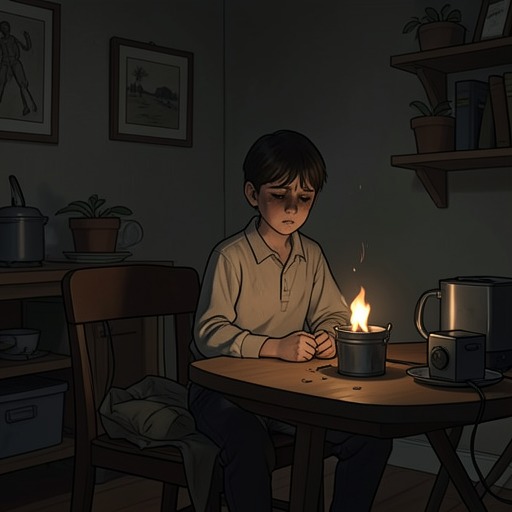
After laying Charlie on the couch, Andrew went to the kitchen phone and called his former roommate, Quincey. The call came after the fall and fire had made the family’s unspoken problem impossible for Andrew to contain alone. Quincey was reluctant to talk; in that year, 1975, he worked for an aircraft corporation as a counselor to employees troubled by their work and personal lives. The contrast is telling: Andrew sought help from someone whose job was to listen, while at home the subject of Charlie’s ability had largely been kept silent.
Charlie’s Earliest Memory
Charlie’s own earliest memory reaches back to another fire: giant faces leaning over her, enormous voices, and the smell of burned waffle, which was her own hair. She had set her hair alight and burned nearly all of it off. Her father put her in the shower, and afterward he raised the possibility of getting help. Vicky first laughed, then cried, then laughed again; Andrew slapped her, a moment Charlie remembered as the only time she knew of that he had done such a thing to her mother. Vicky proposed seeing Dr. Wanless, referring to earlier help without explaining it in Charlie’s recollection.
The shower remained part of the memory’s physical detail: wet hair, the smell of burning, and the adults’ large, agitated faces. In a later shower, Charlie recalled the warning that she had been bad and remembered her father telling her not to use the power because it might have been his face. Her recollection gives the family’s prohibition its other side. What Andrew intended as protection and instruction also became a source of fear that Charlie carried within herself.
A Family’s Improvised Fire Training
The episode’s fire training was assembled from urgent acts rather than a stated program. Andrew and Vicky removed the crib, placed extinguishers around the house, and tried to teach Charlie that fire could damage the things and people she loved. Andrew’s warning after the teddy bear burned made that danger concrete; his tenderness afterward, as he held her until she slept, sits beside rather than erases the severity of the lesson.
The fires thus marked both Charlie’s emerging ability and the parents’ struggle to respond to it. They could not prevent every flare-up or agree openly on what it meant, but they could remove hazards, put out flames, and establish a rule. Charlie’s earliest memory shows that the rule endured—not simply as an instruction, but as a fearful question about what her power might do next.