winter, during the war’s third year
An Unwanted Awakening
At three in the morning, [Sergey Sergeyich](entity:character-recall-character-sergey-sergeyich-26c87314cb89) wakes to a cold house and feeds his improvised stove with coal. Distant guns have become so familiar that he dismisses their blasts as men warming their hands; the war has settled into the household’s silences.
that winter
Two Neighbours Remain
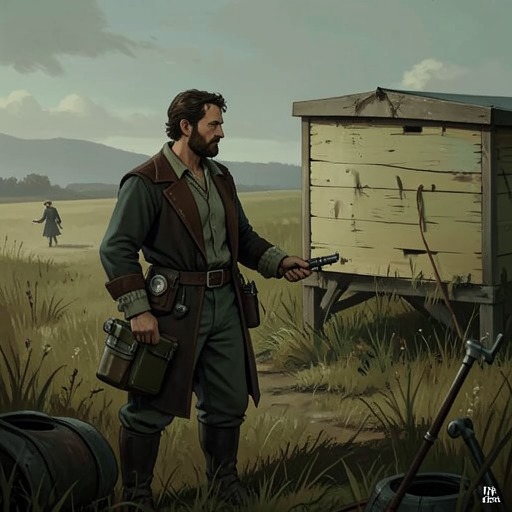
Only [Sergeyich](entity:character-recall-character-sergeyich-7a94bdebc124) and [Pashka Khmelenko](entity:character-recall-character-pashka-khmelenko-b130e65accfe) remain in [Little Starhorodivka](entity:location-recall-location-little-starhorodivka-4d4e9e44f27a), where most residents fled after the fighting began. Sergeyich endures the danger with a detached persistence, but his attention never leaves the six hives he is responsible for protecting.
that winter, at noon
A Neighbour’s Visit
[Pashka](entity:character-recall-character-pashka-209534b2d9e1) visits [Sergeyich](entity:character-recall-character-sergeyich-7a94bdebc124) and boasts that electricity briefly returned, then admits strangers offered him a stolen Audi. Their wary conversation recalls their lifelong school rivalry, but the two men now depend on one another in the deserted village.
a few days later
A Body on the Field
From the edge of his garden, [Sergeyich](entity:character-recall-character-sergeyich-7a94bdebc124) spots a dark shape on the snowy slope between his village and the Ukrainian trenches. He borrows [Pashka’s binoculars](entity:object-recall-object-pashka-s-binoculars-e96fb124c814) and confirms that it is a dead soldier, lying exposed in the open field.
that night
The Dead Man’s Dream
[Sergeyich](entity:character-recall-character-sergeyich-7a94bdebc124) dreams that he is the abandoned soldier, frozen in the snow, and wakes shivering. In the candlelight he revisits memories of [Vitalina](entity:character-recall-character-vitalina-995cbf651f33) and her red-ant dress, whose eccentricity once embarrassed him and helped drive a wedge between them.
the next morning
A Dispute over the Body
[Sergeyich](entity:character-recall-character-sergeyich-7a94bdebc124) insists that the dead man deserves a grave, but [Pashka](entity:character-recall-character-pashka-209534b2d9e1) refuses to crawl into the exposed field. They cannot identify the soldier’s side, and the uncertainty leaves Sergeyich unable to persuade either army to retrieve him.
during the winter’s long quiet hours
The Governor’s Bee-Bed
While waiting for sleep, [Sergeyich](entity:character-recall-character-sergeyich-7a94bdebc124) recalls how the former governor once lay on his hives to restore his strength. The governor’s visits brought Sergeyich money and local respect, and a pair of extraordinary mother-of-pearl shoes became the keepsake of that vanished, peaceful life.
in the first spring of the war
The Village Empties
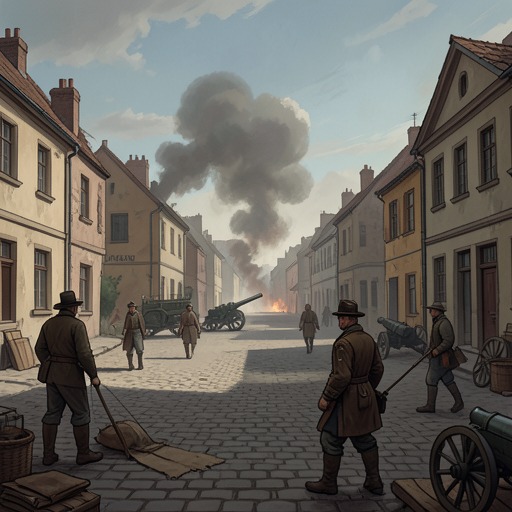
The first shell strikes the [Leninist church](entity:location-recall-location-leninist-church-f1c88906237a), and [Little Starhorodivka](entity:location-recall-location-little-starhorodivka-4d4e9e44f27a)’s families leave in waves. [Sergeyich](entity:character-recall-character-sergeyich-7a94bdebc124) discovers that nearly everyone is gone, then finds [Pashka](entity:character-recall-character-pashka-209534b2d9e1) still sitting in his yard, unwilling to abandon his home; the two become the village’s last keepers.
two days after the snowfall
A Shell Hits Nearby
A close blast shakes [Sergeyich](entity:character-recall-character-sergeyich-7a94bdebc124)’s windows. The shell has demolished part of the Krasyuk home and destroyed its shed, leaving [Pashka](entity:character-recall-character-pashka-209534b2d9e1)’s house exposed to the winter cold and making the danger feel suddenly immediate again.
that afternoon
Windows from an Empty House
[Sergeyich](entity:character-recall-character-sergeyich-7a94bdebc124) offers [Pashka](entity:character-recall-character-pashka-209534b2d9e1) a place to sleep and devises a way to replace his shattered windows with glass from an abandoned house. They take panes from the Serovs’ deserted home, an improvised act of mutual care that makes their old antagonism feel less important.
later that evening
Petro Comes at Night
A young Ukrainian soldier named [Petro](entity:character-recall-character-petro-9da434a81731) arrives in camouflage with his rifle and asks to meet [Sergeyich](entity:character-recall-character-sergeyich-7a94bdebc124), whom he has watched from the trenches. Over tea, they discuss the dead man, the front, and the renaming of streets; Petro leaves Sergeyich a grenade and offers help if he signals from the orchard.
the next day
The Soldier’s Sweet Cargo
After drinking vodka, [Sergeyich](entity:character-recall-character-sergeyich-7a94bdebc124) realizes [Petro’s grenade](entity:object-recall-object-petro-s-grenade-1677b7dd91c5) is missing and begins searching the house and yard. He then turns his attention to the body in the field, which still lies uncovered and continues to trouble him.
that afternoon
Sheltering the Fallen
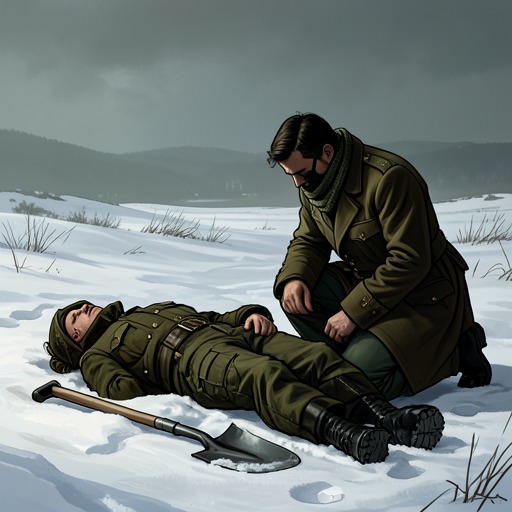
[Sergeyich](entity:character-recall-character-sergeyich-7a94bdebc124) crawls across the exposed field with a shovel and searches the dead soldier’s pockets. He finds a backpack full of [Red Poppy sweets](entity:object-recall-object-red-poppy-sweets-3adc2e07717c), cannot dig through the frozen ground, and hides the body beneath heavy slabs of snow crust instead.
the following day
A Soldier’s Promised Sweets
At nearby [Svitle](entity:location-recall-location-svitle-8065d1d19979), [Sergeyich](entity:character-recall-character-sergeyich-7a94bdebc124) trades honey for eggs and hears children describe a young, earring-wearing soldier who promised them sweets. He recognizes the dead man’s backpack and understands that the candy was meant for those children, not for him.
that night
The Late Santa Claus
Unable to keep the sweets, [Sergeyich](entity:character-recall-character-sergeyich-7a94bdebc124) returns to [Svitle](entity:location-recall-location-svitle-8065d1d19979) and delivers them to the children through their mother, Valya. She sends him home with lard, answering his kindness with generosity and restoring a small measure of ordinary human reciprocity.
soon afterward
A Second Meeting with Petro
[Petro](entity:character-recall-character-petro-9da434a81731) returns with food and [Sergeyich](entity:character-recall-character-sergeyich-7a94bdebc124)’s charged mobile phone. The two share a meal and talk about their families, names, and lives before the war; Petro also reports that someone has finally taken the dead soldier away.
that evening
The Sniper’s Position
[Sergeyich](entity:character-recall-character-sergeyich-7a94bdebc124) shows [Petro](entity:character-recall-character-petro-9da434a81731) the straw nest and spent cartridges in the Krupins’ garden, realizing that a sniper has been firing from the abandoned village. Petro thanks him and walks back across the field without crouching, a quiet display of trust and nerve.
February 23
A Strange National Holiday
[Pashka](entity:character-recall-character-pashka-209534b2d9e1) brings Vladlen, a volunteer from Siberia, to celebrate [Defender of the Fatherland Day](entity:time-recall-time-defender-of-the-fatherla-762ca7e0e6c5). Over vodka and food, Vladlen praises Russian expansion and calls the region drab; [Sergeyich](entity:character-recall-character-sergeyich-7a94bdebc124) resists the stranger’s talk and sends the men away with bottles of counterfeit vodka.
after the holiday, before dawn
The Swapped Street Signs
Angry after the drinking and a quarrel with [Pashka](entity:character-recall-character-pashka-209534b2d9e1), [Sergeyich](entity:character-recall-character-sergeyich-7a94bdebc124) pries street signs from fences and exchanges the names of [Lenin Street](entity:location-recall-location-lenin-street-fb826c7f216a) and [Shevchenko Street](entity:location-recall-location-shevchenko-street-0a1b9e1b2bf8). He presents the change to Pashka as a unanimous decision, and his neighbour is delighted to live on Lenin Street again.
a few days later
A Frightening Knock
[Pashka](entity:character-recall-character-pashka-209534b2d9e1) arrives in the night claiming that intruders have broken into his home. In the morning, the house is intact; [Sergeyich](entity:character-recall-character-sergeyich-7a94bdebc124) confesses that he broke the lock himself while checking on Pashka and winding [Pashka’s weight-driven wall clock](entity:object-recall-object-pashka-s-weight-driven-86fe0480082b).
March 3, the announced ceasefire day
The Postal Ceasefire
[Pashka](entity:character-recall-character-pashka-209534b2d9e1) tells [Sergeyich](entity:character-recall-character-sergeyich-7a94bdebc124) that a one-day ceasefire will allow mail to be delivered through the [grey zone](entity:location-recall-location-grey-zone-373fd6655502). The pair wait for the yellow-and-blue [Ukrposhta](entity:organization-recall-organization-ukrposhta-1287b1e7f30d) van, which arrives from [Karuselino](entity:location-recall-location-karuselino-b744ec76c1a5) with a bag of accumulated letters and little else.
after the mail arrives
The Postman’s Old Game
[Pashka](entity:character-recall-character-pashka-209534b2d9e1) withholds [Sergeyich](entity:character-recall-character-sergeyich-7a94bdebc124)’s letters until he performs the old village postman [Pistonchik](entity:character-recall-character-pistonchik-300d613d66e9)’s comic demand: dance for the mail. Sergeyich humors him, and the two men sort the letters by the streets’ newly reversed names.
that afternoon
Delivering the Letters
[Sergeyich](entity:character-recall-character-sergeyich-7a94bdebc124) carries the letters through empty streets, placing them at the boarded-up homes of neighbours who have fled. The work lets him imagine the villagers returning and gives the abandoned settlement a temporary community again.
that evening
Vitalina’s Postcards
Three delayed cards from [Vitalina](entity:character-recall-character-vitalina-995cbf651f33) and [Angelica](entity:character-recall-character-angelica-7e8a6e4721ed) arrive, carrying greetings from [New Year](entity:time-recall-time-new-year-3081c4d3858f) and [Defender of the Fatherland Day](entity:time-recall-time-defender-of-the-fatherla-762ca7e0e6c5). Their words remind [Sergeyich](entity:character-recall-character-sergeyich-7a94bdebc124) that his family has not entirely forgotten him, though his own long silence has helped keep them apart.
that evening
A Failed Phone Call
[Sergeyich](entity:character-recall-character-sergeyich-7a94bdebc124) calls [Vitalina](entity:character-recall-character-vitalina-995cbf651f33) but cannot speak when he hears her familiar voice. He hangs up, then listens to the phone’s imagined ringing after the call has ended, caught between longing and the fear of reopening their relationship.
the next day
A Greeting on a Photograph
[Sergeyich](entity:character-recall-character-sergeyich-7a94bdebc124) writes a Women’s Day greeting on the back of a wedding photograph, addressing it to “My Dear [Vitalina](entity:character-recall-character-vitalina-995cbf651f33) and [Angelica](entity:character-recall-character-angelica-7e8a6e4721ed).” He uses his new street address, hoping to send a message that acknowledges both his estranged wife and the daughter he has barely known.
around midnight, shortly before the next ceasefire
Petro Carries the Card
With no local post office, [Sergeyich](entity:character-recall-character-sergeyich-7a94bdebc124) asks [Petro](entity:character-recall-character-petro-9da434a81731) to mail the greeting card from the Ukrainian side. They speak about the street’s new name and the governor’s shoes, while Petro mentions his imminent rotation and gives Sergeyich matches as a parting gift.
a few days later, before dawn
The Bombardment Returns
A prolonged bombardment shakes [Little Starhorodivka](entity:location-recall-location-little-starhorodivka-4d4e9e44f27a), and the bees panic inside their shed. After the guns fall quiet, [Sergeyich](entity:character-recall-character-sergeyich-7a94bdebc124) checks that [Petro](entity:character-recall-character-petro-9da434a81731) is alive and decides the hives can no longer safely remain in the village.
the next morning
Leaving the Village
[Sergeyich](entity:character-recall-character-sergeyich-7a94bdebc124) packs clothes, savings, and his books into the green Lada, then loads his six hives onto a trailer. As rain falls on the yard, he realizes that the home he thought he was protecting has been protecting him; he leaves [Pashka](entity:character-recall-character-pashka-209534b2d9e1) a key and a jar of honey.
the day he leaves, after departing Karuselino
Crossing the Frontline
A soldier recognizes [Sergeyich](entity:character-recall-character-sergeyich-7a94bdebc124) and directs him toward the crossing route through the separatist-held side. At the checkpoints, officials question his documents and his bees, but eventually allow him through with a paper pass.
the next morning
The Road to Vesele
After sleeping in the car, [Sergeyich](entity:character-recall-character-sergeyich-7a94bdebc124) finds a quiet forest site near [Vesele](entity:location-recall-location-vesele-04a2c1a2e0cc) for the hives. Unable to unload them alone, he seeks help in the village and meets [Galya](entity:character-recall-character-galya-4ca958b39e78), a shop worker who agrees to help in exchange for honey.
that afternoon
A New Apiary
[Galya](entity:character-recall-character-galya-4ca958b39e78) proves strong enough to help [Sergeyich](entity:character-recall-character-sergeyich-7a94bdebc124) unload and arrange the hives. She gives him groceries on credit against his honey, making the unfamiliar place feel more stable and opening a new, cautiously personal connection between them.
the first nights at the campsite
Warm Meals by the Fire
[Galya](entity:character-recall-character-galya-4ca958b39e78) begins bringing [Sergeyich](entity:character-recall-character-sergeyich-7a94bdebc124) hot food by scooter, and they sit together beside the fire without needing to fill every silence. Her kindness and practical concern make the solitary beekeeper feel welcomed in a place where he arrived as a stranger.
after several dinners
The First Night Together
[Galya](entity:character-recall-character-galya-4ca958b39e78) invites [Sergeyich](entity:character-recall-character-sergeyich-7a94bdebc124) to eat borscht at her home. They drink vodka, share a meal, and spend the night together, but Sergeyich slips away before dawn because anxiety about his bees overwhelms his desire to stay.
the following day
An Apology and a Place at the Table
[Sergeyich](entity:character-recall-character-sergeyich-7a94bdebc124) returns to apologize for leaving without saying goodbye. [Galya](entity:character-recall-character-galya-4ca958b39e78) accepts his explanation and invites him to eat again, while he admits that home still means the village he left and that he has never managed to build a life elsewhere.
early summer
A Life Between Campsite and Home
[Sergeyich](entity:character-recall-character-sergeyich-7a94bdebc124) settles into a routine of tending the hives and visiting [Galya](entity:character-recall-character-galya-4ca958b39e78), who sells his honey with an invented “anti-alcoholic” benefit. Their relationship stays warm but undefined: she hopes he will move in, while he remains attached to his tent, his bees, and the possibility of returning home.
early summer
A Call to Pashka
[Sergeyich](entity:character-recall-character-sergeyich-7a94bdebc124) calls [Pashka](entity:character-recall-character-pashka-209534b2d9e1) from the campsite and hears that shelling continues and the village remains without electricity. Pashka confesses that he is lonely, but Sergeyich still cannot bring himself to call [Vitalina](entity:character-recall-character-vitalina-995cbf651f33), leaving the conversation with an ache of distance and guilt.
later that summer
The Roadside Mourning
[Galya](entity:character-recall-character-galya-4ca958b39e78) takes [Sergeyich](entity:character-recall-character-sergeyich-7a94bdebc124) to join villagers kneeling along the highway to welcome the body of [Vitya Samoylenko](entity:character-recall-character-vitya-samoylenko-f077b1d8c946). Sergeyich resists kneeling until the crowd’s expectation and Galya’s urging overcome him; afterward he feels humiliated by the gesture and alien among the mourners.
that rainy night
A Fallen Soldier’s Vigil
Back at his tent, [Sergeyich](entity:character-recall-character-sergeyich-7a94bdebc124) pours a drink for the dead soldier and tries to imagine the unknown man beneath the grass. In a dream, miners sing a psalm while an angry voice calls from above, foreshadowing the danger about to reach his campsite.
later that night
Valik’s Violent Visit
[Valik](entity:character-recall-character-valik-a8deeb48b616) arrives drunk with his former teacher [Mikhalych](entity:character-recall-character-mikhalych-87a194c9b775) and blames [Sergeyich](entity:character-recall-character-sergeyich-7a94bdebc124) for the soldier’s death. While Mikhalych tries to hold him back, Valik smashes the Lada’s windows with an axe and strikes one hive, turning grief into an attack on the beekeeper’s fragile refuge.
before dawn, after the attack
The Flight to Crimea
Fearing [Valik](entity:character-recall-character-valik-a8deeb48b616) may return, [Sergeyich](entity:character-recall-character-sergeyich-7a94bdebc124) and [Galya](entity:character-recall-character-galya-4ca958b39e78) quickly reload the hives and belongings onto the trailer. He leaves her with a promise to return and drives toward the border, choosing the possibility of shelter in [Crimea](entity:location-recall-location-crimea-734146ce28e8) over a return to the war-torn village.
that morning, at the Crimean crossing
A Beaten Car at the Border
At the border, people mistake [Sergeyich](entity:character-recall-character-sergeyich-7a94bdebc124) for a refugee, while Russian officials inspect his battered car and ask where he came from. A security officer brings journalists to film his story, but they instruct him to omit the Russian role in the fighting; afterward he receives money for repairs.
later that day
The Search for Akhtem
On the road toward Bakhchysarai, [Sergeyich](entity:character-recall-character-sergeyich-7a94bdebc124) stops at [Akhtem Mustafayev](entity:character-recall-character-akhtem-mustafayev-4ad3ed8c2624)’s home and learns that his old beekeeping friend was taken nearly twenty months earlier. [Akhtem](entity:character-recall-character-akhtem-e1e82fb431f2)’s wife [Aisylu](entity:character-recall-character-aisylu-02dd937b39b3) welcomes Sergeyich and lets him place his hives beside the family apiary.
the day Sergeyich arrives
The Missing Tatar Beekeeper
[Aisylu](entity:character-recall-character-aisylu-02dd937b39b3) explains that [Akhtem](entity:character-recall-character-akhtem-e1e82fb431f2) and two other Crimean Tatars disappeared after going to a mosque; their vehicle was found abandoned. [Sergeyich](entity:character-recall-character-sergeyich-7a94bdebc124) begins to understand that the peninsula’s calm landscape conceals coercion and danger, even as the family gives him a place to settle.
the first days in Crimea
A Place Among the Hives
With [Aisylu](entity:character-recall-character-aisylu-02dd937b39b3)’s help, [Sergeyich](entity:character-recall-character-sergeyich-7a94bdebc124) installs his hives in the mountain apiary and discovers an almost idyllic landscape beneath Mangup. He takes the birdsong, clean water, and quiet as signs that the bees—and perhaps he himself—have escaped the war.
about two weeks after his arrival
The First Tatar Funeral
Sergei participated in the funeral of Akhchym, standing at the edge of a funeral procession held in Tatar language, led by an imam. He was the only outsider among the men. After the prayer, he privately made the sign of the cross and then returned to the bees
after the funeral
Aisylu’s Request
At a family dinner, [Aisylu](entity:character-recall-character-aisylu-02dd937b39b3) asks [Sergeyich](entity:character-recall-character-sergeyich-7a94bdebc124) to go to the [Federal Security Service](entity:organization-recall-organization-federal-security-ac3b8a4d7072) in Simferopol and ask what happened to [Akhtem](entity:character-recall-character-akhtem-e1e82fb431f2). She believes a Russian-speaking man from [Donbas](entity:location-recall-location-donbas-dc1e943de1ef) might be heard where she would be turned away; Sergeyich is frightened but eventually agrees.
a few days later
The FSB Conversation
At the [Federal Security Service](entity:organization-recall-organization-federal-security-ac3b8a4d7072) office, [Ivan Fyodorovich](entity:character-recall-character-ivan-fyodorovich-4c51411b11bb) knows [Sergeyich](entity:character-recall-character-sergeyich-7a94bdebc124)’s texts to [Petro](entity:character-recall-character-petro-9da434a81731) and warns him to watch his words as a foreigner. He advises [Aisylu](entity:character-recall-character-aisylu-02dd937b39b3) to contact the police about [Akhtem](entity:character-recall-character-akhtem-e1e82fb431f2), then calls her a widow before claiming he misspoke, leaving Sergeyich with a grim suspicion.
several days after the FSB visit
Akhtem’s Body Is Returned
[Aisylu](entity:character-recall-character-aisylu-02dd937b39b3) tells [Sergeyich](entity:character-recall-character-sergeyich-7a94bdebc124) that the authorities returned [Akhtem](entity:character-recall-character-akhtem-e1e82fb431f2)’s body, which had been buried in the woods. Police remain around the house as the family prepares for the funeral, and the arrival of the dead man turns the beekeeper’s suspicions into grief.
the day after the body is returned
The Candle at the Mourning House
[Sergeyich](entity:character-recall-character-sergeyich-7a94bdebc124) attends the funeral and watches the men carry [Akhtem](entity:character-recall-character-akhtem-e1e82fb431f2) to the cemetery, where the prayers and burial follow Tatar custom. He later learns that women and children say their farewells at home, and that the family’s memorial observances differ from the Orthodox practices he knows.
after the funeral, during the power outage
A Candle for Aisylu
Remembering that [Aisylu](entity:character-recall-character-aisylu-02dd937b39b3)’s home has lost power, [Sergeyich](entity:character-recall-character-sergeyich-7a94bdebc124) leaves her a bundle of church candles without waiting to be invited inside. The gesture offers practical comfort, but it also crosses religious boundaries and later becomes entangled with the authorities’ suspicions.
the following weeks
Aisha’s Album
[Sergeyich](entity:character-recall-character-sergeyich-7a94bdebc124) visits [Aisylu](entity:character-recall-character-aisylu-02dd937b39b3) and explains that an FSB official had called her a widow. [Aisha](entity:character-recall-character-aisha-edd9b16947fe) shows him the family photograph album, including a picture from the old beekeepers’ convention; with a magnifying glass he finds his younger self beside [Akhtem](entity:character-recall-character-akhtem-e1e82fb431f2), confronting how much time and distance have altered both men.
later that summer
An Arm Goes Numb
After a sleepless night and growing exhaustion, [Sergeyich](entity:character-recall-character-sergeyich-7a94bdebc124)’s left arm becomes numb and useless. He refuses medical help at first, hoping that lying on the hives will restore him as it has before, but he needs help arranging the [bee-bed](entity:expression-recall-expression-bee-bed-bb9a907f29a7).
soon afterward
A Son Arrested
[Aisylu](entity:character-recall-character-aisylu-02dd937b39b3) tells [Sergeyich](entity:character-recall-character-sergeyich-7a94bdebc124) that Bekir has been arrested and accused of stealing church property, including the candles Sergeyich himself delivered. He goes to the police station and gives a written account, but the detective refuses to release Bekir and threatens imprisonment or military service.
that evening
Aisha’s Future in Vinnytsia
[Aisylu](entity:character-recall-character-aisylu-02dd937b39b3) asks [Sergeyich](entity:character-recall-character-sergeyich-7a94bdebc124) to help her daughter leave [Crimea](entity:location-recall-location-crimea-734146ce28e8) for an education in [Ukraine](entity:location-recall-location-ukraine-ba45f872dbc9). He offers to take [Aisha](entity:character-recall-character-aisha-edd9b16947fe) toward the border and arrange for [Vitalina](entity:character-recall-character-vitalina-995cbf651f33) to receive her in [Vinnytsia](entity:location-recall-location-vinnytsia-086afeaeac0c), opening a path back toward the family he had been unable to contact.
near the end of Sergeyich’s permitted stay
The Hive Taken for Tests
[Ivan Fyodorovich](entity:character-recall-character-ivan-fyodorovich-4c51411b11bb) arrives with a supposed bee specialist and removes one hive, claiming it must be tested because [Sergeyich](entity:character-recall-character-sergeyich-7a94bdebc124) brought his bees across the border without clearance. Their visit makes the beekeeper fear that his inquiry about [Akhtem](entity:character-recall-character-akhtem-e1e82fb431f2) has drawn official retaliation.
the following evening
The Hive Comes Back
After a sleepless night, [Sergeyich](entity:character-recall-character-sergeyich-7a94bdebc124) sees the confiscated hive returned. [Ivan Fyodorovich](entity:character-recall-character-ivan-fyodorovich-4c51411b11bb) lies on the [bee-bed](entity:expression-recall-expression-bee-bed-bb9a907f29a7) to experience its vibrations before leaving, while Sergeyich checks the bees and finds them unusually quiet, unable to dismiss the suspicion that their removal had another purpose.
the next morning
The Bees Escape
[Sergeyich](entity:character-recall-character-sergeyich-7a94bdebc124) discovers that the returned hive is empty and finds the swarm clustered on a pear tree. He breaks into [Akhtem](entity:character-recall-character-akhtem-e1e82fb431f2)’s shed, uses a ladder and spray bottle to catch the bees, and puts them back in their hive, noticing that they look strangely grey.
Wednesday, near the end of Sergeyich’s ninety-day stay
Aisha Leaves Crimea
[Sergeyich](entity:character-recall-character-sergeyich-7a94bdebc124) drives [Aisha](entity:character-recall-character-aisha-edd9b16947fe) to the border and waits while she crosses on foot with her suitcase. He then takes her to [Novooleksiyivka](entity:location-recall-location-novooleksiyivka-c1c8386f49fb), buys a train ticket to [Vinnytsia](entity:location-recall-location-vinnytsia-086afeaeac0c), and watches her board for the long journey to meet [Vitalina](entity:character-recall-character-vitalina-995cbf651f33).
that morning
A Farewell on the Platform
As the train pulls away, [Sergeyich](entity:character-recall-character-sergeyich-7a94bdebc124) feels that he has missed his own chance to board and is close to tears. He calls [Vitalina](entity:character-recall-character-vitalina-995cbf651f33) with the arrival details; she asks him to visit, and he promises only after returning home to receive the winter coal promised by the [Baptists](entity:organization-recall-organization-82db56e14b0d).
later that day, on the road north
The Grenade in the Hive
Stopping to repair a damaged hive, [Sergeyich](entity:character-recall-character-sergeyich-7a94bdebc124) finds [Petro’s grenade](entity:object-recall-object-petro-s-grenade-1677b7dd91c5) hidden among the combs, warm and crawling with bees. He calls [Petro](entity:character-recall-character-petro-9da434a81731) but gets no answer, and carries the weapon with him as he continues toward the war zone.
that evening, near Vesele
Petro Is Alive
At a roadside turning, [Sergeyich](entity:character-recall-character-sergeyich-7a94bdebc124) receives [Petro](entity:character-recall-character-petro-9da434a81731)’s call and learns that the soldier survived, though he is recovering from a wound in hospital. Petro confirms that the dead volunteer’s body was retrieved and returned to his family; the two promise to meet again when the war ends.
the following morning
The Grenade’s Final Rest
On the road, [Sergeyich](entity:character-recall-character-sergeyich-7a94bdebc124) dreams of enormous grey, militarized bees and awakens to find the grenade still with him. Believing the dreams are a warning, he carries the suspicious grey-bee hive away from the trailer and detonates the grenade beside it, destroying the hive and killing some of its bees.
immediately after the explosion
The Bees Reject an Outsider
A survivor from the blast reaches another hive but is driven away by its guards. [Sergeyich](entity:character-recall-character-sergeyich-7a94bdebc124) cups the lone bee in his hand, then releases it after it stings him; the episode leaves him wondering why bees, like people, can turn away those who need shelter.
later that day
Supplies for Pashka
[Pashka](entity:character-recall-character-pashka-209534b2d9e1) calls to ask for cigarettes and warns [Sergeyich](entity:character-recall-character-sergeyich-7a94bdebc124) that checkpoints are searching cars. Sergeyich says he will hide them among the bees, and the thought that someone is waiting for him helps steady his resolve to keep driving home.
near the novel’s ending
The Return to the Grey Zone
[Sergeyich](entity:character-recall-character-sergeyich-7a94bdebc124) drives toward [Little Starhorodivka](entity:location-recall-location-little-starhorodivka-4d4e9e44f27a) with his hives, supplies, and the weight of everything he has witnessed. The road brings him back to the place he still calls home, where [Pashka](entity:character-recall-character-pashka-209534b2d9e1) is waiting and the war continues to shape their lives.