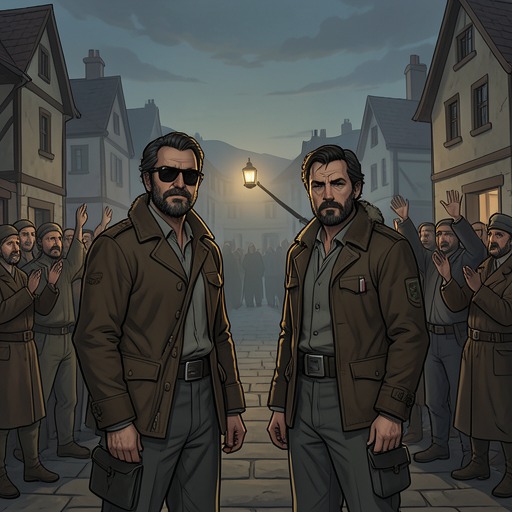
Walter Thirsk—John Carr
HarvestWalter Thirsk and John Carr are neighbors whose closeness is measured less by declarations than by repeated acts of shared labor and assistance. From Walter’s first years in the village to the crisis of the stable fire, Carr is present as companion, fellow worker, and practical ally; their bond belongs to the everyday cooperation on which village life depends.
A Neighbor from Walter’s First Years
When Walter first settled in the village, John Carr was his new neighbor. The two went together into The Woods after the harvest to hunt Fairy Caps, turning a day’s release from field labor into a shared adventure. Walter remembers the mushrooms’ strange effects vividly: dancing lights, rippling trails, exhilaration, and fear that lingered long afterward. Carr’s presence anchors this formative memory in companionship rather than solitary experience.
The friendship endured beyond that first summer. Recalling the excursion years later, Walter identifies Carr as his neighbor then and still, a concise measure of how long their lives have remained adjacent. Their bond is presented as part of a settled familiarity built over time, even as the village itself grows smaller and its demands intensify.
Companions in Work and Danger
Their neighborly relationship becomes physical and urgent during the fire in the stable block. Walter joins the effort to save the master’s burning hay, soaking a neckcloth to cover his mouth and entering the smoke with Carr at his side. They brace themselves against a bale and push together, trying to roll it toward the water buckets. The bale turns only halfway; when Walter pushes again, his hand plunges into the burning straw and is badly scorched.
Carr’s presence in the rescue does not prevent Walter’s injury, but it places their companionship within the hazards of shared work. The scene also makes the cost of that work unmistakable: Walter’s damaged left hand leaves him unable to take part in what follows, and he must return home to treat the wound. Carr is not merely named as a neighbor in retrospect; he is beside Walter at the point when communal duty becomes bodily risk.
Practical Mutual Aid
After the fire, Walter’s injury continues to shape what help he can offer others. At the pillory, he considers finding a stone or carrying his heavy oak bench so the older man can rest his feet, but the wound makes these tasks difficult. He decides that at first light he will call on John Carr, and that the two of them can either share the burden of moving the stone or carry the bench together, one-handed. Walter also considers sending boys to fetch a log, but the plan involving Carr is his clearest expectation of adult assistance.
The same practical interdependence appears in their household economy. Walter shares a pair of pigs, George and Gorge, with Carr and Carr’s family. The animals are part of the winter provisions Walter expects to gain from gleaning, so the arrangement connects their friendship directly to food, seasonal work, and the shared management of limited resources. Their relationship is both personal and material: assistance and property pass across neighboring households as part of the means by which they endure.
Significance
Walter and Carr’s friendship is conveyed through recurrence: the shared journey into the woods, the joint attempt to save hay, the proposed help at the pillory, and the pigs held in common. These moments make neighborliness a lived practice rather than a sentimental label. Carr’s place beside Walter links leisure with danger and mutual support, while their shared resources show how village bonds are woven into subsistence itself.