King David's Tomb
JudasThe Tomb of David is a building on Mount Zion associated with a coffin that believers hold contains the bones of King David. In the novel, its guarded entrance stands at the end of a nighttime climb by Shmuel Ash and Atalia: they cannot go inside, yet the stop at the door leads to a moment of closeness and an ambiguous parting at daybreak.
Setting and approach
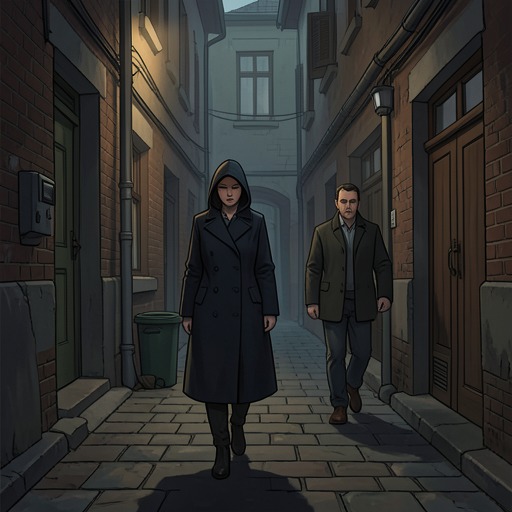
Mount Zion is described as a projection of Israeli territory surrounded on three sides by Jordanian territory. Shmuel and Atalia reach it by climbing a steep path after passing rusted barbed wire marking the mined no-man’s-land between Israeli and Jordanian Jerusalem. Their route thus brings them to the Tomb through a landscape shaped by borders and restricted movement.
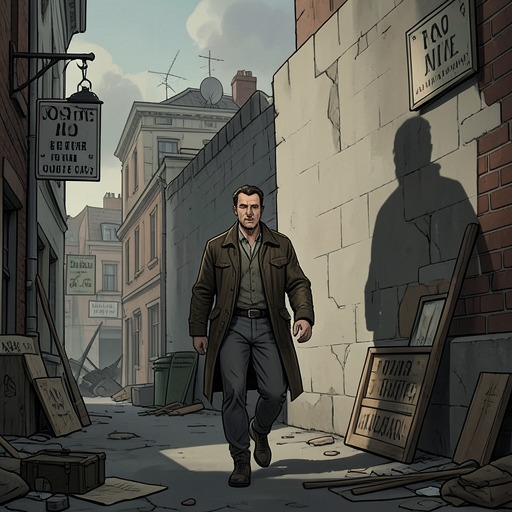
The building is identified as the Tomb of David because it contains an ancient coffin covered by a curtain, in which believers think the king’s bones lie. At the entrance, a short, stocky reservist in a heavy military coat and wool cap stands with an old Czech rifle. His presence makes the site not only a place of religious belief but also a guarded threshold in a divided city.
The closed entrance
The soldier tells Shmuel and Atalia that the building is closed and they cannot enter. Atalia laughs and asks why; the encounter does not result in their admission. The soldier says he has another half hour of duty, an ordinary measure of time that contrasts with the larger, unsettled atmosphere surrounding the boundary.
Atalia moves away to an iron railing facing east, toward no-man’s-land. Shmuel remains briefly beside the sentry, then follows her to a shadowed corner beneath a stone arch. He puts an arm around her shoulders, and she does not reject him. The Tomb’s inaccessible interior redirects the scene outward, toward the rail, the shadows, and the space between the two characters.
Dawn and departure
As dawn approaches, Shmuel and Atalia do not stay to watch the sunrise from the mountain. The sentry has finished his shift and left. Atalia asks Shmuel to wait a few more minutes, then tells him to go home while she remains alone before leaving for work. She takes two of his cold fingers into her mouth briefly and gives him an uncertain promise of what may follow. The encounter at the closed Tomb therefore ends not in entry or resolution, but in separation and an open-ended possibility.
Narrative significance
The Tomb’s threshold gathers the novel’s setting of divided Jerusalem into a single scene: a sacred destination, a guarded door, and a railing overlooking no-man’s-land. The physical barriers do not simply prevent access; they shape where Shmuel and Atalia pause and how their intimacy unfolds. The site’s meaning in this episode lies in that contrast between the inaccessible place associated with a revered past and the tentative, unresolved connection taking shape outside it.