Mitzpe Ramon
JudasMitzpe Ramon is a new settlement in the Negev desert, built at the edge of a crater. It enters Shmuel Ash’s story first as a possible refuge when his circumstances collapse, then as the destination he travels toward after leaving Jerusalem. The place promises employment and a fresh start, but his arrival at Beersheba leaves the journey unfinished for the night.
Setting and Introduction
Mitzpe Ramon is described as a new city under construction in the desert. Shmuel hears of it while living in the house at the end of Rabbi Elbaz Alley, and imagines that its building work might provide him with a job as a night watchman or storekeeper. His plan gives the settlement an early significance: it is a possible alternative to remaining in Jerusalem, though at this stage it exists for him chiefly as an idea.
The journey’s geography connects the new city to Beersheba. Shmuel expects to travel from there to Mitzpe Ramon, which lies at the edge of the crater, and hopes that the developing settlement will have ordinary public institutions as well as construction work. He considers employment as a school caretaker, librarian, or assistant librarian, reasoning that a population would need a library or cultural center.
A Possible Refuge
The prospect of Mitzpe Ramon gains force after Shmuel’s parents can no longer provide the monthly allowance that had supported him during his studies. He begins packing his belongings into used cardboard boxes without knowing where he will go. In the days that follow, he wanders through rainy Jerusalem, repeatedly stopping outside the former home of Yardena and approaching the dangerous boundary between Israeli- and Jordanian-controlled parts of the city.
Against this period of aimless movement, Mitzpe Ramon represents a direction he can still name. When Gershom Wald suggests that Shmuel may leave the household, resume his studies, or return to his parents in Haifa, Shmuel says he had considered seeking work in the new desert city before coming to the house. He now insists that he will stay until the Walds dismiss him, explaining that his will has faded. The contrast makes Mitzpe Ramon less a settled plan than a dormant possibility, one he cannot yet act on.
Departure and Arrival at Beersheba
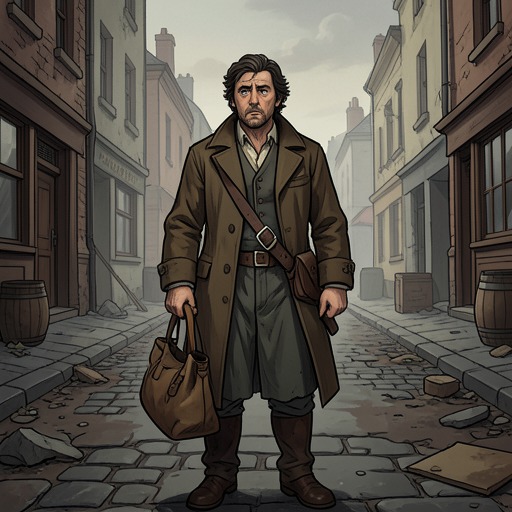
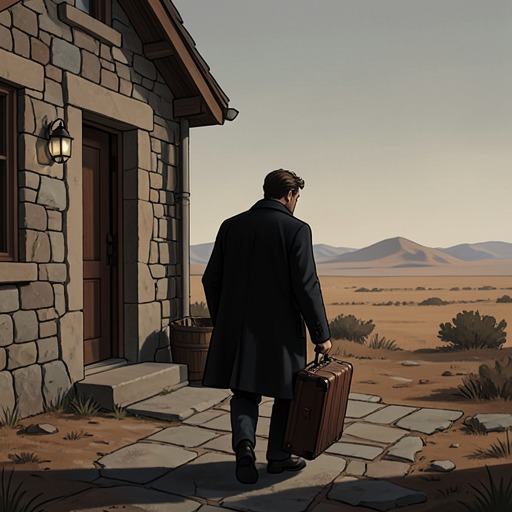
Shmuel eventually leaves Jerusalem at three in the afternoon on an Egged bus bound for Beersheba. He carries a heavy kitbag and a fox-headed cane, and thinks ahead to finding somewhere to sleep in Mitzpe Ramon before looking for work. He also imagines writing to his parents and sister to explain where life has taken him, and perhaps writing to Yardena and to the people in Rabbi Elbaz Alley. He does not know what he will say; he hopes that the new place may help him discover what he has been seeking.
At Beersheba, the last bus to Mitzpe Ramon has already departed. The next is not due until six the following morning. Shmuel does not think of a further question to ask at the information window, so he leaves the station and wanders through the unfamiliar town. The immediate destination is therefore deferred: the evidence ends with him in Beersheba, not yet at Mitzpe Ramon.
Narrative Significance
Mitzpe Ramon functions as a practical but uncertain horizon. Shmuel associates it with work, shelter, and the possibility of beginning again, yet the route toward it is interrupted before he reaches the settlement. His movement from Jerusalem to Beersheba is real, while the future he attaches to Mitzpe Ramon remains prospective. That gap between destination and arrival preserves the ending’s openness: he has left the city and chosen a direction, but has not yet found out what awaits him there.