Zion Mountain
JudasMount Zion is the setting for a winter night walk in which Atalia leads Shmuel toward an anticipated sunrise over the Moab mountains. Their route crosses the armed boundary of divided Jerusalem and ends at the closed entrance to David’s Tomb; by dawn, the meeting Atalia had described may never have existed, and she sends Shmuel home after a brief, tender gesture. The hill thus turns an apparent photographic errand into a scene of uncertainty and closeness.
Setting and approach
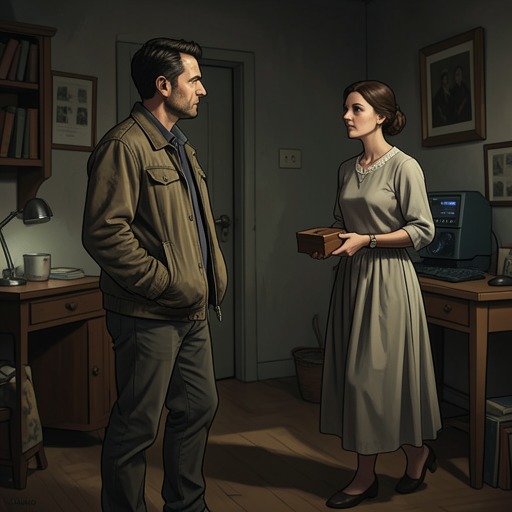
Atalia proposes the excursion after Shmuel remarks that the full moon will be gone. She imagines they will see an incomplete moon and the sunrise together, but gives him another reason for the trip: she wants to photograph a well-known married couple meeting secretly on Mount Zion, with Shmuel serving as her pretext. She tells him to be ready in the kitchen at three in the morning and warns him to dress warmly for Jerusalem’s winter nights.
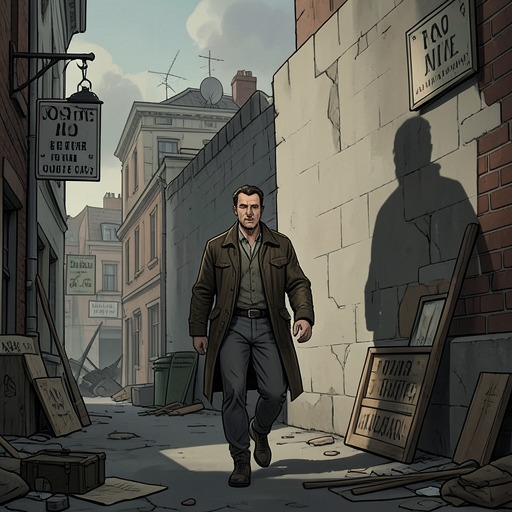
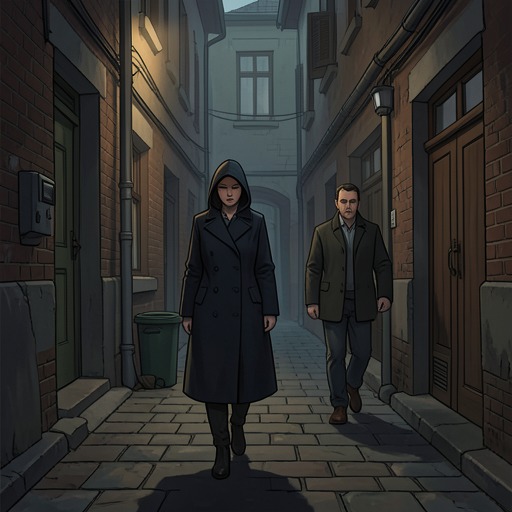
The ascent takes them past rusty barbed wire marking the mined no-man’s-land between Israeli and Jordanian Jerusalem. Mount Zion is described as an Israeli salient surrounded on three sides by Jordanian territory. The steep path leaves Shmuel struggling to keep up with Atalia; he fears losing her in the darkness and worries that exertion might trigger his asthma, though it does not. Their movement through this exposed border landscape makes the walk physically taxing as well as politically charged.
The summit and the blocked destination
A dog accompanying them stops at the boundary, hesitates, and turns back, its posture conveying a fearful retreat. Shmuel and Atalia continue uphill. At the summit they reach the entrance to the building called David’s Tomb, named for an old coffin there, covered by a curtain, which believers hold to contain the bones of King David. A reserve soldier blocks their way. Wrapped in a heavy military coat and wool cap, and leaning on an old Czech rifle, he tells them the site is closed.
The closure interrupts the expected excursion at its threshold. The pair do not enter the building, and the evidence does not establish whether they ever intended to do so: the stated purpose was to watch the sunrise, while Atalia’s account of the couple may itself be a pretext. The tomb and its guarded doorway nevertheless give the scene a precise destination, one they can approach but not pass into.
Dawn and departure
Around six, the first light appears over the Moab mountains. The mountains’ outlines grow clearer, the sky pales, and the stars disappear. The couple Atalia said she meant to photograph will not come there—or perhaps no couple existed at all. The soldier has left after his shift, and a sharp east wind comes and goes as Atalia asks Shmuel to wait a few more minutes before telling him to go home.
Atalia says she will stay alone a little longer and then go to work. Before parting, she takes Shmuel’s frozen fingers and puts two of them in her mouth for a moment, then says that time will tell. The walk produces no photograph and no confirmation of the secret meeting that supposedly prompted it. Instead, Mount Zion becomes the place where the uncertainty of Atalia’s story gives way to a small, direct act of intimacy, followed by her choice to remain alone.