Yemin Moses
JudasYemin Moshe is a poor Jerusalem neighborhood whose low stone houses and deserted lanes shape a nocturnal walk by Shmuel Ash and Atalia Abravanel. The scene’s particular poverty and darkness give the district more than a geographical role: as the pair descend toward the valley of Hinnom, Shmuel names their surroundings Gehenna, letting the physical route acquire a scriptural resonance.
Setting and streets
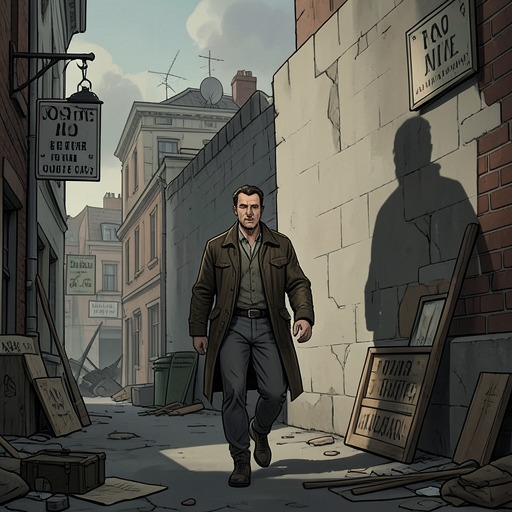
In the late 1950s and early 1960s, Yemin Moshe consisted of rows of low stone houses, some with tiled roofs and others with flat rooftops. Small courtyards held wells for collecting water, dating from the Turkish period and covered with iron lids. Rusted brass pots contained geraniums, edible herbs, and aromatic plants. The details place the neighborhood in everyday use, while its modest homes and water stores distinguish it from a more prosperous urban landscape.
At night, the houses are dark and closed. No light shows behind the barred windows; a single pale streetlamp scatters yellowish patches over the pavements. The narrow lanes are otherwise empty, making the neighborhood feel both inhabited and withdrawn from view.
The walk through the neighborhood
Shmuel and Atalia reach Yemin Moshe after crossing Keren Kayemet Street, passing the Jewish Agency’s amphitheater-shaped building, and continuing by way of King George Street and George Washington Street. They pass behind the YMCA tower and the King David Hotel, then descend toward Montefiore’s windmill and Mishkenot Sha’ananim. From the stairway street at the edge of Yemin Moshe, they continue downhill toward the road around the Hinnom Valley.
A mixed-breed stray dog approaches and sniffs the hem of Atalia’s dress. Shmuel stops to give it a couple of quick strokes. The dog licks his hand, whines softly, and follows the pair at a distance, head lowered and tail wagging as it seeks further affection. Its small, vulnerable presence interrupts the otherwise empty streetscape and accompanies the rest of their descent.
Gehenna and narrative significance
As they go down toward the road around the Hinnom Valley, Shmuel murmurs that they are in Gehenna. The remark binds the literal route to a religious image: the walk moves through a poor, silent neighborhood toward a valley whose name evokes the realm of the dead. The setting thus supports a shift from ordinary urban geography to scriptural association without ceasing to be concrete—iron-covered wells, barred windows, a lone lamp, and a dog trailing behind them remain its visible particulars.