Rombeau
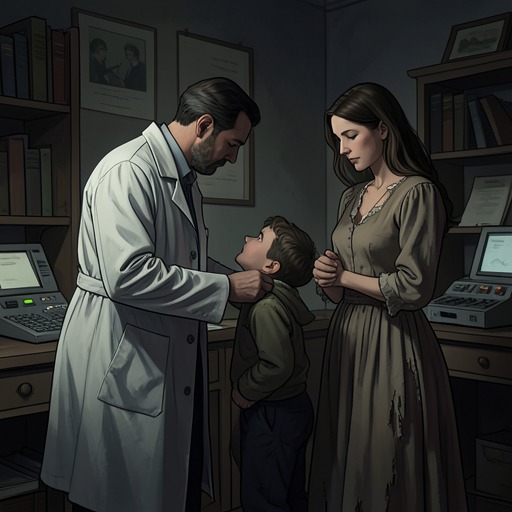
JustineRombeau, Rodin’s friend and colleague, is a physician whose claims of scientific purpose accompany his participation in the abuse and planned killing of Rosalie. He examines her, helps Rodin confine her, and agrees to dissect her after death. When Therese tries to rescue Rosalie, Rombeau helps capture them both and threatens Therese with a further experiment. His role makes him not merely an advocate for Rodin’s scheme but an active agent in it.
Identity and Association
Rombeau enters the account through Therese’s effort to discover what became of Rosalie after Rodin arranged her secret departure. Therese suspects Rodin’s explanation and searches the house; moans lead her to a concealed cellar, where she finds Rosalie imprisoned. Rosalie recounts that Rombeau had examined her before she disappeared and that Rodin then handed her over to him, despite her resistance. The account establishes Rombeau as Rodin’s professional associate and participant in the treatment that preceded Rosalie’s confinement.
Rodin had told Rosalie she would be sent to visit a relative, accompanied by an older woman. Instead, after crossing town and saying farewell to acquaintances, Rosalie was brought back to her father’s house at midnight. Rodin seized and silenced her, then locked her in the cellar. Rombeau is not identified as the person who carried out that final confinement, but his examination and collaboration with Rodin form part of the events that led to it.
The Proposed Dissection
Therese’s suspicions become urgent when she overhears Rodin and Rombeau dining together. Their conversation reveals a plan to kill Rosalie, then fifteen, and dissect her in the name of anatomical research. Rombeau argues that examination of a young girl’s body would provide knowledge unavailable through other means. He tells Rodin that he had feared the father’s attachment to his daughter might make him hesitate, but accepts Rodin’s decision to proceed.
The discussion turns murder into a purported scientific necessity. Rodin claims that sacrificing one life could benefit many, and Rombeau supports the proposition that no other method could supply the desired information. Rombeau’s reference to similar experiments he had witnessed in hospitals presents the planned act as an extension of established practice, rather than an isolated transgression. The appeal to institutional precedent does not make the proposed killing less deliberate: both men discuss Rosalie as the chosen subject of an experiment she has not consented to undergo.
Rombeau’s arguments also make clear that he understands the familial tie that might obstruct the plan. He raises Rodin’s relationship to Rosalie as a reason for concern, only for Rodin to reject the idea that fatherhood should restrain him. Rombeau does not withdraw from the conversation or challenge Rodin’s reasoning; he remains an accomplice as the plan advances toward that evening.
Participation in the Failed Rescue
After hearing the conversation, Therese rushes to the cellar to free Rosalie. She finds the key, opens the door, and urges her friend to flee. Their escape fails just as Rosalie approaches the threshold: Rodin and Rombeau appear, and Rombeau seizes Therese while Rodin stops his daughter. The near-escape turns the conspirators’ discussion into immediate action and makes Rombeau directly responsible for preventing the rescue.
Rodin accuses Therese of encouraging Rosalie’s flight and frames her intervention as a servant’s offense. Therese answers that she had to act because Rosalie’s father was plotting against her life. Rombeau helps drag both women back into the house. Rosalie is tied to a bedpost, while the men direct their anger toward Therese and declare an intention to examine her in a way that could not be carried out on a corpse. Their stated scientific rationale thus extends beyond Rosalie: Rombeau takes part in the threatened abuse of the person who tried to save her.
Characterization and Narrative Significance
Rombeau is characterized through a contrast between professional language and criminal conduct. He invokes anatomy, research, and the limits of existing knowledge while discussing the killing of a girl held against her will. His appeal to past hospital experiments and to the supposed impossibility of obtaining information by other means lends the conversation a veneer of method, but the immediate circumstances expose its function: it helps the men authorize violence and overcome scruple.
His role is distinct from Rodin’s but inseparable from the plan. Rodin is Rosalie’s father and the person who imprisons her; Rombeau supplies professional collaboration, endorses the proposed dissection, and helps capture Therese when she intervenes. The narrative therefore presents him as an active partner rather than a distant adviser. The failed rescue leaves the danger to Rosalie unresolved at this point, while Rombeau’s participation establishes him as one of the people responsible for the threat facing both women.