Valbois
JustineValbois is a compassionate benefactor who gives Therese practical help after she escapes Dubois, then arranges for her to leave Grenoble with Madame Bertrand. His brief appearance provides a sharp contrast to the exploitation surrounding Therese: rather than demand anything from her, he returns what was stolen, supplies what she needs, and helps her continue on her way.
Identity and Encounter
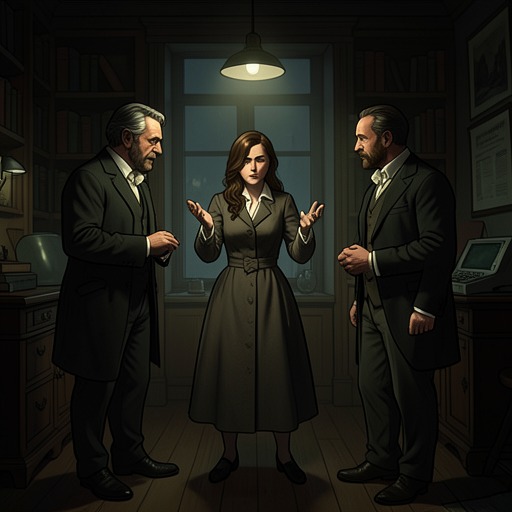
Therese reaches Valbois at an inn after escaping the debauchee’s house. Disguised in the skirt and mantle Dubois had removed, she has fled by an unfamiliar road and entered the inn while its occupants were still asleep. She goes straight to Valbois’s room and wakes him; in her disordered state, he scarcely recognizes her. When he asks what has happened, Therese recounts the horrors she has both witnessed and suffered, and tells him that Dubois is nearby and could be arrested.
Practical Aid and Moral Response
Therese explains that Dubois took her clothes as well as the five louis Valbois had given her. Valbois acknowledges the repeated misfortunes that have befallen her, but reads her survival as evidence of a celestial power protecting her and urges her to remain virtuous. His response is immediately material as well as moral: he returns the stolen money and promises that a seamstress will bring her two complete outfits and linen within an hour.
Valbois also refuses to pursue Dubois. He says his reasons for letting her go are the same as those Therese had explained the previous day. The choice leaves Dubois unpunished, but Valbois does not let that decision become an excuse to abandon Therese: he concentrates instead on repairing the damage done to her and getting her out of danger.
Departure from Grenoble
Valbois tells Therese that she must leave that very day because Madame Bertrand is expecting her. He has persuaded Bertrand to delay her departure by a few hours, giving Therese time to join her. Therese falls into his arms and calls him a virtuous young man, wishing that Heaven will repay his kindness. Valbois answers that the happiness she wishes him is already his, because her happiness is his doing, and bids her farewell.
Therese leaves Grenoble with Madame Bertrand in a small covered carriage drawn by one horse and driven from within. The party also includes Bertrand’s baggage and her fifteen-month-old daughter, whom Bertrand is still nursing. Therese quickly forms a deep attachment to the baby, a bond that she calls a great misfortune. She later recalls Grenoble as a city where she had not found the felicity she expected, but had encountered an unusual number of kind and good-hearted people who sympathized with her or eased her suffering.
Narrative Significance
Valbois’s kindness is defined by concrete acts rather than promises: he restores Therese’s money, arranges clothing and linen, and secures her place in a departing carriage. His refusal to arrest Dubois complicates the relief he offers, since the immediate wrongdoer remains free; nevertheless, he uses his resources to protect Therese and restore her ability to travel. In a story of virtue repeatedly exposed to violence and injustice, Valbois briefly embodies the possibility of humane assistance, while Therese’s account preserves both the comfort of his actions and the limits of their protection.