Abbey of Gethsemani
LongingThe Abbey of Gethsemani is a Trappist-Cistercian monastery in Kentucky, founded in 1848 by monks from France. In this account it is more than a historic religious institution: its worship, silence, and demanding communal life open a window onto monastic spirituality for visitors, while its grounds become central to Thomas Merton’s vocation and writing. The abbey also remains a place of retreat and study, linking the life of its monastic community with the continuing spiritual practice of people who come from outside it.
Setting and Monastic Life
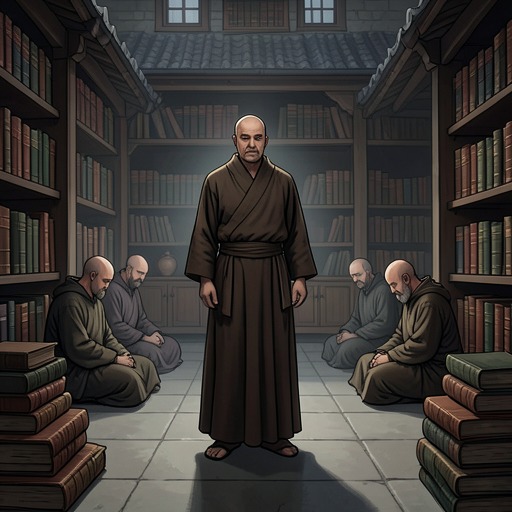
The monastery stands in Kentucky’s rolling Knobs region near Bardstown. Its daily rhythm is organized around communal worship and a disciplined way of life. When a Protestant seminary class visited in the late 1950s, the monks entered the church in white cowls, took their places in the choir stalls, and sang the psalms in Latin as Gregorian chant. There were about 250 monks at the time. For visitors unfamiliar with monastic worship, the service made an otherwise historical subject immediate and present.
The abbey’s hospitality offered visitors more than a brief view of the church. The schedule for the seminary group included the Divine Offices, meals in the guest house, a tour of the monastery, and an afternoon conversation with a monk about monastic life. Visitors encountered both the structure of the community and its interpersonal warmth; the silence of the place made a strong impression alongside the monks’ welcome. The contrast between this ordered life and the wider world was especially striking to students who had imagined religious vocation primarily through social action.
The monastery’s discipline was not an abstraction. Its members had relinquished family and careers for poverty, chastity, obedience, and prayer. To the seminary students, this commitment suggested a dimension of Christian life they had not adequately considered. The visit did not cancel their concern for social justice; it unsettled the assumption that public action alone expressed the full range of religious vocation. Gethsemani’s significance for them began in that encounter with a community whose central work was prayer.
A Place of Encounter and Learning
D. Bard Thompson, a professor of church history at Vanderbilt University Divinity School, took his first-year class to Gethsemani so that students studying medieval monasticism could see that monastic life continued in the present. A student with a car joined the trips five times. On two visits, Thomas Merton spent the afternoon with the group, answering questions patiently and in good humor. The student did not yet know the extent of Merton’s standing as a spiritual writer; that recognition came later, through reading and teaching his books.
These visits shaped the student’s intellectual direction. Having missed Thompson’s course on the history of Christian spirituality, the student undertook an independent study with him, reading works by many of the figures discussed in the book. This developed into a lifelong interest in spirituality and mysticism, with a particular focus on the Cistercian tradition and the writings of Bernard of Clairvaux. The student attended annual conferences on Cistercian history, sometimes presenting papers, and learned from monks among the participants. Gethsemani thus served as the point of entry to a sustained study of monastic thought, not simply as the setting for an isolated class visit.
A small exchange during one trip also carried beyond the visit itself. Asked how to develop a deeper prayer life, a monk advised a student to pray the psalms. The author adopted that counsel as a steady spiritual practice, returning to the psalms and learning to attend to them more deeply. The monastery’s teaching was conveyed through a concise recommendation grounded in its own liturgical routine: the prayers sung by the community could also shape the practice of a visitor.
Thomas Merton’s Monastic Home
Gethsemani became the defining setting of Thomas Merton’s religious life. He first arrived for a Holy Week retreat on Palm Sunday, April 5, 1941, while teaching English at St. Bonaventure College. The retreat’s silence, the monks’ chanting of the psalms, the simple food, the bare guest-house room, and the rigid schedule differed sharply from his earlier life. He came to see the discipline as a possible source of stability and left considering whether he should become a Trappist monk.
On December 10, 1941, Merton arrived by train to enter the monastery, having given away most of his possessions. He was accepted as a choir-monk postulant by Abbot Dom Frederick Dunne, later taking the white novice’s habit and receiving the name Brother; after ordination he was known as Father Louis. On the anniversary of his first visit, he described Gethsemani as the place where everything made sense and where he felt at home. The monastery’s strict routine was not merely a backdrop to his conversion to monastic life: it was the form of life in which he believed he could pursue what mattered most to him, loving God and following God’s will.
Merton’s life at the abbey joined ordinary duties to long reflection. As Master of Scholastics, he walked through the monastery during nightly fire-watch rounds, from its deepest basements to the top of the bell tower. Familiar corridors and the memory of waxing a floor as a postulant connected his present responsibilities with his earliest days there. The sounds and quiet of the building accompanied questions he had considered over many years. For Merton, silence was not simply the absence of an answer; it became a setting in which spiritual attention could deepen.
Gethsemani also marked important turns in his life beyond his own vocation. His brother John Paul visited in 1942 and was baptized a Catholic; the following year, he died when his Canadian Air Force plane went down while returning from a mission over Germany. Merton responded by writing the poem “For My Brother, Reported Missing in Action.” In 1944, Merton completed his novitiate and took simple vows, promising to remain for three more years. At the abbot’s urging, he began the autobiography that became The Seven Storey Mountain, a work about his life up to his entry into the monastery. Its title invokes Dante’s Purgatorio and the seven levels of purgatory Merton believed he had to climb in making the passage from his former life to monastic life.
Hermitage, Departure, and Return
Merton’s relationship with the abbey developed as his search for solitude and conversation changed. He had once sought permission to transfer to a hermit order, but his request was denied. Eventually, he was allowed to use a small building on the monastery grounds, originally built for ecumenical conversations with Protestants. At first he could spend only occasional hours there. Abbot James Fox gradually extended the permission, and Merton spent his final three years as a full-time hermit in the building. The hermitage therefore offered solitude within the monastery rather than separation from it.
His interest in religious traditions beyond Christianity also extended the abbey’s role as a place of encounter. Merton read and wrote about traditions including Buddhism, Taoism, Hinduism, Islam, and Judaism, and wanted conversations about spiritual matters to foster understanding. The building that became his hermitage had itself been intended for dialogue with Protestant visitors, a purpose that echoed his wider conviction that spiritual exchange could matter more than formal institutional unity.
Merton’s last Asian journey brought the monastery into view through absence as well as presence. In the final entry of his Asian Journal, on the Feast of the Immaculate Conception, he wrote to his secretary at Gethsemani that he felt homesick for the abbey as Christmas approached. On December 10, 1968, the monastery received a cable from the American Embassy in Bangkok reporting his death. The account describes the death as accidental electrocution in his hotel room. The cable brought news of his death back to the community that had been his home for decades.
Continuing Life and Significance
Gethsemani has changed since the period of Merton’s monastic life. Its facilities have been remodeled and improved, and its community has become much smaller. Several monks who had become friends and mentors to the author have died. Yet the abbey remains a place of retreat and spiritual encounter. The author and his wife spend a week there each year, and they often attend a monthly Thomas Merton discussion group held in Merton’s hermitage.
The guest house makes silence an explicit part of its welcome. Signs there declare, “Silence is spoken here,” a phrase that captures the value visitors find in the monastery’s quiet. The setting continues to attract Protestants as well as Catholics; the author notes that they are not the only Protestants who come to retreat in this Catholic community. The abbey’s identity is therefore both particular and hospitable: its Cistercian practices remain rooted in monastic life, while its spaces support reflection among people with different backgrounds.
The monastery’s importance rests on this combination of continuity and influence. It sustains a communal religious practice, introduced generations of visitors to prayer and monastic discipline, and gave Merton the setting in which he lived, wrote, and pursued solitude. Its influence also appears in the lives of those who returned to it as students, researchers, retreatants, and readers. Gethsemani is presented not as a relic of medieval history, but as a living institution whose habits of worship, silence, and hospitality continue to shape spiritual understanding.