Chicago
LongingChicago was a formative place in Dorothy Day’s life: first the setting of her family’s own poverty and an encounter with prayer that she never forgot, and later a city in which her social commitments met the precarious conditions of her adult life. Its significance lies less in a settled home than in the experiences it gathered together—material hardship, religious feeling, work, political company, and imprisonment.
A childhood shaped by poverty
After the family had moved from Brooklyn to Oakland, the San Francisco earthquake exposed young Dorothy to homelessness, loss, and suffering, but also to neighbors feeding and helping one another. The family then moved to Chicago to begin again. Her father, a journalist, tried to write fiction, and this was the first period when the family was actually poor. They lived in an apartment over a store on Cottage Avenue, where pavement replaced a backyard and any stretch of grass. When she wanted to get away, Dorothy walked to Lake Michigan. The contrast between the cramped apartment and the lake gives the childhood account a specific geography: hardship was part of the home, while walking offered a temporary change of scene.
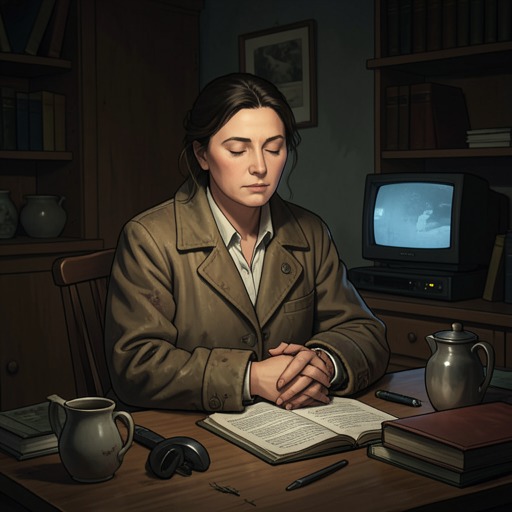
Chicago also entered Day’s early understanding of religious life through a small domestic incident. The family was not religious, but one day she visited a friend and found the girl’s mother, Mrs. Barrett, kneeling in prayer. Mrs. Barrett explained that her daughter was out and returned to praying. Day later recalled feeling an intense affection for her. What stayed with her was the conjunction of poverty and spiritual joy: Mrs. Barrett lived in a poor home, yet Day perceived beauty and gladness in a life centered on God. The scene gave religious practice a presence in ordinary life, quite unlike an abstract doctrine or a formal lesson.
From observation to social concern
Day’s experiences in Chicago helped connect what she had seen after the earthquake with poverty in her own household. The first experience had shown suffering on a large scale and the generosity people could show one another in a crisis; the apartment on Cottage Avenue made financial hardship part of her family’s daily circumstances. Mrs. Barrett’s prayer offered a further contrast: hardship did not rule out joy, but neither did spiritual life erase the material conditions surrounding it. Together, these experiences contributed to Day’s developing concern about poverty, injustice, and oppression.
The account presents that concern as something that matured over time, not as a fully formed program in childhood. Later, Day would see people disabled and exhausted by industrial life, indebted farmers, and mothers with hungry children. She felt called to help but did not know how, and wanted churches to address the suffering around them rather than confine religion to Sunday observance. Chicago’s early importance is therefore twofold: it exposed her to poverty firsthand and supplied an example of religious devotion that made spiritual life seem compatible with everyday conditions. The city’s memories became part of the background to her later demand that faith answer social need.
An unsettled return
Day later went back to Chicago during a melancholy period of her life. There she had a relationship with newsman Lionel Moise that resulted in a pregnancy and an abortion; she later wrote about the experience in her novel The Eleventh Virgin. After Moise ended the relationship, she married Barkeley Tobey, whom she described as a rebound marriage. Tobey seemed to have some connection with publishing. They spent a year in Europe, and Day enjoyed living in Italy, but after they returned she knew the marriage was over. This passage places Chicago within a sequence of intimate upheaval and unstable attachments, rather than presenting it as a permanent refuge. During this period she held various jobs, including modeling for artists and working as a sales clerk.
Her life in the city also brought her into contact with radical political circles. Day’s sister, Della, joined her in Chicago; Della had become a communist and supported the Loyalist movement in Spain. Day, too, wrote for radical publications, including The New Masses. In the fall of 1923, when Della wanted to leave Chicago for New Orleans, Dorothy joined her. The departure marks another transition in a life repeatedly shaped by movement. Chicago was a place where family ties, political affiliation, writing, and uncertain employment converged, but the evidence does not describe it as the final destination of any of them.
Arrest and the limits of escape
A further Chicago episode sharpened Day’s attention to suffering. While visiting a suicidal woman in a rooming house run for members of a radical labor union, Day was caught in a police raid. She and the woman were arrested on a prostitution charge and taken to jail. The charge was eventually dropped after Day and other demonstrators spent several days in custody. The episode brought police intervention and confinement into a visit that had begun as an attempt to see someone in distress.
In an adjacent cell, a woman with drug addiction beat her head against the metal walls and cried out. Day tried to shut out the sounds, covering her ears and using a pillow to muffle them. The scene made her think about addiction and the disorder of the world, connecting a person’s suffering to what she understood as the consequences of small acts of self-indulgence. The account does not turn the woman into a solution to Day’s questions; instead, her suffering confronts Day with a form of pain she could not simply relieve. Chicago thus recurs as a place where compassionate attention met the limits of action, and where the conditions of poverty, addiction, and policing became immediate rather than theoretical.