Washington, D.C.
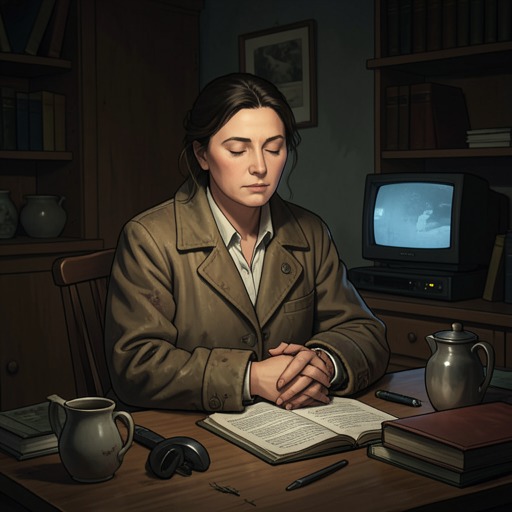
LongingWashington, D.C. appears in two sharply contrasting episodes: as the setting for Howard Thurman’s creative work in university worship, and as the capital where Dorothy Day witnessed unemployed people marching for food, work, and hope. The city is not rendered through a continuous street-level portrait. Instead, the accounts make it a meeting ground for religious experiment and public deprivation, asking what spiritual conviction means inside institutions and in the presence of people in need.
Howard University and religious practice
Howard University, described as a leading university for African American students, offered Thurman a place on the faculty of its School of Religion. He was later appointed dean of the Chapel. The position brought a practical challenge: students needed to be drawn into chapel without feeling resentful or compelled. Rather than treating worship as a fixed program, Thurman tried different forms in an effort to engage them and improve their experience.
His experiments included periods of silence for meditation and prayer, shaped in part by his study of mystics at Haverford, as well as liturgical dance. The first dancer was a Roman Catholic woman who taught at a Catholic school in Baltimore. Thurman also explored visual art as a form of worship. For one service, he selected six European masterpieces depicting the Madonna and arranged for live participants to reproduce them onstage. Each life-sized tableau appeared behind a frame nine feet by five feet, with costumes, colors, backgrounds, and lighting carefully matched to the painting. A period of silence separated each display, and Ave Maria accompanied every presentation.
The elaborate staging did not displace contemplation; it organized attention. Stillness, music, and carefully composed images made the service an experiment in how people might experience worship together. Thurman judged the event a success, describing the congregation and participants as joined in a moment of spiritual transcendence. He saw that shared worship could make an experience of unity more compelling than the divisions that separated people. In this account, Washington’s university chapel becomes a place where a religious idea is tested through the concrete arrangements of performance, silence, and participation.
The hunger march and public witness
A different Washington enters Dorothy Day’s account in late 1932, during the depths of the Great Depression. Commonweal sent her to the capital to cover a hunger march by unemployed people. She was already troubled by what she regarded as the lack of Catholic leadership in addressing the social crisis, and she prayed for a way to help the poor. The assignment put that concern before her as an observable public event rather than an abstract question.
Day recalled standing on the sidewalk among others as a ragged group, mostly men, demonstrated in search of hope. Their needs were specific: food, jobs, and agricultural prices high enough for farmers to make a living from their crops. They stood together in solidarity, while more prosperous onlookers watched from curiosity. Day’s account turns that contrast into a judgment about religious responsibility. She understood the marchers as people close to Jesus Christ, who had lived among ordinary workers, and saw their hunger as evidence that Christian profession had not prevented betrayal or deprivation.
The capital’s public setting gives force to the contrast between the marchers’ material needs and the comfort of those observing them. Day did not treat the gathering as a spectacle detached from everyday hardship: the demands for food, employment, and viable prices identify the conditions the marchers wanted changed. Her response also joined social criticism to prayer. The passage records her frustration with inadequate religious leadership, her sight of people acting in solidarity, and her appeal for a means of service; it does not present Washington itself as the source of a resolution.
Two settings, one test of faith
The accounts place different kinds of religious work in the same city without suggesting that Thurman and Day shared a Washington episode. At Howard University, Thurman addressed the challenge of making worship meaningful to students through experimental forms. In Day’s report, the sidewalk and the march exposed the distance between Christian ideals and the circumstances of unemployed people. One setting is deliberately arranged for collective worship; the other is a public demonstration shaped by need. Both make religious commitment answerable to actual human participation rather than merely to declared belief.
Washington’s significance in these passages therefore lies in the work carried out and the conditions made visible there. Thurman’s chapel program sought to create a shared experience across differences, while Day’s witness directed attention to people whose poverty and search for work tested the claims of Christianity. The juxtaposition does not equate a service with a protest. It shows, instead, two distinct ways the book connects spiritual life to the world beyond private devotion: through the forms of worship a community builds, and through the attention given to people demanding the means to live.