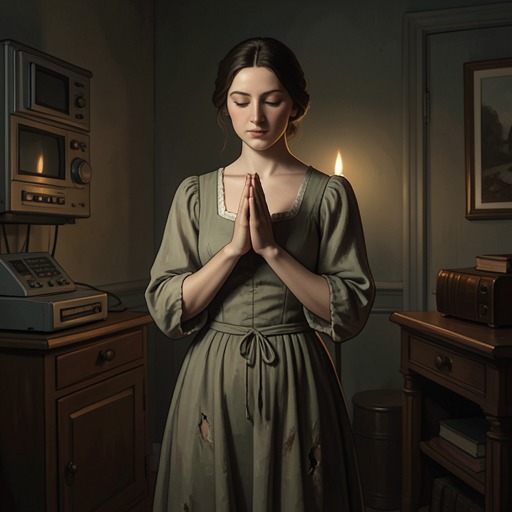
Milan
LongingMilan was the turning point in Augustine’s search for religious truth: a city he entered for professional reasons became the place where his intellectual doubts, growing interest in the Church, and encounter with Ambrose converged. Although his later mystical experience with Monica took place at Ostia, the decisive preparation for that new life unfolded in Milan.
Setting and Arrival
Augustine moved to Milan after finding that students in Rome evaded tuition, undermining the financial security he sought as a teacher. An opening for a rhetoric instructor offered a new opportunity, and he traveled there with his companion and their son, Adeodatus. Milan was a major city and the residence of the Roman Emperor Valentinian II; for Augustine, however, its importance lay less in its imperial standing than in the religious direction his life would take there.
He arrived still troubled by ideas acquired through Manichaeism. He had imagined God as a material substance and evil as another substance, a view that continued to obstruct his search for an account of God and human life. Milan therefore became not an instant refuge from uncertainty but the setting in which his inherited assumptions began to give way.
Ambrose and a New Religious Direction
The move brought Augustine into contact with Ambrose, the bishop of Milan, whose reputation and preaching impressed him. Augustine became a catechumen in the Church, intending to wait for a clear direction about what he should do. His mother, Monica, joined him and found him discouraged: he had left the Manichaeans but had not yet become a Catholic. He admired Ambrose while still wondering how a man could sustain a celibate life, a question that reflected Augustine’s own difficulty imagining a different way of living.
Ambrose’s skill in interpreting scripture helped change Augustine’s judgment of the Bible, which he had previously considered inferior literature. Meanwhile, reading Neoplatonist philosophy encouraged him to look inward and conceive of God as transcending the mind and material existence. These influences did not settle everything. Augustine still struggled to understand how the divine could be joined to human flesh, and his friend Alypius helped explain the Church’s belief that Christ was God made flesh. Reading Paul then brought him to a Christian account that joined philosophical insight to grace, humility, and the person of Christ.
Crisis and Conversion
The conversion narrative associated with Augustine’s Milan period gathers these gradual changes into a moment of crisis. Ponticianus visited Augustine and Alypius and, finding Augustine reading Paul, told them about Antony and other Christians who had left city life for prayer and self-denial. The account unsettled Augustine: people without his education, he recognized, were committing themselves to God while he remained divided over whether to change.
Augustine withdrew to a garden behind the house where he was living. There, in anguish over his conflict between the desire to serve God and his attachment to his former life, he heard a child’s voice say, “Pick up and read, pick up and read.” He opened Paul’s letter to the Romans and read a passage urging a life turned away from indulgence and toward Jesus Christ. The passage spoke directly to the life he had led and the change he feared and desired. Augustine later described the effect as relief from anxiety and the dispersal of doubt. He told Monica, who received the news with joy.
Consequences and Significance
After the conversion, Augustine resigned his Milan professorship, where he had taught lawyers and orators the art of rhetoric. His departure marked a concrete break with the professional life that had brought him to the city. He was later baptized alongside Adeodatus and Alypius; after Monica’s death, he returned to North Africa and established a monastery at Tagaste with friends.
Milan’s significance lies in the way it links a long preparation to a decisive response. Augustine’s arrival for work did not itself resolve his doubts: Ambrose’s example, a renewed engagement with scripture, philosophical exploration, and the stories of Christians devoted to prayer all contributed to the change. The book presents the city as the setting where those influences converged, while locating the fullest later expression of Augustine and Monica’s spiritual ascent at Ostia.