Branwen and Matholwch’s marriage
MabinogionBranwen and Matholwch’s marriage is presented first as a dynastic alliance intended to unite Ireland and the Island of Britain, then as the bond through which a courtly insult escalates into persecution and war. Branwen leaves her family’s court with honor and becomes queen and mother in Ireland, but the marriage cannot protect her when Matholwch’s people demand vengeance. Her secret appeal to Bendigeid Fran brings the conflict back across the sea, and she dies on the journey home, believing that the two islands have been destroyed because of her.
Alliance and Wedding
Matholwch, king of Ireland, arrives with thirteen ships and asks Bendigeid Fran for Branwen’s hand. His stated purpose is political: an alliance would make Ireland and the Island of Britain more powerful. Bendigeid Fran welcomes the suitor ashore, and the court agrees to the match. Branwen is described as one of the three chief ladies of the island and as the fairest damsel in the world; the account thus gives her exceptional standing within the alliance being negotiated.
The wedding is held at Aberffraw. Matholwch and his host travel by ship, while Bendigeid Fran and his company go overland. At the feast, Branwen sits beside Matholwch, with Bendigeid Fran and Manawyddan on the other side of the gathering. The company feasts beneath tents rather than inside a hall, since no house could contain Bendigeid Fran. That night Branwen becomes Matholwch’s bride. The marriage is therefore marked publicly by hospitality and ceremony, but the narrative gives no account of Branwen’s own decision or of private affection between the spouses; its stated rationale is the power of the alliance.
The Insult and Its Consequences
The wedding’s celebration is followed by a rupture caused not by the spouses but by Branwen’s maternal half-brother Evnissyen. Seeing Matholwch’s horses, Evnissyen learns that they belong to the Irish king, who has married his sister without his consent. He treats the exclusion as a personal insult and mutilates the horses so severely that they are rendered useless. His grievance over not being consulted thus damages the very relationship the marriage was meant to secure.
Matholwch’s men interpret the ruined horses as a deliberate insult and urge him to return to his ships. Matholwch himself is especially struck by the contrast: he has been given a woman of high rank and beloved by her kin, yet has been dishonored after the match. He leaves the court, and messengers sent by Bendigeid Fran catch up with him to ask why he is departing. The surviving account establishes that the wedding proceeds after this crisis, but does not detail the terms by which the offense is settled. The marriage continues across the sea, carrying the original grievance into Branwen’s new household.
Branwen in Ireland
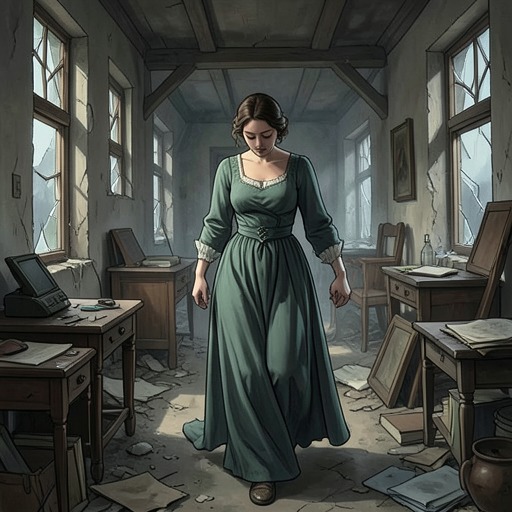
Branwen and Matholwch travel from Aber Menei to Ireland, where their arrival is welcomed. During her first year there, Branwen receives visitors generously, giving each great man or noble lady a clasp, ring, or royal jewel. She spends this period in honor and friendship. She becomes pregnant, gives birth to Gwern, and the boy is sent to be foster-nursed among Ireland’s best men. The marriage has thus established not only a connection between royal houses but also a new generation with ties to both kingdoms.
In the second year, public resentment over the insult Matholwch suffered in the Island of Britain rises among his foster-brothers and closest supporters. They blame him for accepting the settlement made for his horses without exacting vengeance. The punishment falls on Branwen: she is removed from Matholwch’s chamber and made to cook for the court. Each day, after the meat is cut up, the butcher strikes her on the ear. The account presents this treatment as retaliation for a grievance originating in the marriage negotiations, although Branwen did not cause Evnissyen’s act. The royal union that had promised mutual strength instead leaves her exposed to the anger directed at her husband.
The Message, War, and Aftermath
To prevent news of Branwen’s treatment from reaching the Island of Britain, Matholwch’s men order ships, ferries, and coracles stopped; people arriving from Britain are imprisoned so they cannot return. This isolation lasts three years. Branwen secretly raises a starling in the cover of a kneading trough and teaches it about Bendigeid Fran. She writes of her suffering and the contempt with which she is treated, ties the letter to the bird’s wing, and sends it across the sea. The starling reaches Bendigeid Fran at Caer Seiont in Arvon, where it alights on his shoulder and reveals its message.
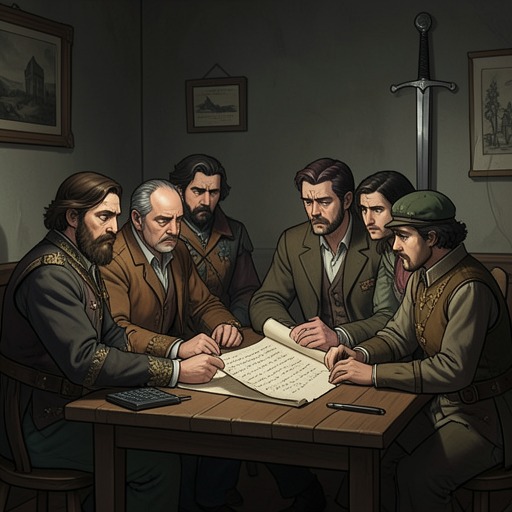
Bendigeid Fran grieves at the news and summons the island. He gathers seven-score and four countries, tells them of his sister’s suffering, and takes counsel with them; they resolve to go to Ireland. The response transforms the marriage’s private and political consequences into a military expedition. After the conflict, Branwen returns with the survivors and Bendigeid Fran’s severed head. When the party lands at Aber Alaw in Talebolyon, she looks toward Ireland and the Island of Britain and laments that both islands have been destroyed because of her. She groans, her heart breaks, and she is buried beside the Alaw River. Her death closes the marriage’s arc without reconciliation: the alliance that began in ceremonial welcome ends in bereavement, and Branwen’s own words register the human cost of the conflict as self-blame even though the story traces its escalation through Evnissyen’s violence and the vengeance imposed on her.