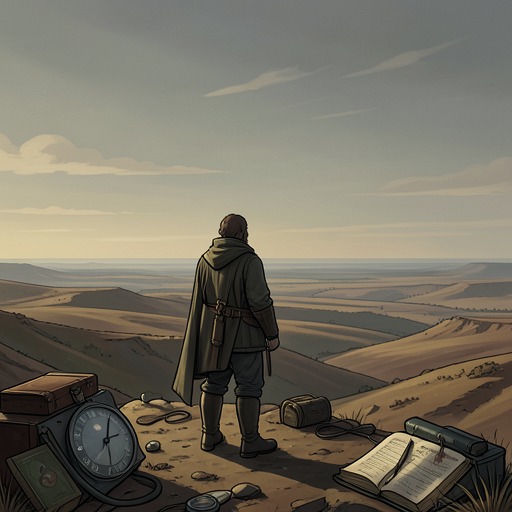
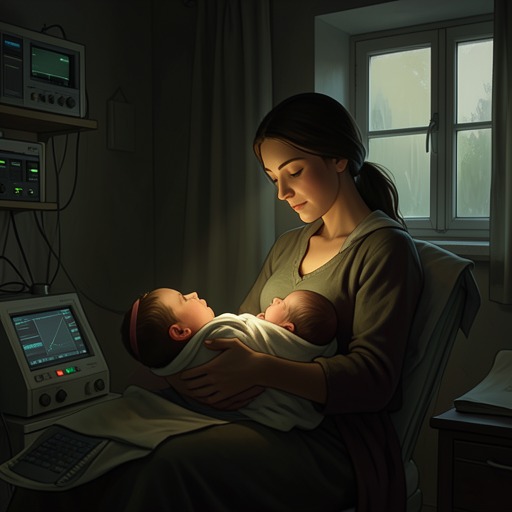
Creéis que vais a un funeral, pero en realidad acudís a un nacimiento
MayaThe expression “Creéis que vais a un funeral, pero en realidad acudís a un nacimiento” (rendered in another recollection as “Pensaréis que acudís a un funeral, pero en realidad habréis llegado a un nacimiento”) recasts a funeral as an arrival rather than an ending. Attributed to Ana María Maya, it becomes a hinge between her belief in a reality beyond ordinary life and the novel’s later revelation that she has not died. Its force comes not from a stable, indisputable prophecy but from the way its wording is remembered, disputed, and reinterpreted by different narrators.
Wording and Attribution
In the account Frank gives in his letter to Vera, Ana’s outlook is summarized in three pronouncements: reality extends beyond the present world; what people call her death will not mean that she is dead; and mourners will discover that what they thought was a funeral is in fact a birth. The funeral-and-birth formulation gives that sequence its most arresting image, making death and beginning occupy the same event rather than opposite ends of a life.
John Spooke later qualifies Frank’s report. He concedes that Ana said something like this, while emphasizing that no one can recall the exact words of a conversation from more than a year earlier. In his recollection, Ana spoke more generally about belief in another reality and life after death. He remembers her saying, “Tal vez volvamos a vernos en otro lugar y recordemos esto como un sueño,” and says that Frank goes too far by tying her dualistic view specifically to her own life, death, and funeral. John nevertheless believes that she did compare a funeral with a birth. The expression therefore reaches the reader through a layered act of recollection: Frank’s written account, then John’s retrospective correction of it.
A Recollection That Changes Meaning
The difference between the two accounts matters. Frank’s version makes the words sound like a direct forecast of Ana’s own death and what follows it. John resists that personal application, locating the remark instead within a broader conversation about what may lie beyond this reality. He also admits that Frank’s letter may have expanded Ana’s remembered thought through literary embellishment. The text leaves the precise original wording uncertain without dissolving the phrase’s importance: its significance lies partly in the gap between what was said and what later narrators need, or believe, it to mean.
That uncertainty makes the expression a small model of the book’s larger struggle with memory and interpretation. A sentence spoken in conversation is not preserved as an untouched record. It returns through a letter and a later correction, with each version placing different emphasis on its implications. John’s account does not simply disprove Frank’s; he confirms the funeral-and-birth comparison while resisting the claim that Ana explicitly applied it to herself. The image remains, but its status shifts from personal prediction toward a more general proposition about death and reality.
Grief, Memory, and the Living
The saying resonates beyond Ana’s own fate because the book repeatedly presents bereavement as a continuing relationship rather than a clean break. After rereading his letter to Vera, John is finally able to sort Sheila’s clothes for collection by the Salvation Army. The task feels like removing a swallow’s nest that has long been empty. Yet the practical act of clearing those clothes does not extinguish Sheila’s presence in his memory or his inner conversations.
John describes how he still anticipates Sheila’s exact words and sometimes answers aloud, even when he knows what she will say. He misses her body and the shared details of their life, including her habit of asking him to shuffle the cards for her solitaire games. In a telling reversal, he now misses the eccentricities that once irritated him, such as spending whole afternoons playing solitaire or cheating to make a game come out. The funeral-and-birth expression belongs to this emotional landscape: it does not make loss disappear, but gives language to the possibility that a relationship, a memory, or a life’s meaning may continue in forms the bereaved cannot simply control.
Frank and Vera’s history gives the phrase another dimension. After their daughter Sonia dies, their shared grief becomes too painful to sustain beneath one roof. Frank acknowledges that Vera did not leave because he had failed to forgive her; she fled his pain while struggling with her own, and their separation divided a grief they could not then bear together. In Salamanca, they speak at length about Sonia and recall the child through small stories, recognizing that they alone can keep her memories alive as part of an ongoing life. This does not reverse Sonia’s death. It does show how what comes after a loss can alter the meaning of what came before, a possibility Frank explicitly considers when he wonders whether the death might acquire a new meaning through something he and Vera do together.
Prophecy and Its Reversal
The phrase’s apparent prophetic force is tested in a conversation about whether Ana had been predicting the future. John recalls it as a question rather than a settled interpretation: Ana’s words may have been prophecy, but he cannot claim certainty about what she meant. That hesitation preserves the difference between a saying that foreshadows an outcome and proof that the speaker possessed foreknowledge.
The later reunion supplies the sharpest reversal. At a gathering in Seville, Frank and Vera stand together with a hand on her visibly pregnant belly. John recalls the phrases attributed to Ana, including her image of new consciousness developing in pregnant bellies, and then recognizes the immediate fact that overturns the assumption on which the earlier funeral interpretation rested: Ana has not died. The remembered expression thus meets two kinds of birth at once—the literal expectancy signaled by Vera’s pregnancy and the figurative birth invoked by Ana’s account of another reality. But the discovery that Ana is alive is not evidence that she literally returned from death; it reveals instead how readily a reported saying, shaped by grief and uncertainty, can be mistaken for an announcement of her death and what follows it.
The Expression’s Narrative Work
The phrase links otherwise distinct forms of loss, expectation, and continuation without making them interchangeable. Sheila’s absence persists in John’s habits of speech and memory; Sonia remains present in Frank and Vera’s shared recollections; Vera’s pregnancy brings a new life into view; and Ana’s reappearance overturns the story that she had died. The expression gives these developments a common vocabulary of endings that may not be final, while the different circumstances keep each loss and return specific.
Its movement through Frank’s letter and John’s later account also makes narration part of its meaning. Frank’s version gives the words a striking personal application; John restores uncertainty and disputes the precision of that application, yet confirms the central comparison. By the time the characters gather again and Ana is known to be alive, the line has already been heard as a possible prophecy. Its lasting significance is therefore less that it predicts a single event than that it exposes the unstable boundary between death as an event, death as it is understood by survivors, and the meanings that later experience can revise.