Se tarda miles de millones de años en crear un ser humano. Y sólo se tarda segundos en morir
MayaThe expression “Se tarda miles de millones de años en crear un ser humano. Y sólo se tarda segundos en morir” binds the deep time of human creation to the suddenness of death. First identified as Frank’s own words, it returns as Ana’s last utterance in hospital, where José understands it as both a farewell and a declaration of love; near the book’s close, the sentence is repeated alone, giving a private exchange the force of a final refrain.
Meaning and Form
The saying sets two radically unequal spans against each other: billions of years to create a human being, seconds to die. Its compressed contrast makes mortality legible not as an abstraction but as a violent difference in scale. The long work of becoming and the instant of ending occupy the same sentence, with the second clause cutting sharply across the first.
The statement does not treat human life as self-contained. Its immense timescale evokes the long process that makes a person possible, while its abrupt ending insists on the fragility of the result. The line’s force comes from holding those truths together without reconciling them: life takes deep time to form, yet can disappear almost at once.
Frank’s Words, Returned by Ana
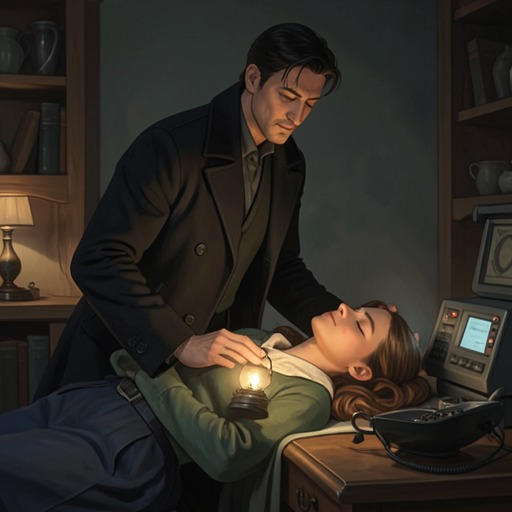
When asked what Ana had said during her hospital stay, José recalls that she was more lucid than ever. She spoke about Comodín, El Planeta, her great-grandfather, who had died after a fatal fight, and secrets about flamenco. Then her heart suddenly stopped. Her last words were the sentence Frank had once used to express his own perception of life.
José recognizes the saying as his own words, but also says that this view of life had left its mark on Ana, just as he himself had become an aficionado of flamenco. The sentence therefore returns not as a mere quotation remembered at a deathbed, but as evidence of an exchange between people: a way of understanding life has passed from Frank to Ana and become part of what she can say at the end.
Farewell and Refrain
José interprets Ana’s final words as both farewell and declaration of love. Their double meaning follows from the sentence’s two measures: it names the long labor of creating a human life while confronting the few seconds in which that life can end. In the hospital scene, the line carries both a recognition of mortality and an intimate message to those left behind.
The book later prints the sentence as a separate, numbered fragment near its ending, after the image of evolution’s long journey ending abruptly. Isolated on the page, it echoes the earlier bedside scene while widening its scale: the sudden end of one person’s life resonates with the larger possibility of extinction. Repetition gives the saying its final shape—not a solution to death, but a compact expression of the disparity between the time required for life and the speed of its loss.