Berto Wins the Pro-Am Tournament and Mickey Falls into Debt
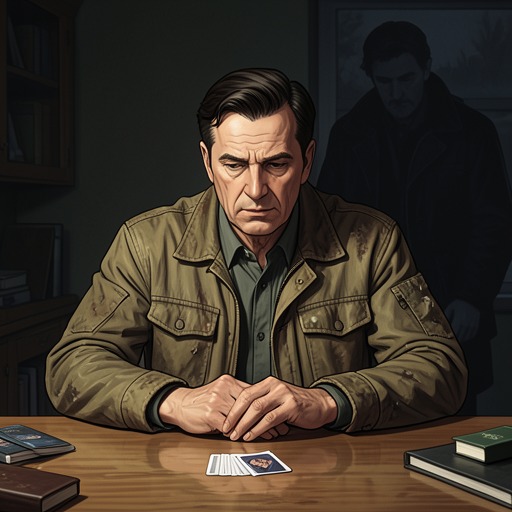
Mickey7Berto Gomez’s return to the spring pro-am becomes a triumph for him and a financial disaster for Mickey Barnes. Nine years after leaving competitive play, Berto wins the tournament; Mickey, having wagered on his early defeat and doubled down as the results go against him, ends up deeply indebted to Darius Blank. The event turns on the distance between Berto’s public legend and the private history his friend knows—and on Mickey’s confidence that he can make money from that difference.
Background and Berto’s Reputation
Berto’s history as a prodigy gives his comeback its public appeal. At fifteen, after his mother bought him a pog-ball racket, he taught himself by hitting balls against the administration building after school. He took no lessons and joined no recreational league. After a few months, he played one season on the school team, then entered a pro-am tournament as an unknown competitor and won his first match decisively. By the end of that week, he had placed second in his age bracket; the following year, he won the amateur division.
After graduation, Berto began playing for money. Two years later, he left the game for serious flight training, by which point he ranked tenth in the world. That trajectory remained vivid in Kiruna: people remembered the twenty-year-old who beat seasoned professionals seemingly without effort, performed with a racket in ways audiences had not known were possible, and was hailed by commentators as exceptionally gifted. What they did not know was that he had scarcely touched a racket during the nine years since leaving the sport.
The Comeback Decision
Nine years after Berto retired, he had been selected for the crew of the Drakkar. He and Mickey were waiting for a ball game to begin on a viewscreen in Shaky Joe’s, a café in Kiruna, when Berto said he was considering one last attempt at the spring pro-am before departing into the unknown. He imagined that winning after such a long absence would make him a legend remembered for generations.
Mickey recognized the gap between that ambition and the likely result. He expected Berto to lose his first match to an eighteen-year-old by a wide margin, and knew that Berto had been away from the game for nine years. But he also understood that the public’s memory had preserved Berto at the peak of his talent, without that private qualification. Instead of voicing his doubts, Mickey encouraged him to enter, telling him that he would be a legend. The encouragement helped turn Berto’s tentative idea into a registered entry.
The Tournament and the Reversal
A news feed picked up Berto’s return and interviewed him, pairing the story with footage from his last tournament, which he had won without losing a single game. The coverage gave the comeback a compelling public frame: the celebrated former champion returning for one final run. It also reinforced the version of Berto’s abilities that Mickey knew the public remembered, rather than the nine years of inactivity he knew about.
Mickey responded by scraping together every credit he had, and more besides, to bet that Berto would lose his first match. The wager depended on his judgment that Berto’s old brilliance would not survive the long break. Yet the outcome was not the quick defeat Mickey anticipated. Berto won the tournament. His success reversed the wager’s premise completely: the remembered prodigy was not merely a media story, and Mickey’s private knowledge of Berto’s inactivity had not made the bet safe.
Mickey’s Debt and the Consequences
As Berto kept winning, Mickey doubled down repeatedly, deepening his exposure rather than cutting his losses. By the time the tournament ended, the accumulated debt had left him so far underwater that even finding a paying job would not have enabled him to recover quickly; he reckoned that repayment could take half a lifetime. The person to whom he owed the money was Darius Blank.
Mickey had placed the bet in a life with few evident financial prospects. He was living in an unfashionable apartment in an unfashionable part of Kiruna, had no realistic prospects for gainful employment, and found the prospect of living indefinitely on a basic subsidy bleak. He admits no persuasive defense for risking the money, and the thought of being dissolved headfirst had not yet become part of his calculation. His desperation helps explain the wager, but the repeated decision to double down is what converts a speculative bet into an overwhelming liability.
Mickey does not assume that Darius will simply kill him for failing to pay. He reasons that a dead debtor is harder to collect from than a living one and expects, vaguely, that Darius might garnish his subsidy or put him to work as a valet. Berto, for his part, tries to convince Mickey that he has misunderstood what will happen. The event therefore ends not with the debt resolved but with its consequences looming: Berto’s celebrated victory has made him a champion again, while Mickey’s attempt to profit from his friend’s expected failure has left him financially trapped.