The Asher’s World expedition abandons colonization
Mickey7The Asher’s World expedition abandons colonization when the world it had crossed more than twenty light-years to reach proves uninhabitable by the means and timetable available to it. The colonists’ final choice—reporting their discovery and opening the ship to space—turns a failed settlement attempt into a deliberate collective death, exposing how little room a colony mission has to recover from a mistaken reading of its destination.
Background and the Long Voyage
Launched from Asher’s World more than a century before Mickey Barnes recounts its history, the expedition set out toward a star more than twenty light-years away, near the outer limit of what a colony ship could manage. Its distance made the voyage unusually risky: by the time the adult colonists completed their deceleration burn, they were old, tired, and hungry, while their ship was close to falling apart. They had neither the time nor the sound vessel needed to begin again elsewhere.
The expedition’s predicament reflects a broader constraint on interstellar colonization. Antimatter drives are practical only at enormous scale, and producing antimatter is so difficult and expensive that a society cannot casually send probes ahead to assess many possible worlds. Colonists therefore have to make decisions from limited observations, then live with what those observations fail to show.
A Misread Destination
The target planet was not where the expedition expected it to be in relation to its star: it orbited slightly too close. Astronomers had detected oxygen absorption in its atmosphere and taken that evidence to suggest a potentially habitable world. But the surface was too hot for liquid water. The oxygen was real; the inference drawn from it was not enough to make the planet a viable home.
The colonists’ best explanation was that the planet might once have been habitable, perhaps even inhabited by life capable of splitting carbon from carbon dioxide and releasing oxygen. A runaway greenhouse effect may then have sterilized it comparatively recently. On that account, the observed oxygen was a remnant that had not yet had time to bind out of the atmosphere. This remained a theory rather than a confirmed history, but it explained why a seemingly promising atmospheric signal had led them to a world without the water they needed.
The Decision to Abandon Colonization
Terraforming might have made the planet workable, but it would have required a century. The expedition did not have that kind of time: given the condition of its ship, the colonists likely had fewer than ten years. The gap between the planet’s theoretical future and the expedition’s immediate survival left no practical path to founding a colony.
They transmitted their findings back home, placed the ship in a stable orbit, and administered drugs to everyone who wanted them. Then they opened the air locks. The account presents the act without a rescue or a renewed plan: the colonists could not wait for the world to become habitable, and they chose a rapid end over the long decline their circumstances seemed to promise.
Significance in the Colony Histories
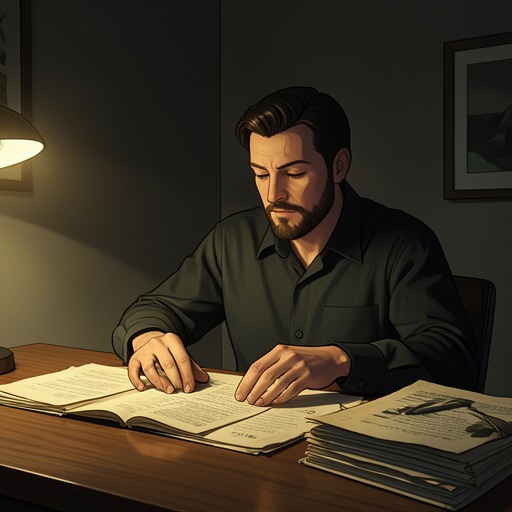
Mickey Barnes encounters the expedition’s fate while reading records of failed colonies, a history that complicates the public impression of the Diaspora as an uninterrupted chain of success. This case is distinct from a settlement destroyed by conflict or local life: the failure begins in the distance between what could be inferred before arrival and what the planet actually offered, then becomes irreversible because the ship and its passengers have no margin to wait.
The episode also sharpens the limits of technological optimism. Oxygen spectra and a theoretically terraformable world could not substitute for liquid water, a functioning ship, or a century of time. The expedition’s last transmission preserves useful knowledge for those who remain at home, but it cannot turn that knowledge into survival for the people who gathered it.