Cetology
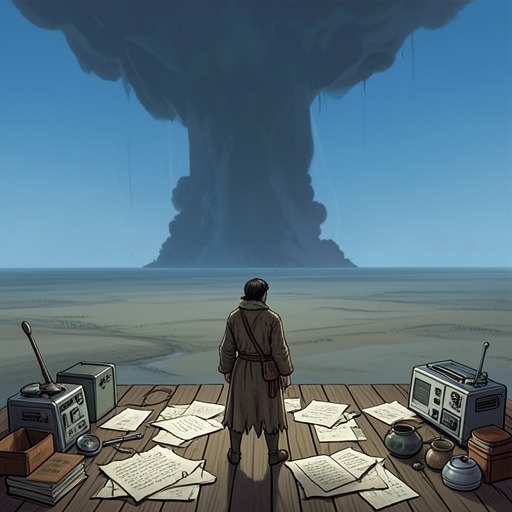
Moby-DickCetology is Ishmael’s ambitious but openly incomplete system for making the whale intellectually legible. It prepares the reader for the many zoological descriptions, hunting scenes, images, measurements, and philosophical reflections that follow, while turning classification itself into a subject of inquiry. The system promises order but preserves uncertainty: the whale remains a living Leviathan whose immense body, changing behavior, and oceanic range repeatedly exceed the categories imposed upon it.
Purpose and Intellectual Setting
The chapter on Cetology appears as the Pequod is already launched upon the deep and before the narrative enters the most sustained revelations about whales. Ishmael presents a systematic exhibition of the whale’s broad genera as necessary preparation for understanding the book’s later allusions. Yet he immediately defines the undertaking as an attempt to classify chaos rather than a settled scientific achievement. His knowledge comes from several unequal sources: libraries, ocean travel, direct bodily contact with whales, the observations of whalemen, and the published work of specialists. This mixed basis gives Cetology both the appearance of natural history and the texture of a working sailor’s field knowledge.
Ishmael stresses that the science remains unsettled at its foundation. Authorities still dispute whether a whale should be regarded as a fish, despite Carl Linnaeus’s earlier separation of whales from fish. The uncertainty is therefore not merely a gap in popular knowledge; it reaches into learned classification itself. The sperm whale is also described as poorly represented in existing literature. The books by Beale and Bennett offer reliable material, but their accounts are limited, and no scientific or poetic literature yet contains the living sperm whale in full. Cetology answers that absence without pretending to close it.
The Bibliographical System
Ishmael’s central innovation is to classify whales by magnitude, treating the whole animal as a volume and arranging species as though they belonged to a library. The three primary books are the Folio Whale, the Octavo Whale, and the Duodecimo Whale. The Sperm Whale serves as the type of the Folio, the Grampus as the type of the Octavo, and the Porpoise as the type of the Duodecimo. Within the Folio division he lists the Sperm Whale, Right Whale, Fin-Back Whale, Hump-backed Whale, Razor Back Whale, and Sulphur Bottom Whale.
This scheme is intentionally practical rather than anatomically exact. Ishmael argues that no single visible feature can provide a dependable basis for classifying all whales. Baleen, humps, back-fins, and teeth appear in irregular combinations across different kinds. The Sperm Whale and the Hump-backed Whale may both have a hump, but the resemblance ends there; the Hump-backed Whale and the Greenland whale may both possess baleen, yet their broader structures remain unlike. Detached traits therefore produce misleading similarities instead of a general method.
The same difficulty persists inside the body. Even the Greenland whale’s baleen, although striking, cannot serve as a sufficient anatomical key, and internal organs offer distinctions still less useful to the systematizer. Ishmael consequently chooses to classify whales in their entire bodily volume. He calls this the Bibliographical system because it organizes creatures as complete books rather than reducing them to isolated parts. The method is less a claim that whales are literally books than a recognition that available human knowledge reaches them through acts of selection, arrangement, naming, and comparison.
Incomplete Knowledge and Open Categories
Cetology deliberately includes creatures according to the working judgment of informed Nantucketers while excluding animals that fail the practical criteria Ishmael establishes. Smaller spouting creatures with horizontal tails are admitted to the general plan, whereas Lamatins and Dugongs are rejected because they do not spout and are associated with river mouths rather than the open whale world. The boundaries of the category thus arise from a mixture of observation, local expertise, inherited terminology, and polemical choice.
The system also leaves room for uncertain and half-fabulous whales known only by forecastle names. Ishmael lists such names as Bottle-Nose Whale, Junk Whale, Pudding-Headed Whale, Cape Whale, Leading Whale, Cannon Whale, Scragg Whale, Coppered Whale, Elephant Whale, Iceberg Whale, Quog Whale, and Blue Whale. He does not treat these names as established species. Instead, he preserves them as possible material for future investigators, who might later incorporate a captured and identified whale according to its Folio, Octavo, or Duodecimo magnitude. The catalogue records the boundary between knowledge and rumor rather than erasing it.
The classification ends unfinished by design. Ishmael compares it to the incomplete Cathedral of Cologne, whose crane still stands above the unfinished tower, and declares that grand and true constructions leave their final stone to posterity. The unfinished system is therefore not an accidental failure but part of its epistemological argument. To complete the whale would be to pretend that a human account could contain an immeasurable living world. Cetology remains a draft of a draft, a structure whose incompletion testifies to the scale of its object.
Cetology in the Wider Narrative
The later chapters repeatedly test the categories and authorities that Cetology has established. Ishmael’s chapter on the monstrous pictures of whales challenges inherited artistic and scientific images, promising to present the whale as it appears in its own body when moored beside a whale-ship and available to the whaleman’s direct inspection. Representation becomes another contested form of knowledge: images may claim certainty while distorting the animal they purport to show.
The narrative also joins classification to ecological observation. When the Pequod encounters vast meadows of brit near the Crozet Islands, Right Whales are seen feeding through the minute yellow substance with their baleen, separating nourishment from water through the fibres of their mouths. Elsewhere, a strange squid appears in a preternaturally still sea, and the Pequod encounters immense herds of Sperm Whales whose spouts form a semicircle across the horizon. These episodes expand Cetology beyond a static list. Species are understood through food, movement, reproduction, social aggregation, predation, and relations with ships and hunters.
The Sperm Whale herds particularly complicate older assumptions. Because relentless hunting has altered their customary patterns, whales that formerly appeared in small pods are now often encountered in immense caravans, sometimes after weeks or months without a single spout. Their behavior is thus inseparable from human pressure, even when the text does not reduce them to passive victims. At the center of the surrounding fear, the whales continue peaceful courtship and social life, revealing an animal world whose purposes exceed the hunt directed against it.
Knowledge, Instruments, and the Limits of Mastery
Cetology’s skepticism extends from books and images to instruments and navigation. In the Japanese sea, Ahab uses a quadrant to determine his latitude, but the instrument can tell him only where he is, not where Moby Dick is or where any other living thing will be. He condemns the quadrant as powerless before the future, exposing the gap between measurement and prediction. The episode gives practical navigation a place within the same epistemological drama as whale classification: exact location does not yield total knowledge.
The Pequod’s compass reversal after lightning makes the point materially. The storm’s electrical force inverts the needles, and Ahab identifies the alteration, takes the sun’s bearing, and orders the ship’s course changed accordingly. The crew obeys, though some fear that Ahab’s authority is greater than their fear of fate. Maritime knowledge here depends on instruments, weather, inherited experience, and command, yet none of these guarantees control over the sea.
Even the chase depends on a provisional form of knowledge. Experienced Nantucket commanders can infer a whale’s direction and rate while it is out of sight, treating its wake almost as reliably as a pilot treats a visible coastline. They may estimate that a whale will travel a particular distance and reach a particular latitude or longitude after a given number of hours. But the skill succeeds only when wind and sea cooperate. Cetology therefore belongs to a broader culture of embodied, probabilistic expertise: knowledge is powerful because it reads patterns, but fragile because the ocean can withdraw the conditions that make prediction possible.
Significance
Cetology gives the novel a taxonomy, but it also gives that taxonomy a built-in critique. Whaling is presented as a globally powerful industry, supported by hundreds of American vessels, thousands of men, enormous expenditure, and the worldwide consumption of whale products. The whale-ship has explored remote seas and archipelagoes, while whale oil illuminates lamps across the globe. Such reach encourages the belief that the industry can convert the ocean into an object of knowledge and use.
Against that confidence, Ishmael places the whale’s scale, mobility, and opacity. Whale-bone whales may retreat from heavily hunted waters into Polar citadels beneath ice fields, beyond ordinary pursuit. Sperm Whales may disappear for long periods and then emerge in immense herds. Their bodies resist classification by detached parts, their lives exceed existing literature, and their behavior remains only partly predictable. Cetology consequently joins scientific description to humility. It does not abandon order; it builds an order that openly displays its seams, provisional divisions, uncertain names, and unfinished ending. Its deepest subject is the necessity of knowledge and the impossibility of completing it.