early in the story
Ishmael Goes to Sea
[Ishmael](entity:character-recall-character-ishmael-82722fc2d331), troubled by depression, restlessness, and an itch for distant places, decides to go to sea rather than remain ashore. He chooses whaling because the whale promises access to remote oceans, danger, and the unknown.
This decision begins the voyage and establishes the sea as both a literal destination and a metaphysical escape from the pressures of ordinary life.
a Saturday night in December
Arrival at New Bedford
[Ishmael](entity:character-recall-character-ishmael-82722fc2d331) reaches New Bedford with little money and discovers that the packet to [Nantucket](entity:location-recall-location-9eb254100f29) has already sailed. Searching for cheap lodging in the bitter cold, he wanders toward the waterfront and eventually finds the [Spouter-Inn](entity:object-recall-object-5e5d37508a91).
His arrival places him within the strange, international world of whaling and begins the chain of encounters that will lead him aboard the [Pequod](entity:object-recall-object-1fbfd757c5e8).
the first night at the Spouter-Inn
Ishmael Meets Queequeg
Because the inn is full, [Ishmael](entity:character-recall-character-ishmael-82722fc2d331) is assigned half a bed with an unknown harpooner. [Queequeg](entity:character-recall-character-queequeg-88a93db6b590) arrives carrying a preserved head, a tomahawk, tattoos, and a pagan idol, terrifying Ishmael before the landlord identifies him.
Ishmael gradually recognizes that Queequeg is courteous, clean, and human beneath his unfamiliar appearance. He chooses the companionship of a sober pagan over the supposed respectability of drunken Christians.
the following Sunday
Ishmael and Queequeg Become Friends
After sleeping together, [Ishmael](entity:character-recall-character-ishmael-82722fc2d331) attends the [Whaleman's Chapel](entity:organization-recall-organization-whaleman-s-chape-fa47fcbbce16) with [Queequeg](entity:character-recall-character-queequeg-88a93db6b590) and later watches him pray to [Yojo](entity:object-recall-object-2bfadf124bfd). Their shared smoking, conversation, and mutual curiosity dissolve the remaining hostility between them.
Queequeg declares them bosom friends, and Ishmael joins him in worship despite their different religions. Their friendship becomes the emotional center of the voyage and a practical alliance against the isolation of the sea.
Sunday night before departure for Nantucket
Queequeg’s Island Story
[Queequeg](entity:character-recall-character-queequeg-88a93db6b590) recounts that he is a prince from the unmapped island of Rokovoko who stowed away on a ship to reach Christian lands. His experience among Christians convinced him that civilization could be as wicked and miserable as pagan society.
He decides to continue as a harpooner rather than return immediately to rule his homeland, and agrees to sail with [Ishmael](entity:character-recall-character-ishmael-82722fc2d331) from [Nantucket](entity:location-recall-location-9eb254100f29).
the passage from New Bedford to Nantucket
Queequeg Rescues the Greenhorn
On the packet schooner Moss, [Queequeg](entity:character-recall-character-queequeg-88a93db6b590) throws a greenhorn into the air after the man mocks him. Moments later, when a loose boom sweeps the deck and the greenhorn falls overboard, Queequeg secures the spar and dives into the freezing water to save him.
The rescue proves his courage and generosity, wins the crew's respect, and confirms [Ishmael](entity:character-recall-character-ishmael-82722fc2d331)'s loyalty to him.
early Monday in Nantucket
Choosing the Pequod
[Ishmael](entity:character-recall-character-ishmael-82722fc2d331) inspects the available whaling ships and selects the [Pequod](entity:object-recall-object-1fbfd757c5e8), an old, heavily ornamented vessel decorated with the bones and teeth of whales. [Captain Peleg](entity:character-recall-character-captain-peleg-386d733c3338) and [Captain Bildad](entity:character-recall-character-captain-bildad-bcd034cabe00) negotiate his lay and accept him for the voyage.
Although Ahab remains unseen, Peleg describes him as a formidable, educated, wounded, and possibly moody captain. Ishmael senses danger but signs the articles nonetheless.
the next day
Queequeg Joins the Pequod
[Queequeg](entity:character-recall-character-queequeg-88a93db6b590) initially faces religious suspicion from Bildad, who demands proof that he belongs to a Christian church. [Ishmael](entity:character-recall-character-ishmael-82722fc2d331) argues that all people belong to one universal congregation, and Peleg accepts the explanation.
Queequeg demonstrates his skill by striking a tar spot with a harpoon across the deck, earning an unusually generous lay and a place in the crew.
before the Pequod’s departure
Elijah’s Prophecy
The ragged prophet [Elijah](entity:character-recall-character-elijah-2d1cb64406ff) repeatedly warns [Ishmael](entity:character-recall-character-ishmael-82722fc2d331) and [Queequeg](entity:character-recall-character-queequeg-88a93db6b590) about [Captain Ahab](entity:character-recall-character-captain-ahab-2487212ace75), mentioning the lost leg, strange encounters, and men who may not return. Ishmael dismisses him as a humbug, though the warnings deepen his unease.
Elijah's cryptic predictions establish the voyage as something already shaped by hidden forces and prepare the reader for the supernatural atmosphere surrounding Ahab and the [Pequod](entity:object-recall-object-1fbfd757c5e8).
the day before departure
Queequeg’s Ramadan
[Queequeg](entity:character-recall-character-queequeg-88a93db6b590) observes a day of fasting and immobility, sitting for hours with [Yojo](entity:object-recall-object-2bfadf124bfd) on his head. [Ishmael](entity:character-recall-character-ishmael-82722fc2d331) fears that he has suffered a stroke, breaks open the locked room, and later argues against the practice as unhealthy religious fanaticism.
The episode becomes a comic but serious meditation on religious tolerance. Ishmael concludes that all people are irrationally attached to their own forms of worship and should be granted room to practice them.
Christmas Day
The Pequod Sets Sail
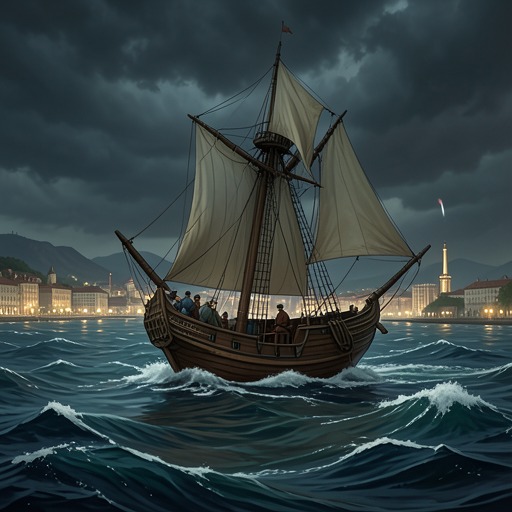
The [Pequod](entity:object-recall-object-1fbfd757c5e8) leaves [Nantucket](entity:location-recall-location-9eb254100f29) under the temporary command of Peleg and Bildad, while Ahab remains below. After the pilots depart, the ship enters the cold Atlantic and begins its long passage southward.
The departure turns private choices into collective fate. The crew, drawn from many nations and islands, is united under one keel and unknowingly placed under Ahab's command.
several days after leaving Nantucket
Ahab Appears on Deck
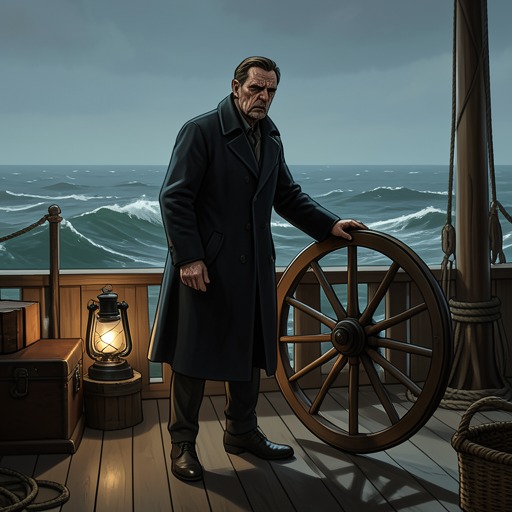
Ahab finally appears, marked by a lightning-like scar and standing on a polished ivory leg made from a sperm whale's jaw. His posture and silence reveal a man consumed by grief, authority, and an unyielding purpose.
The captain's physical mutilation becomes the visible emblem of a deeper spiritual wound. The crew senses that the voyage is governed by a will more dangerous than ordinary commercial whaling.
during the early tropical passage
Ahab Confronts Stubb
Ahab orders [Stubb](entity:character-recall-character-stubb-0053af30db78) below after Stubb jokingly suggests muffling the noise of his ivory leg. When Stubb protests being called a dog and an ass, Ahab overwhelms him with threats and authority.
Stubb retreats in confusion, wondering whether Ahab is mad and whether he should resist or pray for him. The encounter establishes Ahab's dominance over the officers and exposes the psychological pressure beneath the ship's formal discipline.
after the first tropical passage
Ahab Announces His Quest
Ahab summons the entire crew and offers a gold doubloon to the man who first sights a huge white sperm whale with a wrinkled brow, crooked jaw, and harpoon scars. [Tashtego](entity:character-recall-character-tashtego-e57b9984837d), [Daggoo](entity:character-recall-character-daggoo-4336ae7e60d5), and [Queequeg](entity:character-recall-character-queequeg-88a93db6b590) identify the quarry as Moby Dick.
Ahab reveals that [the White Whale](entity:expression-recall-expression-the-white-whale-3597f50b2c6c) tore away his leg and declares that the [Pequod](entity:object-recall-object-1fbfd757c5e8) has been committed to hunting it around the world. The ordinary whaling voyage is transformed into a personal campaign of revenge.
during the oath against Moby Dick
Starbuck Challenges Ahab
[Starbuck](entity:character-recall-character-starbuck-4851170e62c8) objects that the crew shipped to hunt whales, not to satisfy Ahab's private vengeance. He calls the pursuit madness and asks what profit revenge can bring.
Ahab argues that [the White Whale](entity:expression-recall-expression-the-white-whale-3597f50b2c6c) is the visible mask of an inscrutable power behind the world and that striking Moby Dick means striking through that mask. His speech bends Starbuck's will without curing his opposition.
the same day
The Crew Swears the Oath
Ahab makes the crew drink grog from the sockets of the harpoons and swear death to Moby Dick. [Starbuck](entity:character-recall-character-starbuck-4851170e62c8), [Stubb](entity:character-recall-character-stubb-0053af30db78), and [Flask](entity:character-recall-character-flask-b46c5ff3795d) stand beside him while [Queequeg](entity:character-recall-character-queequeg-88a93db6b590), [Tashtego](entity:character-recall-character-tashtego-e57b9984837d), and [Daggoo](entity:character-recall-character-daggoo-4336ae7e60d5) serve as the pagan cupbearers.
The ritual fuses hierarchy, religion, violence, and superstition into one binding compact. The crew ceases to be a group of wage-seeking sailors and becomes an instrument of [Ahab's monomania](entity:concept-recall-concept-430e084d7c2b).
soon after the oath
First Lowering of the Boats
The [Pequod](entity:object-recall-object-1fbfd757c5e8)'s boats are lowered after whales are sighted. Ahab unexpectedly launches his own boat, manned by the hidden Parsee [Fedallah](entity:character-recall-character-fedallah-860cebe6ec77) and several Filipino sailors, revealing that he has secretly prepared a private crew.
The appearance of Fedallah's group confirms that Ahab's plans extend beyond the accepted command structure. The first chase ends in a squall, the boat is swamped, and the whale escapes, but the crew survives.
during the early cruise
The White Whale’s Legend
[Ishmael](entity:character-recall-character-ishmael-82722fc2d331) recounts the scattered reports that have made Moby Dick a global terror: his unusual whiteness, scarred body, cunning retreats, and repeated destruction of boats and men. The whale has acquired a reputation for intelligence, ubiquity, and near immortality.
Ahab's private hatred is shown to be an enlargement of older human fears about evil, fate, and the limits of knowledge. Moby Dick becomes both an animal and the embodied target of metaphysical rage.
during the early cruise
The Whiteness of the Whale
[Ishmael](entity:character-recall-character-ishmael-82722fc2d331) reflects on why whiteness, usually associated with innocence, royalty, holiness, and purity, can become terrifying when joined to violent or alien forms. The white bear, white shark, albino, snow, and dead all contribute to his meditation.
Moby Dick's whiteness therefore signifies not a single moral meaning but an empty, overwhelming blankness capable of receiving every human fear and interpretation. The chapter deepens the whale's symbolic power without reducing it to a simple allegory.
during the early cruise
Cetological Classification
[Ishmael](entity:character-recall-character-ishmael-82722fc2d331) attempts to classify whales into Folio, Octavo, and Duodecimo books, including sperm whales, right whales, finbacks, humpbacks, narwhals, killers, and porpoises. He openly acknowledges that his system is incomplete and provisional.
The mock-scientific catalog shows humanity trying to impose order on a creature and a world that exceed available knowledge. The unfinished taxonomy becomes a structural emblem of the novel's refusal to close the meaning of the whale.
during the tropical passage
The Mast-Head Meditation
[Ishmael](entity:character-recall-character-ishmael-82722fc2d331) takes his turn at the mast-head and becomes absorbed in the sea's meditative vastness. He nearly loses his identity in reverie and admits that an absent-minded watcher can fail to see whales or fall to his death.
The mast-head episode presents contemplation as both spiritual expansion and mortal danger. The sea can dissolve the self into the universe, but practical life demands that one retain a grip on the immediate world.
during the passage around the Cape of Good Hope
The Spirit-Spout
For several nights, the crew repeatedly sees a distant silvery spout that disappears whenever the ship approaches. Some sailors believe the apparition is Moby Dick beckoning them onward, while storms and empty seas intensify the sense of supernatural pursuit.
The recurring spout turns the voyage into a procession toward an unseen destiny. Whether it is a whale, illusion, or projection of the crew's desire, it functions as a sign that the hunt has escaped ordinary navigation.
after rounding the Cape of Good Hope
The Albatross Encounter
The [Pequod](entity:object-recall-object-1fbfd757c5e8) meets the worn whaler Goney, whose captain drops his speaking trumpet while trying to answer Ahab's question about Moby Dick. The encounter yields no useful information and ends as the ships pass one another.
Ahab orders the Pequod to continue around the world, turning away from ordinary sociability and the possibility of human connection. The episode reinforces his isolation and the circular futility of his pursuit.
during a gam near the Cape of Good Hope
The Town-Ho Story
The [Town-Ho](entity:object-recall-object-town-ho-1dec1d44cdc3) reports the story of a mutiny caused by the brutal mate [Radney](entity:character-recall-character-radney-ad834c99d759)'s abuse of the powerful sailor [Steelkilt](entity:character-recall-character-steelkilt-936f2a06a692). Steelkilt resists, organizes the men, and is imprisoned with conspirators before betrayal breaks the revolt.
When Moby Dick appears, Radney is killed by the whale after Steelkilt secretly cuts the line. The tale links human tyranny, revenge, and divine-seeming retribution, while showing how stories circulate privately among whalemen.
during a later gam in the southern fishery
The Jeroboam’s Epidemic
The [Pequod](entity:object-recall-object-1fbfd757c5e8) meets the [Jeroboam](entity:object-recall-object-2abbdddae8e4), whose crew is suffering from an epidemic under the influence of [Gabriel](entity:character-recall-character-gabriel-bc97a48fb87d), a Shaker fanatic who claims to be the archangel and controls the frightened sailors. [Captain Mayhew](entity:character-recall-character-captain-mayhew-1b83aab790bf) remains at a distance to avoid infection.
Gabriel warns Ahab against hunting Moby Dick, whom he regards as a divine incarnation. Ahab learns that [the White Whale](entity:expression-recall-expression-the-white-whale-3597f50b2c6c) killed the mate [Macey](entity:character-recall-character-macey-68a531a776ec) and receives a mould-covered letter addressed to the dead man from his wife.
during the northeastward cruise toward Java
The Giant Squid
The crew encounters a vast, pale giant squid floating in the calm sea, its innumerable arms curling without any visible face or mind. [Starbuck](entity:character-recall-character-starbuck-4851170e62c8) is horrified by the sight, while Ahab silently turns the boat away.
The squid becomes another manifestation of the ocean's unmeasurable life. Its appearance also points toward the hidden food of the sperm whale and the unknowable depths from which Moby Dick emerges.
during the Indian Ocean cruise
Stubb Kills a Sperm Whale
[Stubb](entity:character-recall-character-stubb-0053af30db78) discovers a sleeping sperm whale and leads a chase through calm water. [Tashtego](entity:character-recall-character-tashtego-e57b9984837d) harpoons it, and Stubb repeatedly lances the whale until its heart bursts and the sea fills with blood.
The killing demonstrates the routine expertise and brutal efficiency of whaling, while Stubb's pipe-smoking humor contrasts with the whale's agony. The crew's ordinary labor continues even as Ahab's private hunt grows more consuming.
during the processing of Stubb’s whale
The Monkey-Rope Bond
[Ishmael](entity:character-recall-character-ishmael-82722fc2d331) is tied to [Queequeg](entity:character-recall-character-queequeg-88a93db6b590) by the monkey-rope while Queequeg works on the whale's submerged body. Their physical connection makes Ishmael responsible for another man's movements and danger.
Ishmael expands the practical situation into a meditation on universal interdependence: every person is bound to others through banks, trades, accidents, and shared vulnerability.
during the baling of the sperm whale’s head
Tashtego’s Fall
While baling spermaceti from the whale's Case, [Tashtego](entity:character-recall-character-tashtego-e57b9984837d) falls headfirst into the great cavity. One of the hooks suspending the whale's head breaks, and the massive head drops into the sea with Tashtego trapped inside.
[Queequeg](entity:character-recall-character-queequeg-88a93db6b590) dives after him, cuts through the submerged head, and pulls him out by the hair. The rescue confirms Queequeg's physical courage and preserves one of the [Pequod](entity:object-recall-object-1fbfd757c5e8)'s most important harpooneers.
after the sperm whale is processed
Stubb Finds Ambergris
The [Pequod](entity:object-recall-object-1fbfd757c5e8) meets the French whaler [Bouton de Rose](entity:object-recall-object-9287d5ab7b4f), which is handling a foul and nearly worthless whale. [Stubb](entity:character-recall-character-stubb-0053af30db78) persuades the inexperienced captain to abandon the carcasses, then secretly excavates one and discovers ambergris.
The discovery turns decay into unexpected value and gives Stubb a comic victory over the French crew. It also extends the novel's recurring pattern in which hidden worth emerges from repulsive or unknowable depths.
during the subsequent whale hunt
Pip Is Abandoned at Sea
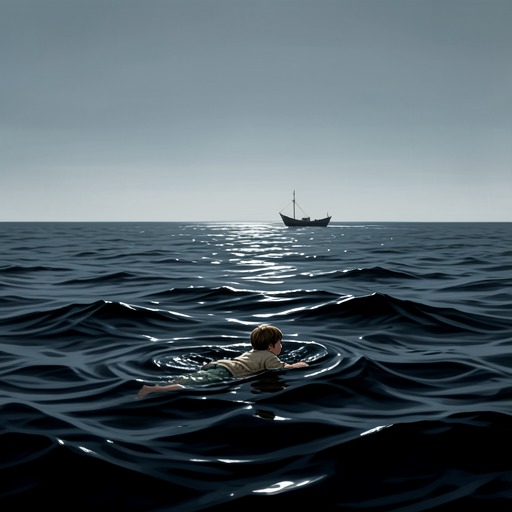
[Pip](entity:character-recall-character-pip-adcf1b9353d3) panics when a harpooned whale strikes beneath him and jumps from [Stubb](entity:character-recall-character-stubb-0053af30db78)'s boat. The first time Stubb cuts him free; the second time he leaves Pip behind so the whale will not be lost.
The ship eventually rescues Pip, but the terror of isolation at sea shatters his ordinary mind. He becomes an apparently mad visionary who perceives divine and cosmic realities unavailable to the supposedly sane crew.
after Pip’s rescue
Ahab Claims Pip
[Pip](entity:character-recall-character-pip-adcf1b9353d3)'s madness draws him toward Ahab, and Ahab recognizes in him a fellow sufferer whose damaged consciousness mirrors his own. He orders Pip to live in the cabin and treats the boy as bound to him by the cords of his heart.
The bond briefly reveals Ahab's capacity for tenderness and self-recognition. Pip becomes the human cost of the hunt and the one person whose vulnerability can still reach the captain's buried humanity.
during the cruise toward the Sunda Strait
Schools of Whales
The [Pequod](entity:object-recall-object-1fbfd757c5e8) encounters large schools of sperm whales, including harems led by dominant males and groups of young bulls. The whales display social behavior, sexual rivalry, maternal care, panic, and collective movement.
These observations complicate the hunters' reduction of whales to cargo. The schools become a living society whose relationships echo human hierarchy, desire, violence, and fear.
during the whale-school episode
Fast-Fish and Loose-Fish
[Ishmael](entity:character-recall-character-ishmael-82722fc2d331) explains the whaling rules that distinguish a fast-fish, connected to a ship or marked by a waif, from a loose-fish, available to whoever can seize it. He extends these rules into a critique of property, empire, slavery, and political power.
The legal doctrine becomes a miniature of human history: possession repeatedly masquerades as justice, while whatever is unclaimed becomes an invitation to conquest.
near the Straits of Sunda
The Grand Armada
The [Pequod](entity:object-recall-object-1fbfd757c5e8) encounters a vast herd of sperm whales moving toward the Sunda Strait. The whales form a spectacular semicircle of spouts, then panic when the ship and pursuing boats approach.
[Ishmael](entity:character-recall-character-ishmael-82722fc2d331) describes the herd's central calm, nursing mothers, calves, and the chaos caused by a wounded whale dragging a cutting-spade. The encounter reveals both the whales' communal life and the destructive intrusion of the fishery.
after the Grand Armada
The Virgins’ Chase
The [Pequod](entity:object-recall-object-1fbfd757c5e8) meets the German ship Jungfrau, commanded by [Derick De Deer](entity:character-recall-character-derick-de-deer-9691aa042ca2), who is desperate for oil. Both ships chase a large injured sperm whale, but the Pequod's harpooneers overtake the German boat and fast to the whale.
The pursuit displays the competitive logic of whaling and the dangerous vulnerability of an aged, wounded animal. The whale eventually sounds, escapes, and leaves the German ship's optimism mocked by the fishery's uncertainty.
weeks after Ahab’s harpoon is forged
The Bachelor’s Good Fortune
The [Pequod](entity:object-recall-object-1fbfd757c5e8) meets the Bachelor, a [Nantucket](entity:location-recall-location-9eb254100f29) ship overflowing with sperm oil and celebrating its successful voyage. Its crew is drunk, festive, and already homeward-bound, while the Pequod remains grimly outward-bound.
The contrast between the ships shows the divergent futures available to whalers: communal prosperity and return, or Ahab's narrowing pursuit. Ahab rejects the invitation to celebrate and continues toward Moby Dick.
during the passage toward the Japanese waters
Ahab Forges the Harpoon
Ahab orders [Perth](entity:character-recall-character-perth-f0bcfe8a1966) to forge a special harpoon from the steel stubs of horseshoes. The weapon is twisted from twelve rods, sharpened with Ahab's razors, and tempered in the blood of [Queequeg](entity:character-recall-character-queequeg-88a93db6b590), [Tashtego](entity:character-recall-character-tashtego-e57b9984837d), and [Daggoo](entity:character-recall-character-daggoo-4336ae7e60d5) rather than water.
Ahab baptizes the weapon in the name of the devil and binds it to a hickory pole. The harpoon becomes a physical extension of his hatred and an instrument intended solely for Moby Dick.
after the Typhoon
The Compass Reversal
A Typhoon destroys much of the [Pequod](entity:object-recall-object-1fbfd757c5e8)'s canvas and temporarily turns the compass needles around. Ahab interprets the reversal as another challenge to his authority and creates a substitute magnetic needle from a lance and a sail-maker's needle.
His success restores the crew's confidence but also intensifies his fatal pride. Navigation, which should submit to external reality, is forced to conform to Ahab's will.
the day after the compass reversal
The Broken Log Line
Ahab orders the old log and line thrown overboard to measure the ship's progress. The rotten line snaps, leaving the ship without another conventional instrument of navigation.
The failure confirms the symbolic collapse of ordinary guidance. Ahab now steers by dead reckoning and his improvised needle, pushing the [Pequod](entity:object-recall-object-1fbfd757c5e8) still more completely into his private system of fate.
during the opening of the hold near Japan
Queequeg Builds His Coffin
[Queequeg](entity:character-recall-character-queequeg-88a93db6b590) falls gravely ill while working in the damp hold. Believing himself near death, he asks the Carpenter to build a canoe-shaped coffin and equips it with his harpoon, paddle, biscuits, water, earth, and [Yojo](entity:object-recall-object-2bfadf124bfd).
After testing the coffin, Queequeg unexpectedly recovers and turns it into a sea-chest. The coffin remains a material reminder of mortality and later becomes the instrument of [Ishmael](entity:character-recall-character-ishmael-82722fc2d331)'s survival.
after Ahab’s encounter with the Samuel Enderby
The Carpenter’s New Leg
[Ahab's ivory leg](entity:object-recall-object-4fd4d85b19b2) is damaged while boarding the [Samuel Enderby](entity:object-recall-object-c405c245ad0d). He orders the Carpenter to fashion a replacement from the whale-bone stock accumulated aboard the [Pequod](entity:object-recall-object-1fbfd757c5e8), while [Perth](entity:character-recall-character-perth-f0bcfe8a1966) provides the necessary iron fittings.
The commission exposes Ahab's dependence on the very laborers and materials he treats as instruments. His body is repeatedly rebuilt by the ship, even as his mind refuses any repair.
during the Japanese cruising
The Samuel Enderby Encounter
The [Pequod](entity:object-recall-object-1fbfd757c5e8) meets the [Samuel Enderby](entity:object-recall-object-c405c245ad0d), whose captain, [Captain Boomer](entity:character-recall-character-captain-boomer-8c988af1715d), has lost an arm through an encounter with Moby Dick. Boomer refuses to pursue [the White Whale](entity:expression-recall-expression-the-white-whale-3597f50b2c6c) again, while his surgeon [Bunger](entity:character-recall-character-bunger-41f2c4a5ba03) treats the matter with grotesque humor.
Boomer's survival offers Ahab a possible alternative: injury can lead to resignation rather than revenge. Ahab rejects that lesson and hurries back to his own ship to continue the hunt.
near the Equator
The Coffin Life-Buoy
A sailor falls from the mast-head and the ship's old life-buoy sinks with him. The crew converts [Queequeg's coffin](entity:object-recall-object-c83a13a60cb2) into a replacement life-buoy, despite the Carpenter's unease and the ominous symbolism.
Death's container is transformed into the means of preserving life. This reversal prepares the final image in which the coffin becomes the sole object capable of carrying [Ishmael](entity:character-recall-character-ishmael-82722fc2d331) beyond the [Pequod](entity:object-recall-object-1fbfd757c5e8)'s destruction.
near the end of the voyage
The Rachel’s Missing Crew
The [Rachel](entity:object-recall-object-892f9db27014) approaches the [Pequod](entity:object-recall-object-1fbfd757c5e8) and reports that Moby Dick destroyed one of its boats. [Captain Gardiner](entity:character-recall-character-captain-gardiner-92cc8b69c561)'s young son is among the missing, and he begs Ahab to join a forty-eight-hour search.
Ahab refuses, choosing the pursuit of Moby Dick over the rescue of a child. His decision is the clearest moral betrayal of the voyage and proves that revenge has displaced every ordinary human obligation.
the day after meeting the Rachel
Ahab’s Moment of Doubt
In a calm, beautiful sea, Ahab confesses to [Starbuck](entity:character-recall-character-starbuck-4851170e62c8) that forty years of whaling have cost him his youth, marriage, family, and peace. He briefly considers returning home and recognizes the waste of his life.
Starbuck urges him to abandon the hunt, but Ahab submits again to the mysterious force he believes commands him. His moment of self-knowledge becomes tragic because it does not produce a change of action.
after the encounter with the Rachel
Ahab Takes the First Watch
Ahab personally takes the highest mast-head position so that he will be the first to sight Moby Dick. He entrusts the supporting rope to [Starbuck](entity:character-recall-character-starbuck-4851170e62c8), the officer who has most resisted him.
A black hawk steals Ahab's hat and later drops something into the sea, a dark omen that intensifies the crew's sense that the hunt has entered its final stage.
shortly before the final chase
The Delight’s Warning
The [Pequod](entity:object-recall-object-1fbfd757c5e8) meets the wrecked ship Delight, whose captain reports that Moby Dick has killed nearly an entire boat crew. Ahab shows the forged harpoon and insists that its blood-tempered barbs will kill [the White Whale](entity:expression-recall-expression-the-white-whale-3597f50b2c6c).
The Delight's wreck and funeral make the danger unmistakable, but Ahab treats the warning as another challenge. The ship is now sailing over the tombs of earlier hunters.
the first day of the final chase
Moby Dick Is Sighted
Ahab smells the whale's presence and orders every mast-head manned. He personally sights Moby Dick, whose white hump and spout finally appear ahead, and commands [Starbuck](entity:character-recall-character-starbuck-4851170e62c8) to keep the ship while the boats lower.
The long pursuit reaches its appointed object. Ahab's private prophecy and the crew's collective oath now become immediate physical action.
the first day of the final chase
Ahab’s Boat Is Destroyed
Moby Dick approaches Ahab's boat, takes its bow into his mouth, and snaps it in two. Ahab falls into the sea but is rescued by [Stubb](entity:character-recall-character-stubb-0053af30db78)'s boat, while the other boats and the ship regroup.
The White Whale demonstrates both physical power and tactical intelligence, yet Ahab treats the wreck as an interruption rather than a defeat. His pursuit continues even after losing another leg and nearly losing his life.
the second day of the final chase
Fedallah Disappears
During the second day's pursuit, [Fedallah](entity:character-recall-character-fedallah-860cebe6ec77) vanishes after the whale attacks the boats. Ahab discovers that the Parsee's body has been dragged along Moby Dick's back in the tangled lines.
The event fulfills Fedallah's prophecy that he would go before Ahab and be seen again before Ahab's death. His disappearance marks the collapse of Ahab's supernatural alliance and confirms that the chase has entered its fatal sequence.
the second day of the final chase
Moby Dick Routs the Boats
Moby Dick attacks the three boats, shattering [Stubb](entity:character-recall-character-stubb-0053af30db78)'s and [Flask](entity:character-recall-character-flask-b46c5ff3795d)'s crafts and throwing Ahab's boat into the air. [Ahab's ivory leg](entity:object-recall-object-4fd4d85b19b2) is broken again, while the crew survives only by clinging to wreckage and being rescued by the ship.
The repeated destruction exposes the gap between Ahab's will and the material world. Yet he interprets survival as proof that the final encounter is still owed to him.
the evening of the second chase day
Ahab Rejects Starbuck Again
[Starbuck](entity:character-recall-character-starbuck-4851170e62c8) begs Ahab to stop, pointing to the wrecked boats, the missing [Fedallah](entity:character-recall-character-fedallah-860cebe6ec77), and the accumulating omens. Ahab insists that the entire act was decreed long before the present voyage and orders the crew to continue.
His language turns fatalism into a defense of personal responsibility: he calls himself the Fates' lieutenant while actively choosing the deadly course. The conflict with Starbuck reaches its final moral limit.
the third day of the final chase
The Final Lowering
At dawn Ahab sees Moby Dick again and orders the repaired boats lowered. He exchanges a tearful farewell with [Starbuck](entity:character-recall-character-starbuck-4851170e62c8), who senses that the voyage is reaching its end, then descends with his crew while sharks follow the boat.
Ahab understands the chase as his third and final voyage into the whale's domain. The scene combines tenderness, premonition, and the irreversible movement toward catastrophe.
the third day of the final chase
Moby Dick Rams the Pequod
Moby Dick turns from Ahab's boat and charges the [Pequod](entity:object-recall-object-1fbfd757c5e8) itself, striking the bow and opening a fatal breach. The ship begins to settle while [Tashtego](entity:character-recall-character-tashtego-e57b9984837d) remains aloft, nailing the flag to the sinking mast.
The whale's attack expands the feud from a personal contest into the destruction of the entire community Ahab commands. The Pequod, shaped from the products of whale hunting, is finally destroyed by the whale.
the third day of the final chase
Ahab Is Killed
Ahab throws his harpoon at Moby Dick, but the line fouls around his neck and hurls him from the boat. He disappears into the sea as the whale continues forward.
His death is caused by the very instrument of revenge he forged and wielded. The prophecy of hemp killing him is fulfilled, and Ahab's body becomes another piece of wreckage in the wake of his obsession.
moments after Ahab’s death
The Pequod Sinks
The [Pequod](entity:object-recall-object-1fbfd757c5e8) is pulled beneath the surface, taking the remaining crew, the mast-head lookouts, and [Tashtego](entity:character-recall-character-tashtego-e57b9984837d) with it. The flag and hawk descend together as the final mast disappears, and the sea closes over the ship.
The sinking completes the destruction wrought by [Ahab's monomania](entity:concept-recall-concept-430e084d7c2b). The Pequod becomes a submerged tomb, while the ocean resumes its ancient motion as if the human drama had never occurred.
immediately after the sinking
Ishmael Floats on the Coffin
[Ishmael](entity:character-recall-character-ishmael-82722fc2d331) is drawn into the [Pequod](entity:object-recall-object-1fbfd757c5e8)'s vortex but is expelled when [Queequeg's coffin](entity:object-recall-object-c83a13a60cb2) life-buoy shoots upward from the sea. He clings to the coffin through a day and night while sharks and sea-hawks pass without attacking him.
The coffin, once made for [Queequeg](entity:character-recall-character-queequeg-88a93db6b590)'s death, becomes the object that preserves Ishmael's life. Mortality is transformed into survival, allowing one witness to remain and tell the story.
the second day after the sinking
The Rachel Rescues Ishmael
The [Rachel](entity:object-recall-object-892f9db27014), still searching for its missing children, finds [Ishmael](entity:character-recall-character-ishmael-82722fc2d331) floating on [Queequeg's coffin](entity:object-recall-object-c83a13a60cb2). The ship takes him aboard as the only surviving member of the [Pequod](entity:object-recall-object-1fbfd757c5e8)'s company.
The rescue closes the novel through a bitter inversion: the ship Ahab refused to help becomes the vessel that saves the narrator. Ishmael survives not through victory over the whale but through accident, memory, and another captain's continuing search.