Liliana
MomoLiliana is Nino’s wife, a friend of Momo, and a forceful defender of the people and relationships that give their small inn its character. When rising costs tempt Nino to remake the business for profit, Liliana insists that success cannot be separated from care for family and customers. Her argument ends not in a grand victory but in a practical reconciliation: the old men return, Nino gives up his plans, and Liliana tells him they will get by.
Identity and Place in the Community
Liliana lives and works with Nino at their little inn on the outskirts of town. The place is modest: its walls are stained with damp, and a vine grows around the door. It has long been patronized by a handful of old men who spend the evening reminiscing over a single glass of wine. Liliana and Nino are also among Momo’s friends, and they have often brought her good things to eat. Their kindness places Liliana within a community of mutual familiarity, rather than leaving her as merely the innkeeper’s wife.
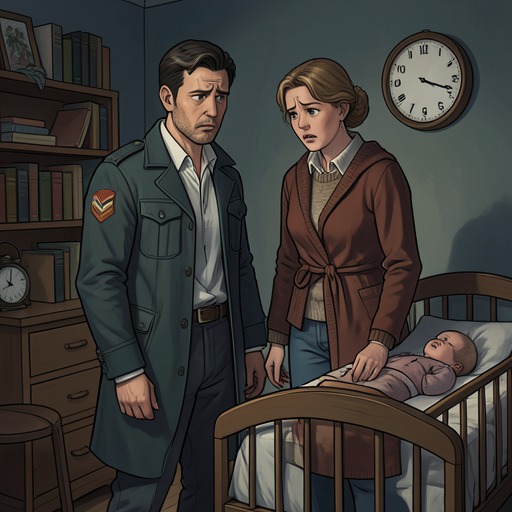
The narrative describes Liliana as plump; in the kitchen, her face shines with sweat as she moves pots and pans around the stove. When Momo arrives during a fierce quarrel, the couple’s baby is crying in a basketwork crib. Momo sits beside the baby and rocks it until it quiets, interrupting the adults’ argument long enough for them to notice her. Liliana’s family life and working life occupy the same cramped domestic space: the stove, the business, the quarrel, and the baby are all present at once.
The Dispute over the Inn
The conflict turns on what Nino believes the inn must become and what Liliana believes it must continue to mean. Nino points to concrete pressures: the rent has risen by thirty per cent, and everything is getting more expensive. He resents being expected to accommodate customers who cannot spend much, especially when he wants to make the business succeed for his family’s sake. His ambition is presented alongside real economic strain, not as a concern Liliana simply fails to understand.
Liliana answers by making the customers personal. One of the old men Nino dismisses as a down-and-out is her Uncle Enrico, whom she calls decent and respectable despite his limited means. Nino says Enrico can come whenever he likes and could even stay, but Liliana points out that he would not want to sit alone without his companions. Her objection is therefore not just that Nino has insulted a relative: his offer of hospitality, as she sees it, is hollow if it separates Enrico from the people who belong with him.
The argument also exposes the cost Liliana is willing to set against Nino’s plans. She tells him that if getting ahead requires heartlessness, she wants no part in it, and warns that she will leave sooner or later. She takes the baby from Momo and flounces out of the kitchen. Nino does not answer immediately. He lights a cigarette and turns it between his fingers while Momo watches, a pause that gives his own account of the conflict room to emerge.
Reconsideration and Reconciliation
Nino admits that he had liked the old customers and feels bad about them, even though he had persuaded himself that changing times left him no choice. With their absence, the inn feels cold to him too, and he acknowledges that he no longer likes the place as it is. His reflection shifts the dispute: the old regulars are not simply an obstacle to a better business, but part of what made the inn worth having in the first place.
Two days later, Nino and Liliana return to Momo together with their baby and a basket of goodies. Liliana reports that Nino went to Uncle Enrico and the other old men, apologized to them one by one, and asked them to come back. Nino confirms that they did. He accepts that his plans for the inn are over, but says he likes the place again; Liliana answers that they will manage. Their reunion does not erase the financial pressures Nino raised. Instead, it shows the couple choosing the inn’s existing community while acknowledging that they must live with the economic consequences.
Character and Narrative Significance
Liliana’s role is to give ethical and emotional weight to a seemingly ordinary business decision. Nino frames change in terms of rising rent, customers’ spending power, and the prospect of getting somewhere in life. Liliana makes visible what such a calculation can exclude: her uncle’s dignity, the old men’s companionship, and the warmth their presence gave the inn. Her stance is firm, but the resolution comes through Nino’s own apology and return to the customers, not through a claim that their material difficulties have disappeared.
The episode also brings Liliana into contrast with Momo’s quiet attention. Momo does not settle the couple’s dispute; she tends to the crying baby, and the adults pause to look at her. Liliana then speaks plainly about what she will and will not accept. Together, these actions make the scene’s repair concrete: a distressed child is soothed, an argument’s underlying values are named, and Nino goes back to the people he had driven away. Liliana’s closing confidence that they will get by rests on restored relationships, even as the future remains financially uncertain.