Nino
MomoNino is an innkeeper whose changing fortunes make the pressure to save time and earn more than an abstract social trend: it reshapes his business, his treatment of old customers, and the hours available to recognize a friend. He first appears as a skinny, tired-looking man whose small tavern serves a handful of old men; later, Momo finds him working without pause in a fast-food restaurant. Between those scenes, her visit helps him recover a connection to the people and place he had been preparing to leave behind.
Identity and the Inn
Nino runs a small inn on the outskirts of town. Its regulars are a handful of old men who spend whole evenings remembering the past over a single glass of wine. Nino is married to Liliana, and the couple have a baby. They are friends of Momo and have often brought her good things to eat, so the inn is not simply a business in her memory: it is part of a web of ordinary kindness and familiar visits.
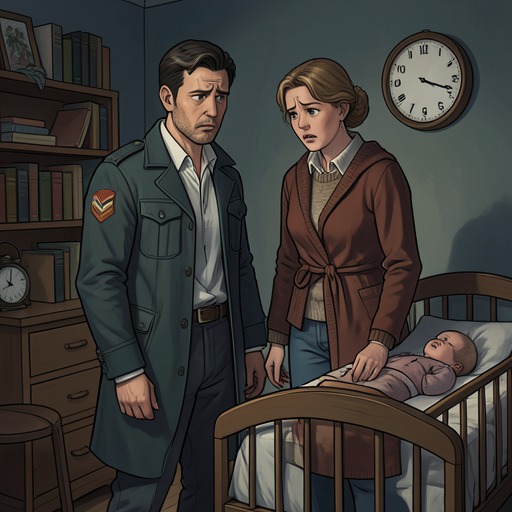
When Momo next calls on them, the inn is still the little old tavern with damp-stained walls and a vine around the door. She enters by the kitchen, as she used to, and finds Nino and Liliana in a fierce argument while their baby cries in a basketwork crib. Nino shouts and gestures; Liliana clatters pots and pans on the stove. Momo first sits beside the baby and rocks it until it stops crying. The interruption gives the adults a chance to notice her, though Nino initially treats even her visit as one more demand on a crowded day.
Financial Pressure and a Repaired Welcome
Nino explains that the inn’s old business brings too little profit: the elderly regulars can afford only one measly glass of cheap red wine in an evening. He wants the place to attract better-off customers, but the pressure is not merely ambition. The rent has risen by thirty per cent, and, as Nino points out, everything else is getting more expensive too. He argues that he cannot keep giving easy terms to others when no one gives him a break. His complaint makes the choice stark: the people who have long made the inn their refuge are also customers whose limited means cannot solve his financial problem.
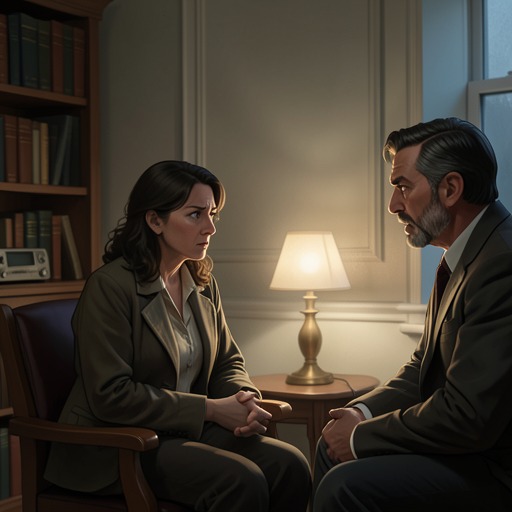
Liliana pushes back with a specific personal claim. One of the men Nino dismisses as a down-and-out is her Uncle Enrico; she insists that he is decent and respectable, even if he has little money. The quarrel therefore sets financial calculation against kinship and loyalty, not simply one business plan against another. Momo does not answer Nino’s arguments with a competing plan. She asks why he and Liliana have stopped coming to see her, and the question turns his attention from the immediate pressure of the inn to the friendship that the pressure has displaced.
Nino remembers their old invitation, “Why not go and see Momo?” He promises to visit with Liliana on their day off, two days later, and gives Momo a large bag of apples and oranges before she leaves. The promise becomes action: he and Liliana return with their baby and a basketful of food. Liliana reports that Nino went to Uncle Enrico and the other old men, apologized to them one by one, and asked them to come back. Nino accepts the consequence without pretending that the financial problem has vanished: he has given up his plans for the inn, but says that at least he likes the place again. Liliana’s confidence that they will get by leaves the economic uncertainty in place while marking the renewed value he has found in the business.
The Fast-Food Inn and Momo’s Return
Much later, Momo approaches the inn expecting to find Nino and learn what has happened to Guido and Beppo. She imagines that they may fetch the children and gather their friends for a party, and hopes that Nino and Liliana might join them. Instead, the old tavern has disappeared behind a dramatic change in the street and the business. Asphalt and traffic now surround a long concrete building with plate-glass windows; a petrol station and a large office building stand nearby. Above the entrance, a neon sign reads “NINO’S FASTFOOD.” The contrast with the damp-walled tavern and its vine makes the city’s transformation visible in the very place where Momo remembers being welcomed.
Inside, customers stand to eat at small tables fixed to the floor, while glass cases display a long assortment of food. A rail channels people toward Nino at the cash register, where he presses buttons, takes money, and gives change continuously. The former innkeeper, who once had time to entertain old men over an evening glass, is now stationed at the point where every customer must pay. The scene supplies no account of how the business changed or what prompted the decision; it does show the changed surroundings and the unbroken rush in which Momo finds him.
The electronic register is so loud that Nino cannot hear Momo calling. When she climbs over the rail and reaches him, his glum expression vanishes at once: he recognizes her and exclaims, “So you’re back!” His warmth survives, but the encounter is immediately hemmed in by the queue. Momo has to return to the line and buy more food before she can speak to him again. When she asks what has happened to the children who used to keep her company, Nino says that everything has changed and that he cannot explain while he is so rushed. His answer confirms the separation Momo is trying to understand but leaves its cause undisclosed in this encounter.
Friends, Reunion, and Narrative Significance
After time resumes, Nino and Liliana are among the friends waiting for Momo and Beppo at the Ancient Amphitheater. Their baby is with them, as are Salvatore, Guido, and the children who had once gathered around Momo. The reunion places Nino back among the people whose company had defined the old inn, now in a larger gathering that includes the friends separated from one another during the crisis. The celebration lasts until the stars appear; after the cheering, embraces, handshakes, and excited conversation, the company settles on the grass-grown steps as Momo begins to sing.
Nino’s small arc links two kinds of change without making his choices simple. Financial pressure had given him reason to seek wealthier customers and had strained both his welcome to the old men and his visits to Momo. Her quiet question renewed his attention to those relationships, and his apologies brought the regulars back even though he abandoned his plans for the inn. Later, the transformed restaurant and the hurried cashier’s desk show a life in which personal contact is harder to make: Momo must push through a crowd to reach him, and he cannot stop to explain what has happened to the children. His recognition of her and his presence at the final gathering preserve the friendship beneath those changes. Through Nino, the book gives the city’s turn toward speed a domestic and local measure: an inn, its customers, and the time a friend can spare.