Anny Leaves Paris
NauseaAnny Leaves Paris is the final, outwardly quiet separation between Anny and Antoine Roquentin. Anny announces that she is leaving for London, declines to see him again before she goes, and departs by train with a man she identifies as a German painter. Roquentin watches from the platform, unseen until Anny notices him through the compartment window; the train leaves without a farewell. The episode closes their attempted reunion not with a new agreement but with distance, uncertainty, and Roquentin’s return to life alone.
The Departure Is Announced
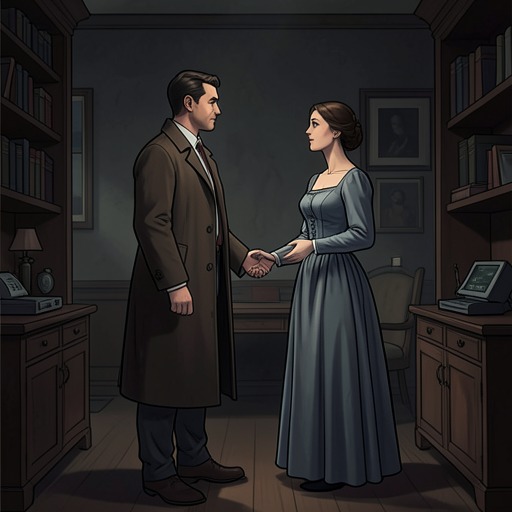
The parting begins in a room darkening into evening. After a silence, Anny abruptly tells Roquentin that he must leave because she is expecting someone. When he asks who, she says she is waiting for a German, a painter. The announcement gives the encounter a practical endpoint, but it also discloses that Anny’s immediate plans do not include continuing their private conversation.
Roquentin asks when he will see her again. Anny says she does not know and that she is leaving for London the following evening. She confirms that she will travel via Dieppe and says she may go on to Egypt, perhaps returning to Paris the following winter. These destinations are possibilities rather than promises of reunion: she offers to write from Egypt, not a definite date on which they will meet again.
Roquentin offers to remain free the next day, but Anny answers that she has much to do and cannot see him. She asks for his address so she can write. He gives it, adding the name of the Hotel Printania because his mail will need to be forwarded after he leaves Bouville. Even as he complies, he expects that she will not write; the address connects their separation to his own imminent departure from the town.
Roquentin Waits at the Station
The next day, identified in his diary as Sunday, Roquentin checks the Railway Guide. If Anny has told him the truth, her train will leave at 5:38; he also considers that the man might drive her instead. He spends the morning in Menil-montant and the afternoon on the quays, remaining physically close to the possibility of seeing her while waiting for the moment when their conversation will become memory.
As the departure approaches, his anxiety becomes bodily. Thinking intensely about Anny leaves his hands trembling and brings on icy chills. He tries to occupy himself by browsing books at second-hand stalls, especially obscene ones, because looking through them distracts him. At five, while examining an illustrated book called The Doctor with the Whif, he realizes the hour and hurries by taxi to the Gare Saint-Lazare. The detour delays him until the last moment, but he reaches the platform in time.
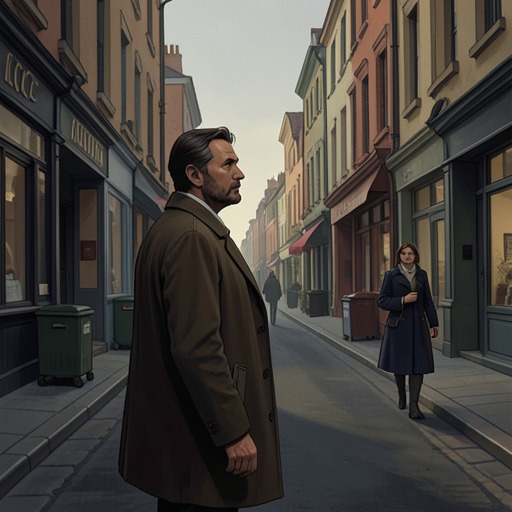
Roquentin walks around for roughly twenty minutes before seeing Anny and her companion. She wears a heavy fur coat and a short veil; the man wears a camel’s-hair coat. Roquentin regards the man as foreign and possibly Egyptian, but does not know his identity beyond Anny’s earlier description of him as a German painter. The two board without seeing Roquentin and do not speak to each other.
The Train Leaves
After the man gets off to buy newspapers, Anny lowers the compartment window and sees Roquentin. She looks at him for a long time, but her expression gives him no clear sign of anger or invitation. The man returns, and the train departs. The scene offers no conversation to resolve what remains between the former lovers: recognition passes between them, but the opportunity for another meeting closes with the moving train.
The sight of Anny brings back to Roquentin the restaurant in Piccadilly where they used to eat. Then, as his account puts it, everything goes blank. He walks until tired, enters a café, and falls asleep; after a waiter wakes him, he writes while still half-asleep. The narrative thus moves from the platform’s decisive departure into a disrupted, exhausted account, emphasizing the immediate aftermath rather than supplying a composed farewell.
Separation and Its Aftermath
Roquentin plans to take the noon train back to Bouville the following day. He expects two days there will be enough to pack, settle his bank accounts, pay the Hotel Printania for the extra notice period, and return his library books. He intends to be back in Paris before the week ends. Anny’s departure is therefore not the only separation in motion: Roquentin, too, is preparing to leave the city where their reunion took place, though his plans are practical and do not restore their relationship.
The diary entry contrasts the present, when Anny is still nearby and another encounter seems possible, with the approaching instant when the conversation will belong to the past. Once the train has gone, that possibility is no longer something Roquentin can act upon. His concluding reflections turn from the specific loss to cities and solitude: Paris and Bouville differ in their settings, but both remain cities he fears and feels unable simply to abandon. The departure makes the prospect of his return to solitude immediate, while leaving the relationship itself unresolved rather than converting it into a renewed commitment.