Nightbitch's Mother
NightbitchNightbitch's Mother is remembered as a woman of extraordinary vocal ability whose unrealized dream of becoming an opera singer shapes Nightbitch's understanding of motherhood, sacrifice, and female ambition. Although she appears in memory as responsible, religious, and emotionally distant, her buried artistic desire becomes one of the most important explanations for Nightbitch's rage at a life that asks women to give up their own greatness.
Identity and Background
Nightbitch's Mother possessed a voice that could rise above everything around it, transforming air into something sharp, translucent, and perfect. She had once imagined studying at the best vocal school in Europe after a theater professional heard her sing a solo at a Wednesday-night church service and offered to become her patron. The offer was recorded on a small white card, which she hid in the base of a music box because her family considered the dream of singing in Europe vain and foolish.
Her religious upbringing taught her a contrary virtue: blending into the group was admirable, while individual distinction threatened to become self-involvement. She therefore gathered and covered her hair and sang four-part harmonies at church each Sunday rather than pursuing the singular voice that had marked her as exceptional. Even the possibility of going to Europe persisted only briefly after she gave birth to a daughter. Her husband reminded her that the individual mattered little to the church, and the talk of Europe began to seem almost morally dangerous, as if personal ambition were a form of spiritual failure.
Life and Plot Trajectory
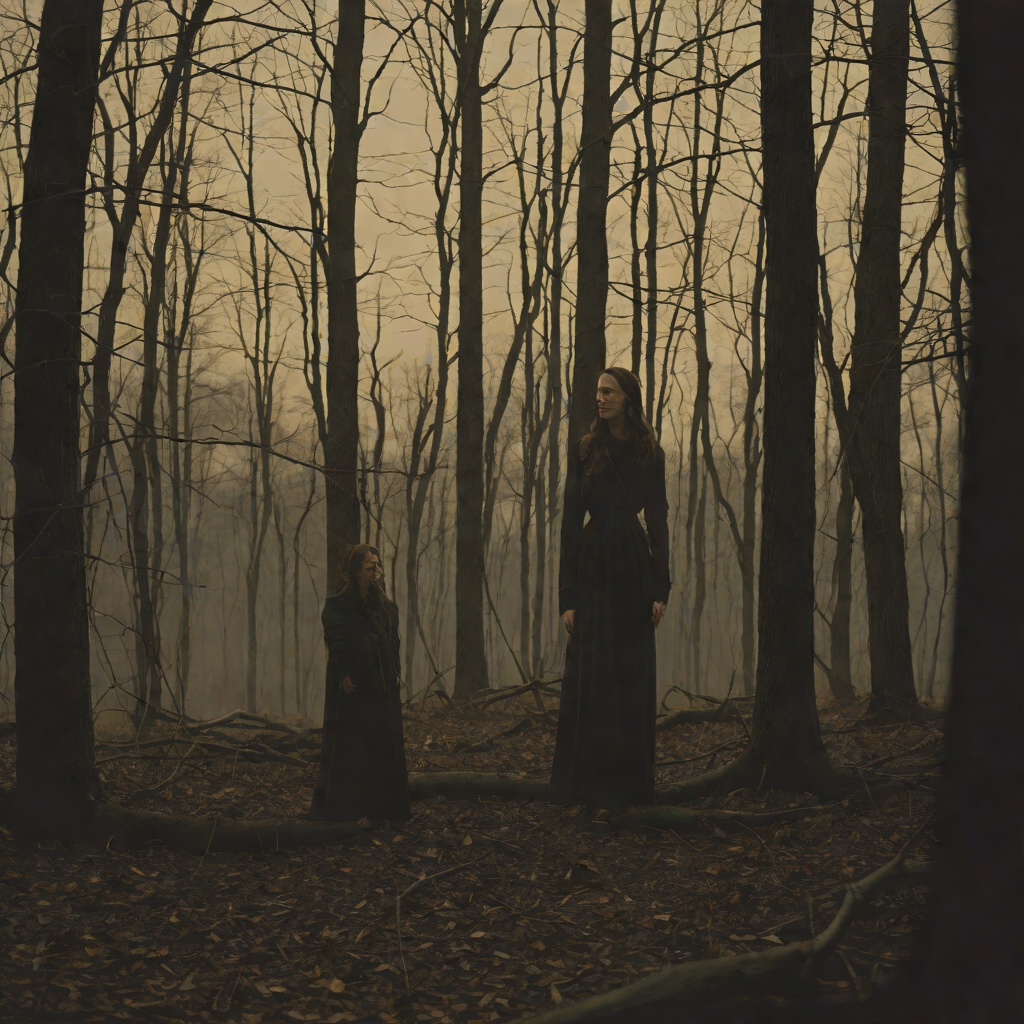
Nightbitch recalls her mother through a series of images that hold beauty and depletion together. On warm summer nights, her mother would sit barefoot on the lawn in a flowered skirt while a record player sent opera into the black grass, black air, and unmoving trees. The child fell asleep to that music and to the sight of a woman who had once wanted a larger life but now seemed suspended outside it, staring at the stars.
The mother is also associated with physical absence and a repeated refusal of intimacy. Nightbitch remembers her as good, responsible, and holy, but also as someone often lost in her own head, suffering from headaches, napping, or asking to be left alone. As a child, Nightbitch interpreted this distance as abandonment: it seemed that her mother was always pushing her outward, telling her to go farther and faster. Only later does she reinterpret that pushing as her mother's best available form of love, an attempt to prevent her daughter from being trapped in the same pattern of postponed greatness.
The Dream and the Kittens
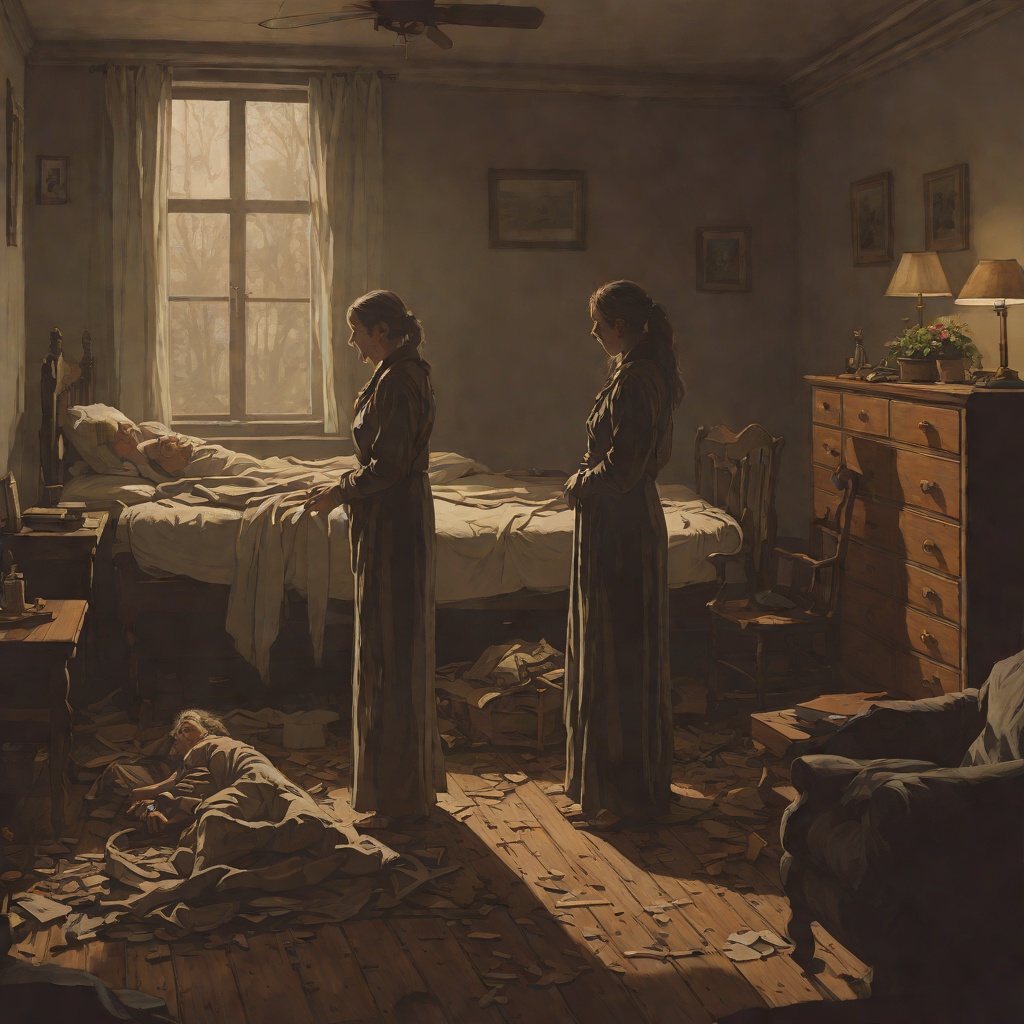
A childhood dream makes the mother's condition visible through animal imagery. In the dream, foxes, raccoons, and wolves set upon her mother outdoors; the mother meows like a kitten and lovingly pets the animals as they pull her apart. Nightbitch watches from a dream window, overwhelmed by despair, and wakes confused about whether the animals are outside with her mother or whether her mother has somehow become part of their world. In waking life, the mother is still on the lawn, unmoving beneath the moon, and dismisses the child's concern by saying she is tired.
The kittens that follow Nightbitch to the school bus extend the same conflict between care and incapacity. They want the warmth of her jacket and the milk taste on her fingers, while Nightbitch desperately wants her parents to take responsibility for them. Her parents treat the animals as merely animals and send her away before she misses the bus. The episode teaches her that she loves dependents with an intensity her parents cannot or will not share, leaving her with the sense of a chasm between herself and them. The memory also foreshadows the adult conflict in which care becomes both an instinctive attachment and an unbearable demand.
Ambition, Motherhood, and Conflict
Nightbitch's adult interpretation of her mother's life becomes inseparable from her own crisis after becoming a mother. She recognizes that women across generations have delayed their greatness until time extinguished it, while men were not required to surrender their ambitions in the same way. Calling such renunciation holy or selfless now appears to her as a cruel trick: women are praised precisely for giving up every dream that might have made their lives their own.
This recognition reframes Nightbitch's anger toward marriage and motherhood. Society, adulthood, marriage, and motherhood seem designed to put a woman in her place and keep her there; after the birth of her son and the loss of her career, figure, ambition, and familiar hormonal balance, that suspicion becomes nearly inevitable. Her mother is not simply an example from the past but the intimate evidence through which the system becomes legible. The inherited lesson is that a woman may be talented, devoted, and morally praised while still being steadily removed from the center of her own life.
Change and Ending
The decisive change occurs in Nightbitch's memory of her mother rather than in the mother's observable life. After realizing that she has only needed to ask her husband for more help, Nightbitch becomes furious that she was not offered that help and that she herself had learned to suppress sadness, rage, and annoyance. Her anger reaches backward toward her mother, whom she imagines pulling upright by the shoulders and shaking with love as well as immense rage. She wants her mother to recognize her own extraordinary gifts, insist on joy, and go to Europe—not only for herself, but for the daughter who needed a different inheritance.
Nightbitch's Mother therefore remains a figure of unresolved possibility. Her story is not presented as a completed artistic career or a triumphant escape, but as a voice diverted into communal harmony, a dream hidden in a music box, and an opera record playing over a dark lawn. In Nightbitch's developing self-understanding, that unfinished life becomes both warning and mandate: love for one's daughter should not require the mother to disappear, and the refusal of self-erasure may have to begin with an explicit demand for one's own happiness and authority.
Narrative and Thematic Significance
Nightbitch's Mother anchors the book's feminist examination of maternal inheritance. Nightbitch's transformation and fury arise within a culture that treats motherhood as an overwhelming multiplication of work and expects the modern mother to become less animal, less instinctive, and less desirous in order to appear civilized and content. Against that demand, the mother's abandoned singing career shows what happens when female desire is disciplined before it can become a life.
Her presence also complicates any simple accusation of maternal neglect. The daughter once experienced her mother's withdrawal as rejection, but later understands it as an imperfect effort to push her away from the fate of women who postpone themselves. That reinterpretation does not erase the pain. Instead, it makes the relationship more difficult and more human: the mother both fails to give her daughter the care she needs and, through the visible ruin of her own dream, gives Nightbitch the knowledge that sacrifice should never be mistaken for virtue. Nightbitch's Mother is thus the silent origin of a rebellion that seeks to preserve both maternal love and the self that motherhood threatens to consume.