Chiaki’s defensive rage
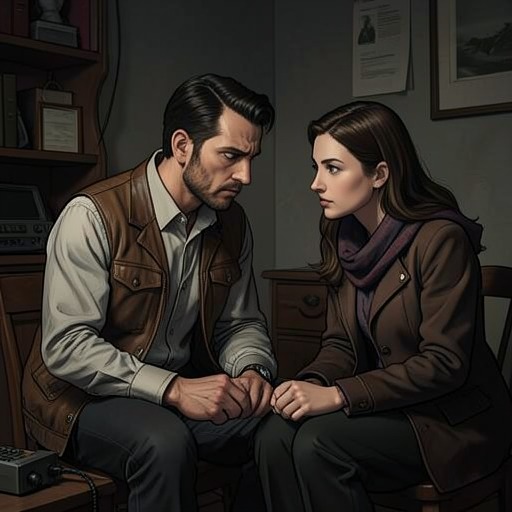
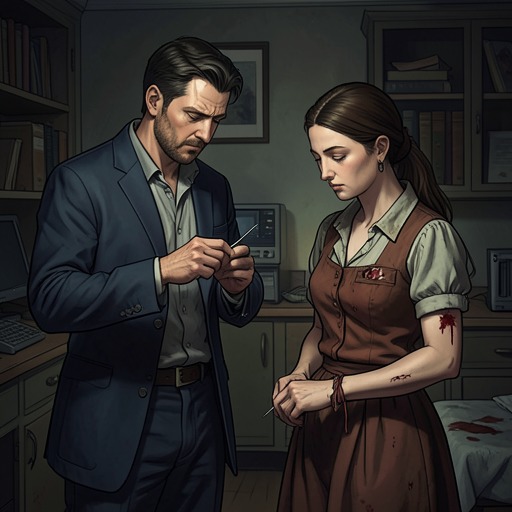
PiercingSanada Chiaki’s defensive rage is a response she understands as necessary for facing hostility, not simply as uncontrolled anger. During her confrontation with Kawashima Masayuki, it enables her to attack when he calls for Yoko, then collapses into exhaustion and fear. The change from forceful action to vulnerable silence gives the rage its central significance: it protects Sanada Chiaki for a time, but does not free her from the danger or uncertainty of the encounter.
What Triggers the Rage
After Sanada Chiaki has given Kawashima Masayuki two tablets of Halcion, she watches him struggle with its effects. She recognizes that his distress resembles her own unpleasant first experience with the drug and feels some sympathy for him. That response changes when she tries to understand what he is mumbling and realizes he is calling for Yoko. Sanada Chiaki’s blood runs cold; she tries to disparage her own reaction, but then something in her gives way and rage takes over.
The scene does not establish that Sanada Chiaki knows who Yoko is or what her relationship to Kawashima Masayuki means. It does show that hearing the name sharply alters Sanada Chiaki’s response to him. Her next actions are deliberate in their immediate sequence: she pulls open a kitchen drawer, takes a manual can opener from among the scattered utensils, and approaches Kawashima Masayuki as he tries to get up. Her attack follows the emotional shock, rather than preceding it.
Rage as a Means of Self-Protection
As Sanada Chiaki moves toward him, she recalls why she regards this rage as necessary. She associates insults with hostility and believes that violent anger is what gives her the courage to stand up to it; in her understanding, rage makes action possible. The episode therefore presents the feeling not only as an eruption but as a defensive capacity she relies on when she perceives herself to be under attack.
That belief has immediate consequences. Sanada Chiaki strikes Kawashima Masayuki with the can opener and continues to hit him as he tries to get away. The account presents the act as dangerous violence without making it a detached display of strength: she is crying as she attacks, and the force she has summoned is bound up with distress. Her own explanation clarifies the function of the rage, but does not make the attack safe or resolve what she feels toward him.
The Collapse of the Defensive State
The change comes when Sanada Chiaki notices that she is sobbing. Her shoulder and arm give way with exhaustion, she gasps for breath, and the can opener slips from her hand. She understands that she has spent the rage she had been relying on. With the weapon no longer in her grasp, she watches Kawashima Masayuki look at her through bloodied hands and becomes afraid of what he might do. She also fears that he might get up and leave.
Her impulse shifts from attack to an imagined plea for closeness: she wonders whether she should embrace him, apologize, and ask him to stay. Yet she is too exhausted to act on that thought. The reversal does not amount to reconciliation. Instead, it exposes the vulnerability that the rage had temporarily enabled her to conceal: Sanada Chiaki is frightened, unsure how Kawashima Masayuki will respond, and unable to take the next step she imagines.
Kawashima Masayuki’s Recovered Voice
The attack also changes Kawashima Masayuki’s state. Its shock and pain pull him out of his drugged confusion, and he recognizes an inner voice that had guided him through his childhood. The voice recalls rules for enduring his mother’s beatings: he should not apologize, should wait for the attack to end, and should meet his attacker’s eyes afterward. Those rules are not Sanada Chiaki’s account of her own past; they belong to Kawashima Masayuki’s remembered way of surviving abuse.
When Kawashima Masayuki sees Sanada Chiaki crying and no longer holding the can opener, the voice urges him to recognize that she is afraid and to lower his guard. He does so slowly. The encounter thus places two different defensive responses beside each other: Sanada Chiaki’s rage has driven her into violence, while Kawashima Masayuki’s childhood voice helps him register her fear and stop treating her as an immediate threat. The scene offers no simple resolution, but it turns the moment of violence into a moment when each becomes visible to the other in a different way.
Context and Narrative Significance
Kawashima Masayuki’s remembered rules emerge from a history he had disclosed to Yoko. After his father died, his mother beat him, and he learned to endure the violence by mentally distancing himself from it and trying to anticipate its recurrence. After a teacher arranged for him to live in a home for abused children, he began drawing narrow roads at night. The memory of that childhood and its survival strategies returns during Sanada Chiaki’s attack, connecting the present confrontation to a past that Kawashima Masayuki had rarely spoken about.
The narrative also contrasts his earlier isolation with his marriage. Since meeting Yoko, Kawashima Masayuki’s bouts of self-loathing had largely stopped, and he had not again been overwhelmed by his old panic, even when his daughter Rie was born. His call for Yoko during the Halcion episode therefore carries the weight of a relationship associated with greater security, though the evidence does not establish how Sanada Chiaki interprets that history. Her rage erupts at the sound of Yoko’s name; its later collapse leaves her exposed to the fear and attachment she cannot turn into action. The episode makes defensive rage consequential precisely because it is temporary: it can produce the courage to strike, but its exhaustion reveals the vulnerability it had been holding back.