Kawashima’s obsession with stabbing the baby
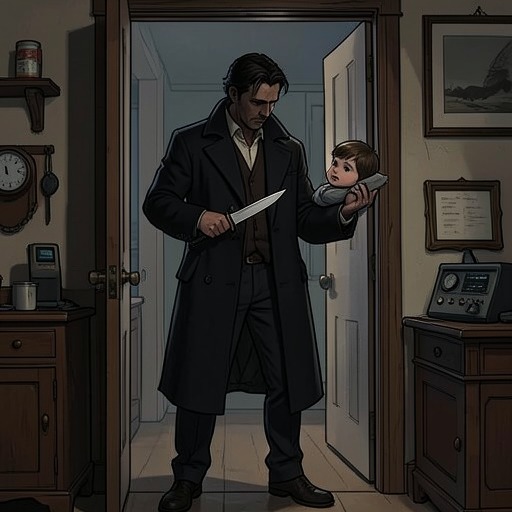
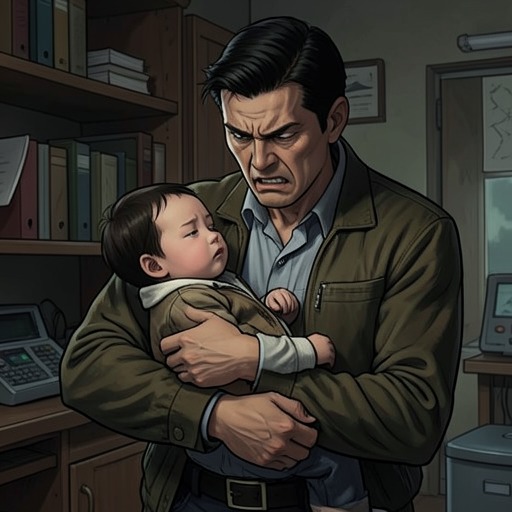
PiercingKawashima’s obsession with stabbing the baby is a recurring fear that Kawashima Masayuki might harm his infant daughter, Rie. It begins as a thought that horrifies him, not as an action he intends to carry out: he tries to reassure himself that he will not hurt her, yet repeatedly returns to her crib with Kawashima’s ice pick to make sure. The pattern turns the ordinary work of caring for a newborn into a source of dread, and later becomes the setting for a more dangerous change in how he understands the fear.
Identity and Household Context
As Yoko’s pregnancy advanced and fatherhood became real to him, Kawashima worried that the baby might inherit his insomnia, which had troubled him since elementary school. He had heard that newborns sleep much of the time and thought of sleep as an essential part of infancy; the possibility of an insomniac child therefore seemed especially distressing to him. This concern establishes the fear within a domestic life in which he is attentive to the baby, not indifferent to her needs.
The first explicit thought of using an ice pick comes ten nights before the night that opens the episode. Kawashima has just washed the baby in the bath and handed her to Yoko, who is drying her. Watching them, he smiles. Then, without warning, the possibility of stabbing the baby enters his mind. His face tightens, and for a moment he becomes so absorbed that he does not register Yoko calling to him. When he comes back to the room, he offers daydreaming as an explanation. The abruptness of the thought, and the interruption it causes in his awareness, make the episode frightening precisely because it arrives unbidden in an intimate, peaceful moment.
Repetition and Reassurance
After that bath, the image of the ice pick’s pointed end will not leave Kawashima. He tries to counter it by telling himself that he would never stab the baby, but the fear returns with an opposing possibility: that he might. The conflict does not resolve through reassurance. Instead, it establishes a nightly routine. He cannot go to bed until he has stood over the crib, holding Kawashima’s ice pick and checking that he will not use it.
The routine has continued for ten consecutive nights by the opening scene. In the darkness, Kawashima shades a penlight with his hand so its beam falls only on the baby. Yoko sleeps in the bed behind him, unaware of the vigil, and he silently confirms to himself that the child is asleep. He watches over her while she is vulnerable, but the same act of protection places him beside her with the object he fears he could use. This contradiction gives the checking its force: it offers a moment of certainty, yet the need to repeat it shows that certainty has not lasted.
His attempt to calm himself also makes the distinction between thought and intention central to the episode. He reasons that imagining an alarming possibility does not mean he wants it to happen, comparing his fear with more familiar anxieties about public embarrassment or being followed. He recognizes that people can sometimes loosen a fear by facing it or telling someone about it, but his own thought feels extreme enough to resist that ordinary reassurance. His repeated insistence that everything will be all right coexists with the nightly need to check; the words do not end the cycle.
The Fear Changes Direction
The story complicates this pattern through Kawashima’s memory of watching Basic Instinct with Yoko during the last month of her pregnancy. The film’s opening murder, committed with an ice pick, makes him want to leave the room. Yoko’s detached interest in the story helps him stay and watch. Later, when he reflects on why he remained calm, he connects that calm not only to her response but also to the memory of Taku-chan saying that the identity of the victim did not matter, and to his own memory of having stabbed a woman. In the account he constructs, remembering that earlier violence calmed his heartbeat and temporarily eased his fear about Rie.
That recollection marks a consequential shift. Until then, the nightly ritual is built around the question of whether Kawashima might hurt the baby. The other self’s interpretation recasts the remembered stabbing as the reason he could tolerate the film, then turns that connection into a directive: the fear can be overcome only by stabbing someone else with an ice pick. Kawashima receives this conclusion in a stupor, and the voice continues after the two selves merge. The episode does not show him carrying out this instruction here, but it does show his effort to manage a fear giving way to a proposed act of violence against another person.
Narrative Significance
The recurring vigil brings together caregiving, fear, and an object that Kawashima cannot treat as ordinary. His attention to the sleeping child is tender, while his presence at the crib with the ice pick makes the possibility he is trying to disprove physically immediate. The penlight narrows the scene to the baby and the instrument; his reassurance narrows it further to the question of what he might do. Rather than settling the fear, the repeated check keeps him returning to that question.
The contrast between the first intrusive thought and the later instruction is essential. Kawashima initially experiences the idea of harming Rie as a threat that he wants to resist. The later reasoning does not erase that fear; it uses the memory of past violence to propose a way out of it. This progression makes the obsession more than a repeated image: it is a process in which attempts at reassurance and memories of violence become entangled, raising the stakes from a private nighttime ritual to the prospect of harm beyond the crib.