Kawashima’s night terrors
PiercingKawashima’s night terrors are recurring episodes of panic rooted in his childhood, when he was abused by his mother. They shape how he understands fear, pain, and closeness: as a child he learned to distance himself mentally from what was happening, and as an adult he still tends to withdraw when he feels out of control. His disclosure to Yoko marks both an act of trust and a return of distress he had nearly left behind.
Identity and Symptoms
Kawashima tells Yoko that the episodes began when he was a small child. He later found the term pavor nocturnus, or night terrors, in a psychology book. In childhood, he would wake in panic, scream, and sometimes run in circles for two or three minutes. Afterwards he could remember little beyond the overwhelming terror and the sense that he no longer knew who he was or recognized the people around him, who seemed to have become part of a nightmare.
The episodes have become less severe with age, but have not simply disappeared. As an adult, Kawashima remains aware of his identity and can recognize Yoko during an episode. One winter night, after they had shared a home for about six months, he woke drenched in sweat and left the apartment for roughly two hours. He explained that when he loses control this way, he has always thought it safer to be alone, walking and breathing deeply until he calms down, rather than letting another person hold him.
Childhood Trauma and Learned Coping
Kawashima believes the night terrors are connected to events after his father died when he was four. His mother began beating him, while leaving his younger brother unharmed. He recalls being frightened by the unpredictable attacks and blaming himself, assuming he must be a bad child. To endure them, he practiced thinking that the person being hurt was not really him. With intense concentration, he could distance himself from the pain; his mother’s response to his lack of visible distress was to hit him harder.
The fear was not confined to the beatings themselves. When Kawashima was about five or six, his mother began taking his younger brother to a children’s play area in Odawara while locking Kawashima at home. After he climbed out and chased after them, she brought him back and tied him to the bathroom pipes. He remembers falling asleep on the tile floor and waking after dark, looking out at an empty, narrow road. Not long afterward, a middle-school teacher arranged for him to live in the Home for abused children. There he began drawing, repeatedly choosing narrow roads at night as his subject.
At his high-school graduation, Kawashima’s mother apologized, then asked him to forgive her. He initially nodded, but something in him gave way and he slapped her; it was the only time he ever struck her. His account of the night terrors therefore sits within a wider history of abuse, separation, and a conflicted encounter with the person he identifies as their source. He had not told anyone these details before speaking to Yoko.
Disclosure and Reprieve
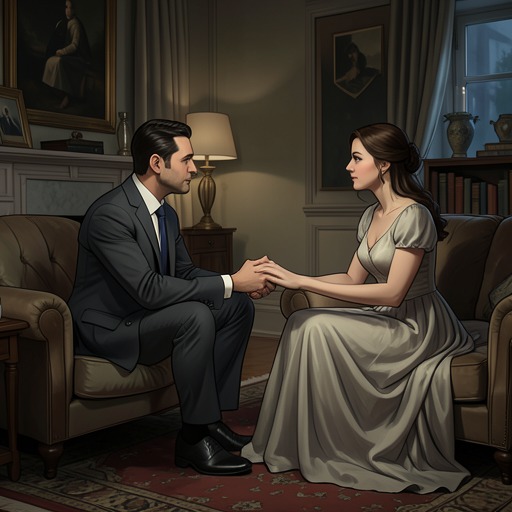
Kawashima’s disclosure follows the winter-night episode in which he leaves Yoko without explaining what is happening. When he returns, he tells her about the night terrors and the childhood abuse he has kept secret. Yoko asks why he went out alone instead of allowing her to comfort him. He cannot offer a new solution: solitude and walking are the method he has always used to recover control. She takes his hand after he finishes telling her about the drawings he made in the Home.
Their relationship coincides with a substantial easing of his distress. Kawashima supports Yoko when she leaves her job and when she says she wants a baby. After they decide to marry, his bouts of self-loathing almost cease, and he is no longer overwhelmed by the old panic and terror—not even when Rie is born and he first holds her. He cannot say with certainty whether he himself has changed, though colleagues notice that he seems more cheerful after marrying Yoko.
Recurrence and Significance
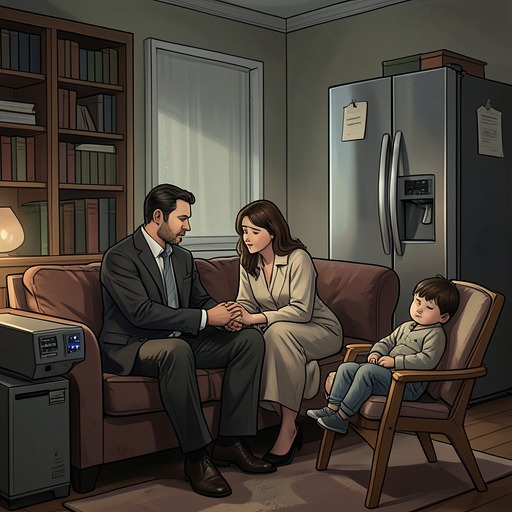
The reprieve proves incomplete. Ten nights before the events of the novel’s present, the old panic returns. Kawashima recognizes that the cycle had seemed to be fading: he cannot bear being alone, yet becomes anxious when someone draws close; he fears what might happen if that closeness continues, until solitude again appears to be the only answer. The recurrence unsettles the security he had found in family life, without erasing the years in which his symptoms had receded.
The story also places Kawashima’s childhood method of mentally separating himself from pain beside later episodes of feeling detached from his body. In a convenience store, a familiar sense of unreality arises, and he imagines another self near the shelves of disposable diapers, beckoning him. This is presented as a related experience of disconnection, not as one of the night terrors he described to Yoko. Later, during a violent confrontation with Sanada Chiaki, Kawashima recognizes an inner voice as one that had protected him in childhood and recalls its instructions for enduring an attack. The connection gives his early coping strategy a continuing presence in the narrative: what once helped him survive becomes part of how the novel portrays the return of childhood fear under adult pressure.