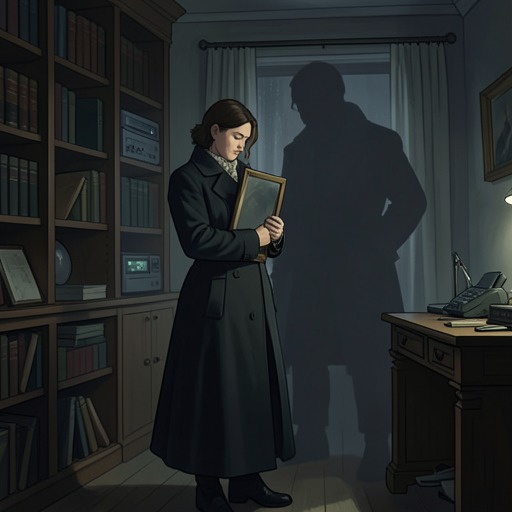
Chiaki’s recurrent self-harm and suicidality
PiercingChiaki’s recurrent self-harm and suicidality are presented as part of a feared, repeating crisis rather than as an isolated act. Her account links changes in desire and sensation to the onset of the Nightmare, a state in which she feels that punishment has taken over and that she can no longer choose what happens to her.
A Feared Cycle
During one night, Chiaki feared that an earlier frightening state was beginning again. The presence she expected did not appear, but she could not reach the Halcion in her handbag and remained awake until dawn. Her body felt rigid, and she was frightened by the absence of sexual desire, which she associated with the first stage of a recurring cycle. She understood the change as a warning: once the Nightmare began, she believed, she would lose the ability to choose her own pain. In this passage, the crisis is marked not only by fear but by a threatened loss of agency; even before she harms herself, she reads an altered state of feeling as evidence that control may be slipping away.
Self-Injury and Its Recognition
Sanada Chiaki’s crisis also becomes visible through repeated acts of self-injury. At one point she pulls at her nipple ring and registers that she feels no pain, an absence that unsettles her because she associates emotional and physical numbness with the beginning of the Nightmare. Later, Kawashima Masayuki finds her in the bathroom harming herself with the scissors of a Swiss Army knife. Her fragmented inner perspective casts the act as punishment directed at a self she experiences as separate from her name, turning self-harm into both an expression of distress and an attempt to impose a sentence on herself.
The pattern is not confined to that episode. Sanada Chiaki shows Kawashima four old scars on her wrist and tells him that she has more on her leg, currently hidden by a bandage. Seeing these alongside her recent injuries, he recognizes that her self-destructive behavior is recurrent and severe. He wonders whether she might be waiting for him to kill her, a suspicion that reveals how her established history of self-harm shapes his interpretation of their encounter. The scars make a concealed history legible to another person, but they do not give him a clear explanation of what she wants or a reliable way to help her.
Dissociation, Care, and the Limits of Rescue
During her crises, Sanada Chiaki describes losing continuity with what has happened: her awareness grows indistinct, and she later wakes in a hospital. She believes that an unknown person has repeatedly taken her there. Although Kazuki has claimed responsibility for calling an ambulance on one occasion, Chiaki does not believe him; the person she imagines as her rescuer remains unidentified, someone she has long hoped to meet. This expectation gives emergency care a personal, almost idealized significance, but its anonymity also leaves her without a dependable account of who intervenes or how.
That hoped-for rescue collides with the encounter that follows. After freeing herself from restraints, Chiaki chooses not to call the police because she anticipates a prolonged stay at the station. Instead, she examines the man’s belongings and reads his notebook, while remaining unsure whether it describes a real crime or the fantasies of a disturbed person. The reading changes her understanding of him: he is not the distant admirer she had imagined would arrive to save her. The episode leaves the identity of the person who has taken her to hospital unresolved, while showing how distress, gaps in awareness, and an uncertain expectation of help complicate Chiaki’s attempts to interpret danger and care.
Fractured Selfhood and Uncertain Witness
The narration makes the crisis difficult to separate from Chiaki’s struggle to recognize herself. Her thoughts divide the self who is named Chiaki from an imagined “real” self that judges and condemns her; the movement between third-person description and first-person thought formally enacts that division. This is not a stable explanation for her behavior but a view of how she experiences it in the moment: her own voice becomes an accusing presence, while the name by which others might identify her seems disconnected from the person undergoing the crisis. The recurring gaps in awareness deepen that uncertainty. Chiaki can recall expecting an unknown rescuer and can question another person’s account of who called for help, but she cannot establish the full sequence for herself. The pattern therefore remains both recurrent and unresolved: others may witness its consequences, while the person at its center struggles to hold a continuous account of what has happened.