Queenie has a miscarriage
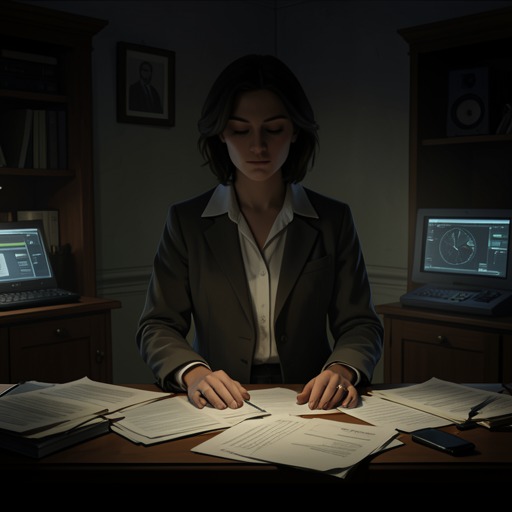
QueenieQueenie Jenkins’s miscarriage is disclosed during an examination intended to check her IUD, turning a routine medical follow-up into an unexpected loss. The event’s significance lies not in a change to her stated intention not to have a child, but in the discovery that intention and choice are not the same: although she did not want to carry and raise a baby, she recognizes that she would have wanted the decision to remain hers.
The Diagnosis and Its Circumstances
The doctor returns to the room to check one more thing. Queenie reminds her that the IUD was present; after the doctor puts on gloves, Queenie lies back for another examination. The doctor pauses, says that another doctor has been asked for a second opinion, and asks whether there is any chance Queenie was pregnant. The question makes her sit up again, and the ultrasound supplies the answer: the doctor says it appears she has had a miscarriage.
The diagnosis revises what Queenie thought the examination was about. The IUD had been found, but its presence had not ruled out pregnancy. The discovery is made through a second look at the ultrasound rather than through any expectation on Queenie’s part that she might be pregnant. In the scene, the medical check and the revelation are inseparable: the same appointment that was meant to confirm the contraceptive’s presence exposes an outcome Queenie did not know had occurred.
A Clinical Explanation, and a Need for Recognition
Queenie’s phone slips from her hand when she hears the diagnosis. She asks why, and wants the doctor to look at her and acknowledge that the news has affected her. Instead, the doctor keeps her attention on the screen and explains clinically that miscarriage can happen with most forms of contraception, often without women knowing. She also frames the outcome as evidence that the contraception has done its job.
That response gives Queenie information without meeting the need she is expressing. The doctor’s explanation addresses how a miscarriage can occur despite contraception, but the reassurance that the method has worked does not answer Queenie’s immediate question about why this has happened to her. Queenie remains on the examination table after the doctor leaves. The scene thus distinguishes a medical account of the event from the personal meaning Queenie is trying to have acknowledged; the latter receives no comparable response in the room.
Loss, Choice, and the Body
At home, Queenie finds that the bleeding has stopped but the cramps continue. She runs a bath, notices ultrasound gel on her underwear, and later, while in the water, probes her stomach and winces at tender places. The physical aftermath continues after the appointment is over, while her thoughts turn to the difference between not wanting a child and not wanting the choice taken away. At twenty-five, she believes she would not have been ready to have a baby; she also understands that the possibility of choosing otherwise would have mattered.
Her reflection brings her mother into the question: her mother was twenty-five when she became pregnant with Queenie. That comparison sharpens Queenie’s sense of her own unreadiness, but does not cancel her grief over the lost possibility. The two thoughts coexist. The miscarriage is not represented as proof that she secretly wanted to become a parent; it makes the absence of choice newly visible to her. She strokes her stomach and lies back in the bath, numb, as the water warms her cold skin.
The Separation from Tom and the Aftermath
That night, Tom is still away, and Queenie cannot sleep because of the continuing cramps. She begins packing her half of their separated belongings, including souvenirs from their first three holidays: a snow globe from Paris, an ugly porcelain donkey from Spain, and a Turkish eye ornament. She wraps the shared memories carefully, but takes the donkey back out of its box and leaves it on the mantelpiece, deciding that if one reminder remains, it will be the object she does not want in her new place. The packing makes the miscarriage unfold within the reality of their separation rather than apart from it. Even the two mugs on the drying rack, marked with T and Q, remain among the things still to be reckoned with.
At the hospital follow-up, Queenie learns that the fetal tissue has passed. Because some of the pain returned after she had sex with Adi, she is given antibiotics to guard against possible infection; she judges the encounter not worth its consequences. The check therefore confirms that the miscarriage has passed physically while adding another health concern to its aftermath. Queenie returns to work carrying the antibiotics and spends the day smiling publicly and privately rehearsing reasons Tom should know.
She does not want to tell him about Adi, but wonders whether he should know about the miscarriage because it is connected to him. Their clean-break rules seem harder to apply when the loss concerns both of them. She sends Tom a message asking him to call. The event consequently reaches beyond the examination room: it exposes the limits of the separation’s rules, while leaving unresolved how—or whether—Tom will respond. Queenie’s desire to tell him is present; the evidence ends before their conversation takes place.