Sylvie Wins Her Lawsuit against Roy
QueenieSylvie Wins Her Lawsuit against Roy marks a hard-won legal resolution whose limits become clear in the same breath as the victory: after almost three years, Sylvie wins her case, but cannot get back her house or most of the money Roy has spent. In telling Queenie Jenkins the news, she turns part of what little remains into practical help for her daughter, making the aftermath as much about care and independence as about the lawsuit’s result.
The News and Its Limits
Sylvie raises the court case quietly while Queenie is helping with cleaning at her grandparents’ home. Queenie understands what the subject might require of her and nods, hoping her mother will not ask her to testify. Instead, Sylvie shares the outcome: after nearly three years, they have won. Her relief is palpable; she embraces her small frame and says she had not thought the case would ever end.
The win does not undo the financial damage. Sylvie explains that she cannot recover the house, and that Roy has spent most of the money. She has been awarded what is left. Nor does the outcome mean that Roy will go to prison. The distinction between a legal victory and a fuller restoration is central to the news: the case is over, but the losses it addressed remain partly unrepaired.
Queenie’s Response
Queenie congratulates Sylvie, yet is disappointed in herself for not feeling immediate relief. Her response registers the distance between knowing that her mother has won and experiencing the result as a simple release. When she asks what will happen to Roy, Sylvie explains that he will not be imprisoned; she admits that she was not really listening to that part, because she was simply glad the proceedings were finished.
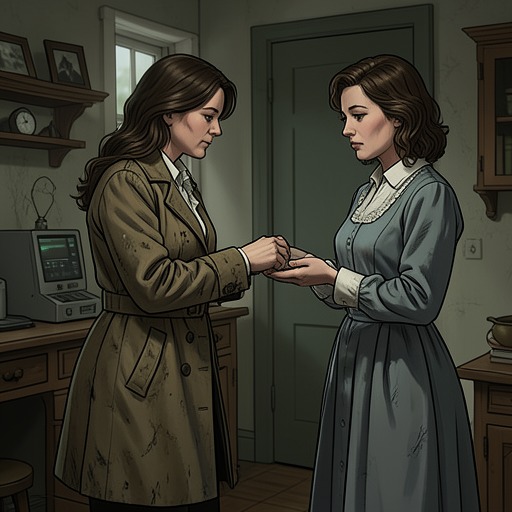
The news arrives with a folded check. Sylvie rummages through her handbag, stands, and gives it to Queenie: a fair portion of what she received, though not a large amount. She intends it as a deposit and several months’ rent so Queenie can find a place of her own rather than continue paying her keep through manual labour. The gesture gives the judgment an immediate consequence in Queenie’s life, while showing Sylvie directing a share of her limited recovery toward her daughter’s independence.
Aftermath and Significance
Queenie unfolds the check and is struck by how much money it represents to her; Sylvie has handed it over as if it were nothing. Queenie carries it into the kitchen and puts it on the table, objecting that Sylvie needs the money herself and describing the hostel where she is living as a hovel. Sylvie rejects that description: she says the hostel is quite nice, that she has friends there, and that she feels safe. She calls it her little port in the storm.
The exchange complicates the apparent direction of help. Sylvie is the person emerging from a long court case and living in temporary accommodation, yet she offers money to help Queenie leave a household where her keep is tied to cleaning. Queenie’s first response is to protect her mother from further loss; Sylvie’s is to insist that her present refuge is safe while making room for her daughter to find one of her own. The lawsuit’s ending therefore brings neither complete restitution nor a clean emotional release. It closes the case, acknowledges what cannot be recovered, and enables a concrete act of support between mother and daughter.