Queenie’s Severe Panic Attack
QueenieQueenie Jenkins’s severe panic attack follows the final confirmation that her relationship with Tom is over. In the hours after that conversation, she keeps the miscarriage from him, walks home through the rain, and tries to manage an escalating physical crisis alone. The attack makes distress impossible to contain privately: when Queenie can no longer breathe normally or call for help, her aunt Maggie and cousin Diana become the people who witness and respond to it.
Causes and Background
Tom says that he understood their time apart as a chance to see how each of them felt, not as an agreement to begin the relationship again. When Queenie asks whether they are really finished forever, he confirms that they are. The exchange closes off the possibility she had hoped might remain open; she feels as though she is about to collapse.
Queenie starts to tell Tom about the miscarriage, hoping that knowing what happened might make him care about what their separation means. His annoyed response stops her. She decides she would rather keep the loss to herself than expose it to what she expects will be his apathy. The unspoken news gives the breakup a second, private weight: Tom leaves without learning what Queenie nearly told him, and she carries both the loss and her expectation of indifference away from the conversation.
She walks home in the rain listening repeatedly to Solange’s Losing You and Prince’s When You Were Mine. By the time she arrives, she is visibly shivering and soaked through; Rupert makes her tea. Asked where she has been, she says she was just out for a walk. She begins to stand, intending to leave the kitchen, but the room seems to warp. The physical disorientation arrives before she can explain what is happening, and the answer she gives Rupert conceals the walk and its reason rather than inviting him into her distress.
The Attack
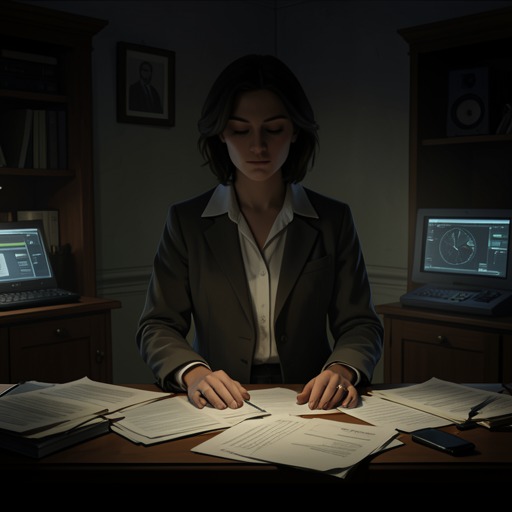
Upstairs, Queenie’s breathing grows shallow. She tries to call out but feels as though a giant is standing on her chest; ringing fills her ears before she blacks out. She comes to on the floor beside her bed, with her limbs so heavy that she knocks her phone from the bedside table while trying to reach it. The sequence turns an emotional crisis into an immediate bodily emergency: she loses consciousness, cannot readily move, and cannot summon help in the ordinary way.
Even after waking, Queenie resists calling the people closest to her. She does not want her friends to see her in this condition and worries that her grandmother is too old to deal with it. She chooses Maggie instead, judging that, whatever her tendency to invoke holy water, Maggie is practical when someone is ill. Queenie curls up on the floor and manages to tell her aunt that she does not feel well. When Maggie asks what is wrong, Queenie cannot identify it; as speaking becomes harder, she says she cannot breathe and asks Maggie to come.
Before help arrives, Queenie staggers downstairs for water and lies on the sofa, her stomach churning. She tries to draw in deep breaths, but feels that something stops her each time; eventually she begins to hyperventilate. Maggie arrives by cab with Diana, who has come because her father forgot he was meant to take her that weekend. Their entrance brings company into Queenie’s isolation, but it does not instantly settle the attack. Queenie has to open the door herself after hauling herself up from the sofa.
Naming the Crisis and Getting Help
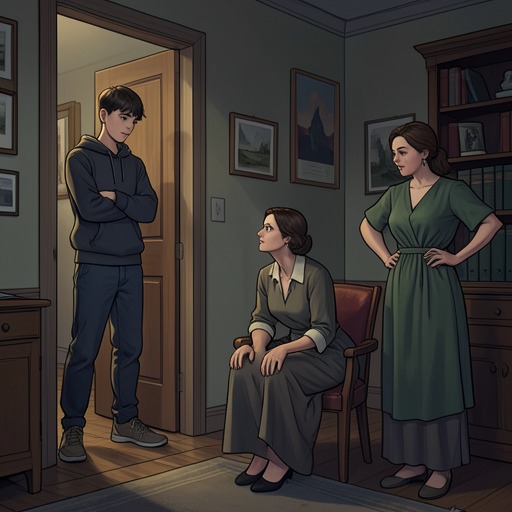
Diana recognizes the symptoms as a panic attack. Maggie initially challenges her authority to diagnose Queenie, but Diana explains that a girl at school experienced similar feelings before classes and had to take lessons alone in a separate room. Queenie says she has never had a panic attack; as she speaks, another wave of acute panic hits. Diana’s explanation does not substitute for a professional assessment, but it gives a name to an experience Queenie has been struggling to describe as a sense that something terrible will happen and that she will never feel better.
Maggie asks whether Queenie is under stress and whether she has been praying. The narration places the question about mental health within a family and cultural context, noting that Jamaicans do not typically believe in mental-health issues. Queenie ignores the question about prayer and asks what Maggie means by stress. This brief exchange shows the difficulty of making the episode legible to the family even as they try to help: Queenie cannot easily name what is happening, Maggie reaches for familiar religious language, and Diana supplies a label drawn from what she has seen at school.
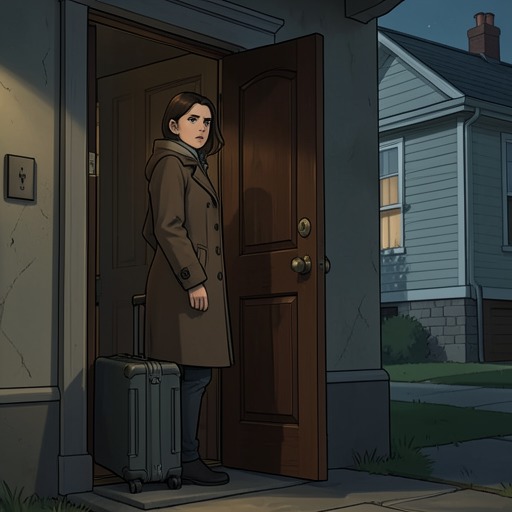
Maggie’s practical response is to get Queenie out of her wet clothes, pack overnight things, and go to her mother’s home. Queenie says she does not want to go outside, but Maggie insists that they go and calls a cab; Diana helps Queenie stand. Earlier, the damp smell of Queenie’s home has drawn comments from both Diana and Maggie. Their observations are not presented as an explanation for the attack, but they make the move to the family home a concrete change in her immediate surroundings as well as a response to her distress.
Aftermath and Significance
At her grandmother’s house, Queenie says she cannot eat and asks to go to sleep. Her grandmother insists that food comes first and points her toward fish fingers. The family’s unofficial motto, Food Is Love, sits beside Queenie’s awareness that concern about food can also become concern about her weight. The scene offers care in a distinctly domestic form, not a resolution of the emotional crisis: in the kitchen, her grandparents’ exchange about the noise from Maggie and Diana’s conversation continues through the wall.
Later, her grandmother tells her to rest and leaves her standing in the dark. Queenie protests that it is only nine o’clock and that she will not sleep, then gets into bed holding a hot-water bottle against her stomach. Tom’s words continue to circle in her thoughts, and she falls asleep almost immediately. The abruptness of that sleep contrasts with her certainty that she cannot rest; it marks the end of this episode’s immediate action without suggesting that grief, panic, or the breakup has been resolved.
The attack’s significance lies partly in the contrast between what Queenie can say and what her body does. She hides her walk, withholds the miscarriage from Tom, and initially cannot name the crisis even to Maggie; meanwhile, breathlessness, collapse, and hyperventilation make her distress visible. The episode also establishes that this is new to her: Queenie says she has never had a panic attack before. Her need to call Maggie, accept help from Diana, and leave her flat for her grandmother’s home makes the crisis a moment when private suffering becomes witnessed, even though its underlying causes remain only partly spoken.