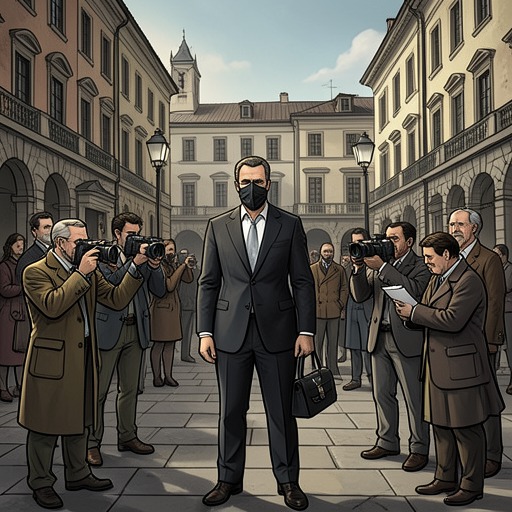
Anna Prado murder
RetributionAnna Prado’s murder is presented as a turning point in the Cupid investigation: examination of her body disclosed evidence of a method of drugging that helped investigators understand how the killer could control his victims, while the case against William Rupert Bantling brought the wider inquiry to his home and its evidence.
Case context
The investigation took shape against a growing record of young women who had disappeared and been found dead. At the Florida Department of Law Enforcement’s Miami Regional Operations Center, investigators assembled photographs and case information on a board known as The Wall. The photographs supplied by families were chosen to represent the women before their disappearances; alongside them, investigators arranged records of the crimes and the dates and locations associated with each case. The board’s scale grew with the investigation, turning a conference room into a visual record of the victims and the work still to be done.
The task force brought together officers and detectives from several local agencies, with the Florida Department of Law Enforcement providing headquarters and investigative support. When Anna’s case was being pursued, evidence from the Prado homicide also supplied the basis for a search of Bantling’s house. A dispute over access followed: federal agents asserted jurisdiction in another murder investigation, but Dominick Falconetti maintained that the state warrant concerned the Prado case and did not authorize federal agents to enter. The jurisdictional disagreement therefore arose from the case’s practical consequences as well as from competing claims over the broader series.
Anna’s Last Known Movements and the Forensic Findings
Anna Prado disappeared from Club Liquid on South Beach on a Friday night. Her four friends recalled that she went to one of the main bars for a drink and did not return. Because they thought she might have met someone and left with him, they did not report her missing to the Miami Beach Police Department until two days later, when she failed to appear for her waitress job. The photograph her parents provided for investigators came from a used-car dealer’s photo shoot in the Keys, taken two days before she vanished. These ordinary details—friends, a workplace, a recent photograph—became the last visible outline of Anna’s life before the investigation turned to forensic evidence.
At the medical examiner’s examination, a second toxicology screen identified haloperidol, the drug sold under the name Haldol, in Anna’s system. The pathologist noted pinprick marks consistent with injections and found a further injection site in a vein, as well as evidence of attempts to place intravenous lines elsewhere. In his account, the findings suggested that the drug had been administered to keep her subdued before her death. The evidence supplied investigators with a possible explanation for how a victim could be incapacitated without an obvious struggle at the point of abduction.
The examination also identified Mivacron, an intravenously administered muscle relaxant that does not cause unconsciousness or relieve pain. The pathologist explained that it could leave a person unable to move while remaining conscious; its short duration and a fresh mark at the intravenous site led him to believe Anna had died while still connected to an IV. This discovery transformed the investigation’s understanding of the method used against her: the drug evidence pointed not simply to restraint, but to a victim kept conscious and unable to respond. Adhesive residue on her eyelids and missing eyelashes led the pathologist to conclude that her eyes had been taped open. Dominick Falconetti, hearing the findings, began to reconstruct a sequence in which Anna was drugged, held, and later killed; the reconstruction was his investigative interpretation of the medical evidence, not a separately witnessed account.
The emerging theory gained weight as investigators assembled evidence about William Rupert Bantling. Club staff recognized him as a frequent customer at several venues where women on The Wall had last been seen, including Level, and described him as arriving well dressed with a different young blonde woman. Yet no witness could place him with any of the victims, or establish that he was at the right club on the night of any particular disappearance. Other facts appeared to connect him to the case: his Haldol prescription corresponded to a drug found in at least six victims, and investigators believed human blood and a likely murder weapon had been found in his shed. The convergence made Bantling a compelling suspect in Anna’s murder, while the gaps in eyewitness identification remained part of the evidentiary picture.
The Case's Personal and Procedural Consequences
The prosecution of William Rupert Bantling also brought an undisclosed conflict into the open. Lourdes Rubio told C.J. Townsend that the defense believed her judgment was clouded and would ask Judge Chaskel to remove her from the case. The challenge turned the investigation back on its prosecutor: Bantling’s lawyer was questioning whether C.J. could continue to handle the case impartially.
In court, C.J. disclosed that she had been raped years earlier while attending law school in New York and that her attacker had never been caught. She explained that Bantling had learned of the unsolved assault through old police reports and public records, then claimed in a late-night confession to have been the attacker. C.J. denied that he was the man who had raped her and said she had already told Lourdes that his accusation was false. The revelation made the case’s personal stakes public, while separating the prosecution of Anna Prado’s murder from Bantling’s claim about C.J.’s past.
The Investigative Record and Its Human Cost
The Cupid task force’s account of Anna’s murder was built within a larger archive of missing women. On The Wall, investigators arranged each woman’s portrait in the order of her disappearance, not the later discovery of her body. Beneath the portraits, case photographs and index cards linked names and ages to disappearance and discovery dates and locations, as well as the medical examiner’s estimated time of death. The sequence made the widening pattern visible while preserving the difference between when each woman vanished and when investigators learned what had happened.
That public display depended on a far less visible accumulation of personal material. Boxes in the task-force room held reports and interviews alongside victims’ financial records, diaries, date books, letters, photo albums, and emails. These items could help reconstruct lives and investigative timelines, but their collection also turned private thoughts and possessions into part of the state’s case record. Anna’s murder thus entered an inquiry that sought connections among victims while confronting the human cost of making their lives legible as evidence.