William Bantling Sentenced to Death
RetributionWilliam Bantling’s death sentence was the culmination of a capital case whose final phase widened the jury’s view beyond the murder for which he had been convicted. The state presented evidence connecting him to ten other victims, while the court imposed restraints to keep his conduct from disrupting the proceedings. In less than twenty-five minutes, the jury recommended death; Judge Chaskel then sentenced Bantling to death by lethal injection.
From the conviction to the penalty phase
Six weeks after the guilt phase, the penalty phase began. The distinction mattered: Bantling’s guilt was no longer at issue. The question before the jury was whether he should live or die for his crimes. Both sides could offer testimony, and the state had three days to present its case for a death sentence. The trial’s larger context was the Cupid murders, in which women had been abducted and killed, their bodies bearing a distinctive pattern that included the removal of their hearts. That record had helped establish the case against Bantling, but the sentencing hearing also brought forward evidence from other crimes. The phase therefore shifted the trial’s focus from determining responsibility for Anna Prado’s murder to showing the scale of the violence attributed to Bantling and assessing its consequence.
Restraints and the state’s case
Judge Chaskel ordered Bantling gagged, handcuffed, and shackled. Before doing so, he had held a hearing to determine whether Bantling could behave without restraints. Bantling responded with an obscene outburst directed at the judge and prosecutor within the first four minutes. Chaskel then ordered the restraints, seeking to prevent another prejudicial disruption from affecting the jury after the guilt phase had concluded. C.J. Townsend presented the state’s case over three days. The jurors heard about evidence recovered in the search of Viola Traun’s mobile home, including material connected to ten additional victims. They saw crime-scene photographs of ten other hearts found in a freezer alongside trophy photographs; Anna Prado’s heart was part of the same collection. The jurors also heard about ten other abductions and victims whose empty chests bore the same black cross. Evidence that had not been usable to secure the conviction could now be presented to support the state’s request for a death sentence. Bantling remained seated beside his attorney, Lourdes Rubio, with his mouth taped shut. The image of the restrained defendant ran alongside the state’s account of the crimes: the court controlled his ability to interrupt, while the evidence presented the breadth of what the state attributed to him.
Bantling takes the stand
On the fourth day, after the state had rested and before the defense began its case, Judge Chaskel cleared the jury from the courtroom. Rubio said that Bantling wished to be the defense’s sole witness and testify on his own behalf. The judge recognized his right to do so and directed that the gag be removed so the court could see whether he would follow the rules. Bantling immediately shouted that he was being framed and accused C.J. of framing him. The gag was put back on. His testimony did not develop into a defense account: the brief opportunity to speak became another outburst, and the judge had the jury removed before it occurred.
Recommendation and sentence
The jury took less than twenty-five minutes to return a unanimous recommendation: death. Judge Chaskel did not delay the next step. He sentenced Bantling to death by lethal injection, ordered him removed from the courtroom, and cleared the room. Three corrections officers dragged Bantling out as he screamed behind the gag. The courtroom emptied into a public aftermath. Reporters hurried into the hallway to contact editors and seek interviews with jurors. Dominick Falconetti, Manny Alvarez, Chris Masterson, and Eddie Bowman were separately approached by television stations for live comment. Inside, only the clerk, C.J., and Lourdes remained, packing the files from the case. As Lourdes prepared to leave, C.J. offered her hand and said it had been good working with her, a small gesture of professional recognition after their adversarial roles had carried them through the hearing.
The personal stakes and aftermath
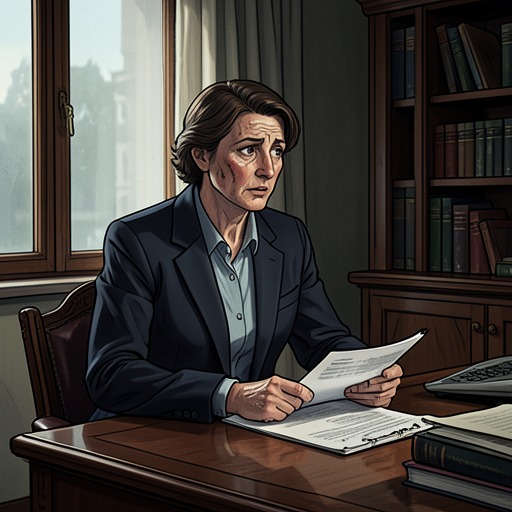
The sentence followed a trial in which C.J.’s own history became public. During the proceedings, she told Judge Chaskel that she had been raped years earlier while a law student in New York. She explained that Bantling had learned of the unsolved assault through old police reports and public records, and that his claim to have been her attacker was an effort to undermine the case. She denied that he was the man who had assaulted her and said she had already told Rubio as much. The revelation exposed a conflict that had shadowed C.J.’s work, even as she continued to prosecute him. That public disclosure followed a long private reckoning with the assault. At Jamaica Hospital, doctors told her that the injuries required an emergency hysterectomy. Later, as the police guard was removed and the daily visits from Detective Harrison became phone calls, C.J. feared that attention to her case would fade. Friends’ flowers filled her room, but she did not want visitors beyond Marie; she could not face explaining her bandages or making conversation with curious acquaintances. When she later read her old police file, a former neighbor’s victim-blaming account revived guilt she had worked through in therapy. These experiences form the background to her appearance in court: the penalty phase concluded Bantling’s prosecution, but it did not make the assault or its consequences disappear. After the courtroom revelation, C.J. took time away from work while press interest subsided. She spent several days in Key West with Dominick. The two did not need to discuss the assault in detail for his knowledge of it, and his continued love, to matter to her. The penalty phase thus closed one legal question with an irrevocable sentence while leaving the personal history that had entered the courtroom to be faced beyond it.