Bantling’s Murder Conviction and Courtroom Outburst
RetributionWilliam Rupert Bantling’s murder conviction turned a closely watched trial into a moment of public rupture: after the jury found him guilty, he challenged the proceedings by accusing prosecutor C.J. Townsend of a past assault and claiming she had framed him. The courtroom had first delivered its verdict in a formal, decisive act, only to have Bantling’s response expose the personal history he said lay behind the case.
The Verdict
The jury began deliberating after closing arguments concluded on Friday afternoon. The court had instructed the twelve remaining jurors on the law after dismissing the two alternates. Earlier that day, during the lunch break, Dominick Falconetti had charged Bantling with ten additional counts of first-degree murder and lodged ten more arrest forms with the Dade County Jail, preserving the possibility of further custody if the jury acquitted him. Bantling’s attorney, Lourdes Rubio, waived his right to a First Appearance Hearing; later, she told the judge Bantling would not testify in his own defense. His previously cocky expression had given way to a nervous, defiant twitch, and quiet, heated disputes between him and Rubio could be heard at the defense table.
At 4:27 P.M., the jury was sent out to decide Bantling’s fate. Less than an hour later, a knock at the jury-room door signaled that a verdict had been reached. The foreman, a Miami Beach garbageman in his forties, confirmed the verdict to the judge while cameras and microphones recorded the moment. The judge returned the verdict form to the clerk, and the jurors watched the bench uneasily, avoiding Bantling’s gaze.
The clerk read the jury’s finding: on January 5, 2001, in Miami-Dade County, Florida, the jury found William Rupert Bantling guilty of first-degree murder. A choked sob followed, which C.J. Townsend suspected came from Mrs. Prado. The verdict closed the jury’s decision, but not the courtroom’s confrontation: Bantling’s reaction immediately redirected attention from the formal judgment to the prosecutor he accused.
The Outburst and Accusation
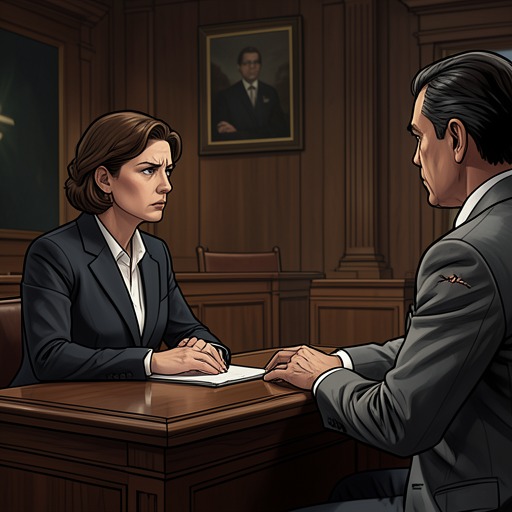
As the courtroom absorbed the verdict, Bantling began screaming, a sound C.J. Townsend recognized from an earlier encounter with him and Lourdes Rubio in the Dade County Jail. He pointed at Townsend and claimed that he had assaulted her years earlier in her New York apartment, then accused her of framing him for the murders. He demanded a new trial and a new lawyer, alleging that Rubio knew his accusation was true but was not defending him properly because she pitied Townsend.
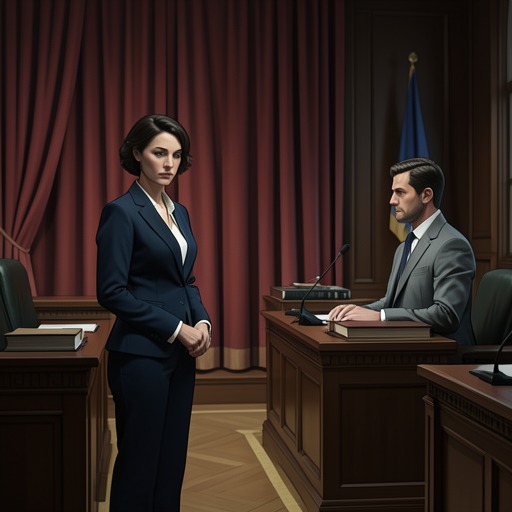
The outburst forced Townsend’s concealed history into the open. She stood and told Judge Leopold Chaskel III that she had been violently raped while she was a law student in New York, but denied that Bantling was the attacker. She said he had learned about the unsolved assault through old police reports and public records and was using that information to cast doubt on the prosecution. Rubio, who had reviewed the reports and spoken with Townsend, told the judge she considered Bantling’s accusations baseless and did not support them. The courtroom disclosure answered his public claim, but made Townsend’s private experience part of the trial’s spectacle.
Removal and Immediate Aftermath
Bantling’s accusation gave way to a physical disruption when he shoved over the defense table and protested the verdict. Three corrections officers restrained him, and Judge Chaskel declared the matter concluded and ordered the bailiff to silence him. Bantling then fell quiet as the bailiff taped his mouth, ending the outburst without undoing the public disclosure of Townsend’s past.
The consequences followed Townsend beyond the courtroom. That night, reporters had found her carefully guarded address at Port Royale and were waiting in the parking lot; news crews had driven past the security guard to get there. Unable to return home, Townsend stayed in her office at 10:30 P.M. and called hotels, seeking somewhere to stay until the reporters left. The verdict had ended the jury’s deliberations, but Bantling’s accusation had made her private history a public spectacle and disrupted her ability to go home.
The Unresolved Past Behind the Disclosure
The history exposed in court began years earlier, when C.J. Townsend was a law student in New York. After the assault, she was taken to Jamaica Hospital in Queens with severe injuries and substantial blood loss; doctors performed an emergency hysterectomy to stop the bleeding. Although they expected her to recover physically, the consequences extended beyond her hospital stay. In the days that followed, the police guard was removed once she was no longer considered in imminent danger, and a detective’s daily visits became brief phone calls. Townsend feared that her case would soon be pushed aside for newer arrivals, while the bandages and the prospect of explaining them made her withdraw from most visitors and calls.
The old case remained painful in part because its records preserved the judgments of people around her as well as the facts of the assault. While reviewing reports and hospital records more than a decade later, Townsend encountered an ex-neighbor’s allegation that her clothing had invited what happened. Though she recognized the statement as the product of a distorted and perverted view, it revived self-blame she had struggled to overcome in therapy. This history clarifies the personal cost of Bantling making her assault a public claim: the courtroom did not merely disclose an old case, but brought its shame and the struggle to speak about it back into the present.
Townsend’s later review of unsolved cases also placed that history beside a much wider pattern. Searching newspaper archives, she found reports of assaults on women in California involving masked intruders, then located further cases associated with cities where Bantling had lived. Police reports described recurring features, including victims attacked in their first-floor apartments at night and masked assailants; the records also contained intimate details about victims that, in Townsend’s judgment, connected the crimes. She contacted an investigator at INTERPOL, who reported matching wanted notices for assaults in South America and the Philippines, while making clear that the notices had not yet been confirmed with local agencies. The accumulating reports gave the trial accusation a disturbing context, but Townsend rejected Bantling’s claim in court, and the account of the verdict scene presents his words as an attempt to undermine the prosecution rather than as proof accepted by the judge.